
10 Steps From Idea to Publishing High Quality Stories
You don’t need too many ideas to write
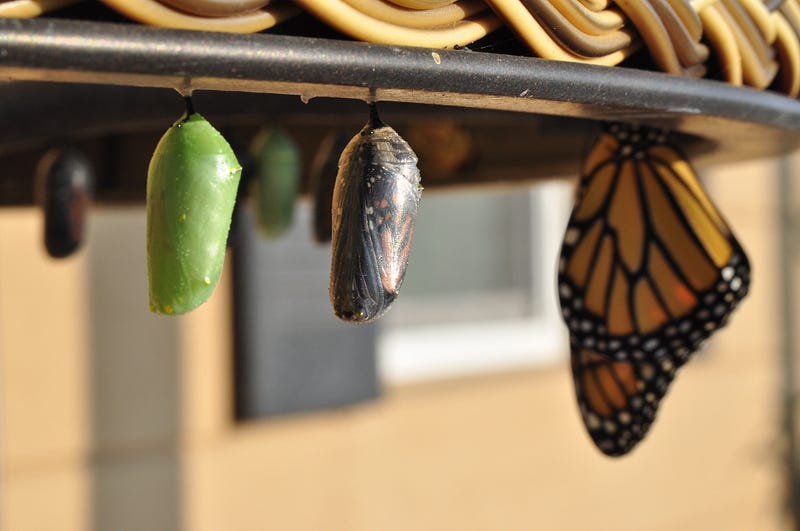
So your stories are not cutting it — yet. Agreed. Now to the next steps.
In my first of week of writing on Medium, I published four stories. And then the following week, one.
Then I decided to study — to understand what goes into the kind of quality articles that people love to read.
I have lost count of how many articles I have read on the subject in the last two weeks, but now I can say it’s been worth it.
I have carefully distilled the following steps from articles written by popular Medium writers. I have arranged the steps based on the elements of my writing process. I have also added quotes from these writers to make the points clearer.
So come along.
1. Before you write, decide to ignore the numbers
“The dirty secret nobody is telling you — a follower is meaningless. Followers are the wrong number to chase. Followers cause people to lose their minds. Followers inflate your ego. Followers make you think the only path to success is more followers.” — Tim Denning
Many of us have been there. Mostly in the beginning. After you hit the “Publish” button on that page, the endless obsessing over the numbers begins. Followers. Claps. Earnings.
This happened to me too.
I refreshed those pages several times a day, looking for some big jump in the numbers.
The lesson: forget the numbers and focus on improving the quality of each new story.
Soon enough the numbers will begin to respond when you are not looking.
2. Schedule time to think and relax
“Don’t just schedule time to write. Schedule time to think and relax. Put on your calendar: ‘Go for a walk and brainstorm @ 4 p.m.’” — Matt Giaro
After I began to learn what counts as quality and improves engagement, I had no idea left to write about.
And then I learned this important lesson: schedule time to think and relax.
Give your mind a chance to reset. Take a walk. Look around. Let your mind take in the things your eyes observe. Let it reflect on those conversations around you. In there somewhere is a story.
3. Write headlines first. Write headlines every single day
“The best way to get better at writing headlines is to write them every single day. My process always starts with writing headlines first. After I’ve got the headline down, I’ll write the article. Instead of using all my creative juice for an article with no headline, I’ll write a whole bunch of headlines and send them to myself. ”— Tim Denning
I began doing this today. It makes the whole process far easier for me now than in the beginning. The commonest advice I have found on Medium is to write 10 headlines every day. This story is on one of the 6 headlines I have written today.
Use any note taking up on your phone — Notion, Apple Notes, Effie, etc or good old paper and pen if it is possible.
Writing headlines every day is also great for preventing writer’s block. Your list of headlines tells you where to start writing.
When you write the headlines first, it creates homework or a to-do list for you. And then when you do sit down to write, the content flows more easily.
4. Focus your headlines on your reader
“Make your headline all about the reader. Address their problem, desire, goal, or a common thing they should avoid. Keep it simple. Use words people know.” — Tim Denning
Readers engage with stories that offer practical takeaways to improve their lives. Your headline should promise them these takeaways:
- steps to take
- ways to do something
- reasons why
- skills to learn
- habits to build, etc
Examples of headlines that are about the reader:
- 10 Life Quotes That (If Applied) Will Change the Way You See The World Forever
- If You Do These Things, You’re Damn Near Guaranteed to Become a Full-Time Writer
- 5 Books About Writing That Made Me a Better Writer
“A lot of writers assume you have to write gimmicky posts, listicles, and self-improvement or money-making tips to get readers. Nope. You just have to answer ‘What’s it in for them?’ before you write your posts and bake that answer into every important part of your posts.” — Ayodeji Awosika
5. Pay attention to your subtitles too
A subtitle is as important as the headline. This is the other part of what people see when they are scrolling through articles to read on Medium.
You should put in good effort to get it right, as you would the headline itself.
Here are two easy hacks to writing subtitles that I learnt from Tim Denning:
- Give your first point in the subtitles
- Pull a quote in as your subtitle
These hacks quoted above are the ones I am currently trying out for my subtitles.
6. Use images that stand out
“The next time you’re looking for an image to go with your post, scroll as fast as you can through Google Images or Unsplash. Which image grabs makes you stop scrolling? My rule of thumb is, if something makes you scroll up or stop scrolling, that may be a good image.” — Tim Denning
The idea is that if a particular image stands out to you when you are searching for images to go with your story, it would stand out to readers when they are scrolling through stories, to find one to read.
And make sure to attribute your images. If you use Unsplash on Medium, the attribution is done for you as shown below. Just follow this pattern for images from other sources, and it should be fine.

Other sources of royalty-free images are:
7. Begin your story with a strong lead
“If your story has no strong lead you won’t get the engagement you crave for. So at the beginning of the story, you should use a strong lead/hook to get the reader’s attention.” — Har Narayan
A lead refers to the opening or introductory portion of a story or article. It does three things: gets attention, sets the tone, and gives important story details.
A hook is a specific technique or element within the lead that is designed to grab the reader’s attention and make them want to read further. It is essentially the most engaging or intriguing part of the lead.
Examples of effective leads:
- an anecdote or a short story used to draw the reader into the main story
- a thought-provoking question to spark the reader’s curiosity
- a relevant and compelling quote
- a surprising or unexpected fact or contrast
8. Build your content on angles
“Each content is a combination of two things: an idea and an angle. An idea can be flat, but an angle makes it three-dimensional. Your idea answers the ‘what’ while your angle answers the ‘how.’”— Matt Giaro
The idea of your story is nicely captured by your headline. Your angle builds the content. The angle is the takeaway for the reader.
Let the structure and the flow of the story be guided by the angle of the story.
“You don’t need too many ideas to write. What you really need is angles.” — Har Narayan.
Angles serve menus like:
- How to
- Steps to
- Reasons why
- Secrets
- Benefits
You get the point.
9. Offer credibility in the first few paragraphs
You don’t have to be a best-selling author to build credibility. All you have to do is tell us why you know what you know. — Tim Denning
After choosing to read your story, your readers need to decide whether or not you have the authority to be talking about the subject. If you have a PhD in the subject tell us. If you’re getting the information from some other authority on the subject tell us.
As much as possible, dial down on the use of ‘I think’. Your readers are looking for a reason to trust you, and your writing should carry that confidence with it.
So this story is not too long — and finally…
10. Conclude with the key takeaways
Too many writers end their posts abruptly. They miss the keys to writing a conclusion that makes the reader eager to read the next post they write. — Ayodeji Awosika
Your conclusion is your chance to retain a reader and make them want to read other stories you have written.
Here are some keys I have learned that you can use:
- Sum up the key benefits, and remind them what they learned, which shows them how smart your post made them
- Paint the picture of the transformation they’ll experience
- Give a ‘rallying cry’ to motivate them to implement your tips
- Give them a key takeaway to remember that impacts their lives
- Close any open loops or resolve conflicts you made in the story
These 10 steps are by no means conclusive, but they cover most of the steps involved in the writing process to set you on the path to writing higher quality stories. See you at the top!
If you found this story useful, please subscribe to receive my weekly newsletter with more helpful tips.


