
10 Reasons Why You Still Don’t Believe in the Future
#3. We are the boiling frog
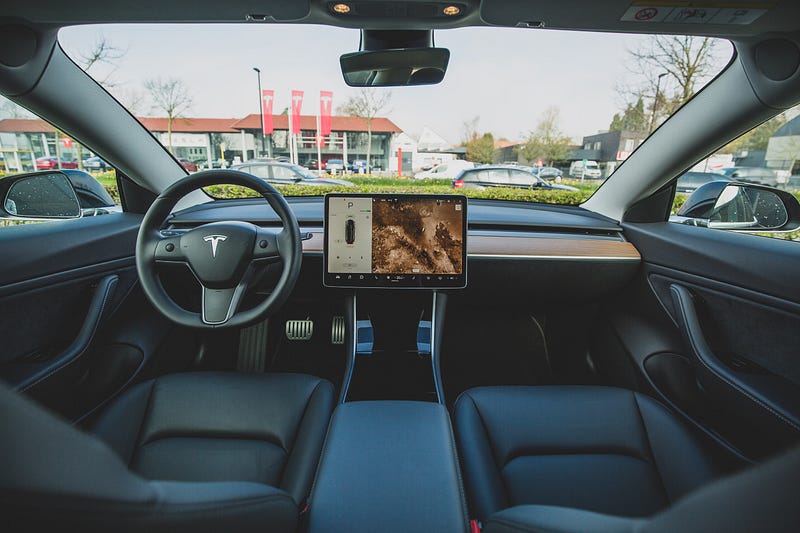
We’re tired of all the hype about Artificial Intelligence, Machine Learning, Automation, and all those things that never seem to materialize. We still get up in the morning make some coffee, drive to the office and do mundane tasks that were supposed to be done by robots, algorithms, and flying cars.
Are we being too impatient? Is it all just hot air and no substance? Is it happening as we speak unbeknown to us?
#1. Unintended consequences
Innovation is often a blind pursue. Inventors don’t realize the full potential of their inventions or the second and third-order effects. It is much later by tinkering and hacking that unintended uses are discovered by hackers and fans. These are some examples:
- The internet was originally meant as a protocol for communicating information in very specific domains like the military or science
- Nuclear fission was discovered when trying to understand the nucleus but ended up being applied to the atomic bomb that killed millions
- Aspirin was originally intended to alleviate rheumatism but then became a wonder drug used to prevent cardiovascular disease and even cancer
Electricity, the telephone, automobiles, or concrete are just some examples of how a discovery or an invention can completely change the world in ways that were impossible to predict beforehand.
The same thing is happening right now. What would be the use of self-driving cars, machine learning, or the blockchain? No one knows because we are in the midst of it.
#2. Can’t see the forest for the trees
Often those who water down the potential of new technologies are their inventors. One of the reasons for this is that they have such a focus on the immediate use that they lack the foresight to see the second-order effects.
Twitter wasn’t meant to spark a revolution in the middle east. Facebook wasn’t invented as a tool for bullying and narcissism. Phone’s microphones weren’t meant to listen to your conversation and spy on you.
This is why scientists or engineers are not always the best ones to foresee the future consequences of technological advances. They are too busy making stuff work to try to guess unintended uses.
Often we hear experts saying, A.I won’t be used for that, it won’t destroy jobs, it will not harm you, etc but, how do they know? Once a technology is released into the world, it becomes alive. It will shape, transform, develop and grow in unexpected ways, good and bad.
Saying the machines won’t solve most of our problems or create even more is just an educated guess but the future doesn’t like to be predicted.
#3. We are the boiling frogs
We are in the middle of a revolution, that’s why it’s so hard to see it. Put a frog in warm water and it will enjoy and relax but then when the water is boiling, it’ll be too late to get out.
We are that frog.
Global warming is a clear example.
Hopefully, technology is here to save us from all the fuckups we’ve done to this planet. If that doesn’t work we are doomed.
#4. Exponential Growth
Our minds are not prepared to comprehend exponential growth. New technologies take years or even decades to reach the tipping point but eventually they explode. For those dormant periods, it’s easy to become disenchanted and think that it was all hype.
Take autonomous cars. They’ve been talking about it for years, yet we’ve hardly seen any improvement. But when they are fully ready, and it won’t take long, the progress will skyrocket and the consequences for society will be enormous. This will mean far fewer accidents (eventually 0), whole industry transformations, and even unintended uses we can’t predict yet.
People are still doubting whether the electric car will take over when is so blatantly obvious, let alone self-driving electric cars. Denial is a comfort zone.
#5. Denial
We are tribal. Often this backlash against technology comes from jealousy and fear. We didn’t like been beaten at Chess and Go by computers so we moved the goalposts. “Well, that’s not really intelligence as we know it” we said. But it is, and it’s getting much better very fast.
In order to protect your future, wake up and realize these machines are coming to take your job, so you better start reinventing yourself real fast and pivot to areas where they can’t catch you.
Creativity, flexibility, and general intelligence seem to be safe havens… for now. Don’t wait until that tsunami hits you on the face, start running now or it’ll be too late.
#6. Idea sex
If one technology like smartphones can transform society, just imagine what several inventions can do when combined together.
What’s going to happen when A.I. gets mixed with social media, blockchain, biotechnology, and solar energy? Who knows, but it’s scary and exciting and the same time.
Uber is a combination of the taxi industry and smartphone geolocation but we ain’t seen anything yet. Uber is no so revolutionary after all, we’ve just switched from one middle man to another. What would be truly revolutionary is a decentralized Uber in which there is no middle man. By the use of blockchain technology, I can take you in my car somewhere and you’ll pay me directly ensuring complete trust throughout the process.
If we have a hard time predicting one technology, imagine when several are combined. That is exactly what’s happening right now.
#7. Back to the Future
The famous 80s movie did a lot of damage to our collective imagination. Every time I engage in a conversation about technology somebody reminds me about the flying cars that should have been operational by now.
Let’s keep in mind that Hollywood is not in the industry of prediction, they are just storytellers and will tell you anything that makes you dream regardless of its feasibility. For that, you need a technologist — someone that knows enough about technology but can also take the helicopter view and connect the dots.
Don’t believe any movie unless it’s been checked up by science.
#8. Time horizon
The future will come, we just don’t know when. Predicting changes is fairly easy, know when exactly these will take place is much harder.
Eventually, we will have flying cars, live on Mars, and achieve immortality (providing we don’t kill ourselves first in the process) but knowing exactly when it’s the hardest part. Sometimes it comes sooner than expected, other times takes longer.
#9. Regulations
Often the culprit for delays in technological advance is the regulators. Arcane laws and obsolete customs often block progress.
I’m sure the self-driving car is already safer than humans but how many years (and human deaths) will we have to wait until they become a reality? Ask the gatekeepers.
Often we think technology and progress are a given, and they will happen anyway, but that’s not true. We’ve seen powerful civilizations collapse and sink the world into centuries of regress. The roman empire, Egypt or Ancient Greece were blooming societies that after their demise left a barren land that sunk us into the dark ages.
Progress only comes when we work towards it and for that, we must let our leaders know we need it now before it’s too late.
#10. Fear
Deep down we dislike disruption and change. It makes us feel uneasy and threatens our status quo. What if I have more to lose than to win? We ask.
While that’s a reasonable concern we must acknowledge we have benefited enormously from technological innovation and we’ll probably continue to do so in the future.
There is far less hunger, war, disease, and violence than just a few decades ago. This is mostly due to technology. Yes, like anything it comes with its own challenges but usually, these are just teething problems that can be resolved once we adapt to the new situation.
Would you go back in time to any time in history to have a better life? Obviously not. We’ve never had it any better — food, travel, internet, entertainment, culture, medicine, etc. The present is much better than the past and the future will be even better. If we work on it.
Conclusions
We are already in the future, this is it. Open your eyes and realize how much is going on. In just a few years the world will be very different from what we are used to.
It’s time to get yourself ready and participate in this progress. Nothing is written in stone, you could and should have your say in the way this is moving forward. Speak to people, participate in debates, express your opinion in forums and never stop learning and discovering.
Don’t let the future pass you by this time.