
10 Reasons Why Electric Cars Are Becoming Very Popular
Governments, companies, researchers, and drivers are all in this race
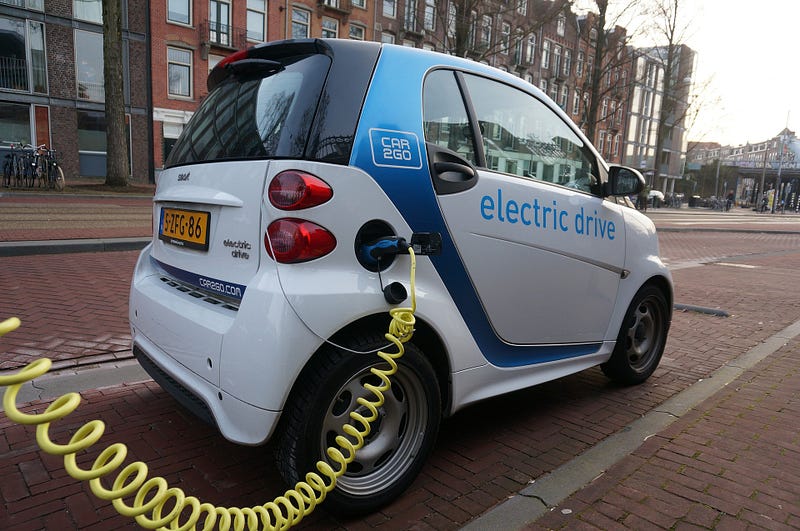
Electric cars are gaining market shares all over the world. In Norway, the sales of electric cars surpassed the sales of conventional cars in 2020.
Many choose electric cars because they are a better environmental choice. Others dislike electric cars because they provide a different driving experience compared to conventional cars.
While many people speak enthusiastically about electric cars, others remain skeptical. Still, electric cars will probably become increasingly attractive in many countries within this decade.
Why are politicians, investors, and drivers choosing electric cars? Why are researchers so busy developing them? Here are the top ten reasons why electric cars are becoming so popular.
1. The Climate Agenda Is Pushing for Change
The world has agreed to implement the Paris Agreement and limit the effects of climate change. This requires fundamental changes. The transport sector is one of the most carbon-intensive sectors of the world economy — it deserves particular attention.
Oil is by far the dominant source of energy in road and flight transport. Electrification shall play a major role in the decarbonization of the sector, at least on the roads. A recent study has shown that the shift to electric cars results in large emissions reductions even before the power sector is decarbonized.
2. Fossil Fuel Independence Is Appealing to Most Governments
Governments need to find ways to implement the climate agenda while promoting socio-economic development. Therefore, renewable energy is high on the agenda. Prices for renewable electricity generation have gone down so this is no longer an issue. In this context, electrification of transport opens a new market for energy companies and attracts more investments in renewables.
Thus, renewable energy paves the way to phasing-out fossil fuels. Most countries are oil importers. EU countries, for example, import 95% of the oil they consume.
Renewable electricity, on the other hand, can be generated using local resources. It substitutes imported oil and improves the trade balance of oil-importing countries. This process creates jobs and contributes to mitigating climate change. Policymakers have understood these double gains. Now they are walking the talk — at least some are.
3. Zero-Emission Mobility Favors Electric Cars
All countries are looking for alternatives to substitute fossil fuels in transport. In Europe, there is strong support for low-emission mobility. The idea is to go for zero-emission vehicles in 2030. For some, it means going all-electric — cars, buses and even trucks are part of the plan.
The largest chunk of emissions in road transport comes from private cars. The more countries push for zero-emission mobility, the more they are likely to favor electric vehicles. The market for electric cars is in place, and they offer the largest potential for reduction of greenhouse gas emissions in the coming decade.
4. Electric Cars Reduce Urban Air and Noise Pollution
Many cities are in the process of banning fossil fuel cars as a way to reduce pollution. This includes a ban on diesel in Paris, Mexico City, Madrid, Athens, and many cities in Britain and Germany. Denmark will ban petrol cars in 2030. Substituting the combustion engine for electric vehicles will not only reduce greenhouse gas emissions but also contribute to addressing health problems.
Car engines release toxic gases and particulate matter that cause lung diseases and other serious health problems, including miscarriage. Noise pollution is also a threat to public health, being the cause of stress, bad concentration, hearing loss, and much more. Long exposure to road traffic noise may lead to cardiovascular disorders as shown in a recent study in Sweden. Noise is an increasing health issue in cities that electric cars can help address.
5. Automakers Are Abandoning the Combustion Engine
In 1995, a scandal grew around the manipulation of car engines to distort emissions measurement tests — the so-called dieselgate. Besides costly effects and discrediting of automakers, the scandal boosted discussions about transport emissions, pollution, and diesel driving bans. The scandal helped advance the development of electric cars.
Automakers are withdrawing R&D investments in combustion engines to focus on electric engines. Daimler, Volvo, Jaguar, and Volkswagen are some of the traditional European automakers that have announced corporate policies in this direction.
In addition to the electric vehicle models launched by traditional automakers, many new electric car brands are competing in the market such as Polestar — not to mention Tesla that has grown strongly in less than two decades. Even Apple will be launching an electric car soon.
6. There Are Many Electric Cars in the Market
The technology around electric cars is improving fast and there are many models, technologies, and brands in the market. The best choice for you depends on how far and how often you usually drive, and how much you want to pay. To check the range of different models, check this database.
Electric cars comprise different technologies that derive all or only part of their propulsion energy from electricity. It may be useful to know the difference.
Hybrid-electric — Electric hybrids combine gas, petrol, or diesel with electric propulsion. The electric motor is fully integrated into the system, and the battery is recharged internally. These cars have been in the market for a couple of decades. The driving experience is similar to that given by a conventional fossil-driven car. However, the main source of energy in this type of car is still a fossil fuel.
Plug-in Hybrid — This type of car is bound to become more common soon, particularly where the infrastructure for electric cars is not developing fast enough. The main difference from the other hybrids is that you can charge the vehicle and use it for longer journeys in electric mode. The petrol or diesel engine is still there and helps reduce potential range anxiety in case recharge is not possible.
All-electric — These vehicles work in full electric mode in both short and long-distance travel. If the driver mostly uses the car for short journeys in a city, he or she can conveniently charge it at home overnight. In long-distance journeys, recharge of the battery may be necessary. Some manufacturers offer full-electric car models with long ranges, though these are usually the most expensive.
7. Battery Performance Is Improving Fast
Research on electric car batteries receives a lot of attention for technical, economic, and environmental reasons. As a result, battery performance has increased as well as durability, while prices have gone down, making electric cars much more attractive today than they were ten years ago. This is likely to continue.
The speed and range of the electric car depend on the capacity of the battery to deliver stable energy to the car motor. In other words, the battery is central to the performance of the electric car. Lithium-ion batteries are the ones commonly found in electric cars today. They allow long driving distances, are safe, and deliver good energy performance.
Other topics related to car batteries occupying researchers these days include driving distances with one single charge and time taken for recharging. Recent research reports on a reduction of the recharge time to 10 minutes only. When implemented, this will make electric cars more attractive for customers that usually drive long distances and need to recharge on the way. Recharging time is also important for taxi and delivery fleets.
Another key issue of research is the environmental impact of car batteries. We need to keep track of the batteries used in electric cars, as they require various metals some of which are difficult to find or have no proper recycling practices at present. To guarantee total environmental gains of large fleets of electric cars, the circularity of battery production, use, and re-use still needs to be resolved.
8. Electric Cars Are More Expensive to Buy but Cheaper to Drive
Electric cars are still more expensive to buy than conventional cars. The technology is under development and it costs to bring it to the market. The cost of production is high, particularly for batteries. Moreover, long-range cars need larger batteries, and they will cost more.
However, the cost to buy a car is one thing, and the cost to own a car is another. The cost of driving an electric car could be less than half if compared with a diesel or petrol car. How much you can save on fuel costs depends on the fuel prices where you live. This varies widely but, generally, running a car on electricity will be cheaper.
In the UK, an app will help you compare the cost of a journey in an electric car with the cost of a journey in a diesel or petrol car.
The total cost of ownership results from the car price and the cost of using the car. For electric cars, the upfront cost is higher but the running costs are lower than for conventional cars. The savings will also depend on how long you own the car. Besides, many countries give various incentives to electric cars, which will affect the calculation.
9. Incentives and Subsidies Are Boosting Electric Car Markets
Many governments provide incentives to make electric cars more competitive. The incentives usually target all-electric vehicles.
Since customers tend to compare upfront prices mostly, many countries provide significant subsidies to reduce the purchasing price of electric cars and boost sales. But, this is not all. There are other incentives to attract potential electric car owners.
Subsidies come in different forms — direct payments to reduce the cost of the vehicle, tax exemptions, and support for the installation of a charging station at home. Many cities offer free parking, free congestion charges, and even access to bus lanes, which saves time. Together, these subsidies reduce significantly the cost of ownership of an electric vehicle.
10. Charging Infrastructure Is Expanding
The growth of electric car fleets will depend on the development of charging infrastructure. Driving range and charging infrastructure are the core concerns of drivers when it comes to electric cars.
Urban car owners are likely to charge their vehicles at home, and this will meet most of their needs. Many electricity providers offer low electricity prices at night when net loads are low, so charging at home is convenient and saves money. Some will charge their cars at work and others in public stations.
Countries aiming at zero-emission mobility are eagerly developing charging infrastructure to allow long journeys and expand the area coverage for electric vehicles. Integration of charging facilities with new buildings and city developments, and along roads will require massive investments. Still, we can expect that to happen as many cities and countries are going in this direction.
Many factors have led to a breakthrough for electric cars across the world. These cars are no longer only a potential alternative for the future. They are a reality here and now! There are hundreds of models, the technology is developing fast, and prices are falling.
Electric cars are the preferred choice of many governments and companies. Incentives are helping boost the market and enlarge the charging infrastructure. Researchers are working hard to improve the technology. People may have different preferences and needs. Still, electric cars are bound to become the number one choice of many drivers.