
10 Reasons Not to Buy Bitcoin
Stay away from it. It’s a scam.
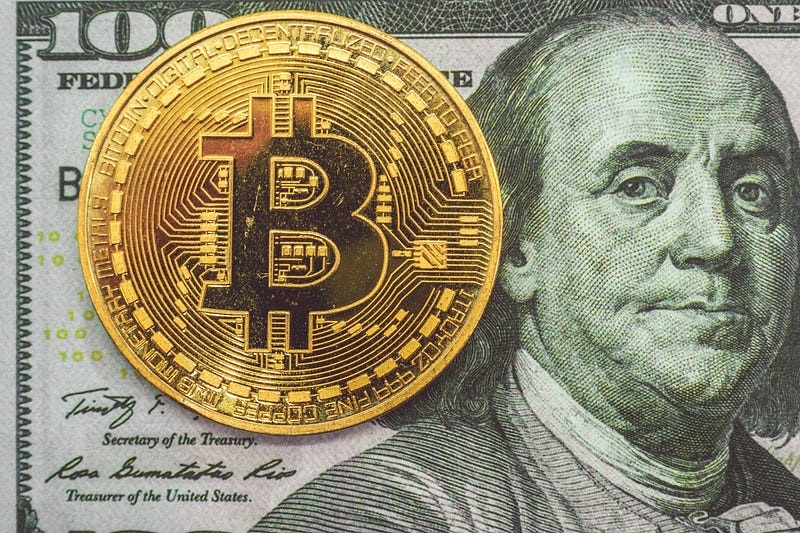
There is so much hype about Bitcoin and all the other cryptocurrencies that it’s difficult not to form an opinion and choose sides.
On one hand, you have the evangelists who think Bitcoin is the best invention since sliced bread. On the other hand, you have the haters who think this is a scam and can’t collapse soon enough.
It’s safe to assume that bitcoin fans know more about how it works than the haters — it’s hard to become an expert in something you dislike. Denialists compare it to other scams and bubbles we’ve seen in history like the tulip mania, the subprime mortgage crisis, or the dot.com bubble.
Now, is bitcoin comparable to any of these bubbles? Is it heading the same way? Is it a scam?
Let’s see.
#1. It has no intrinsic value
Bitcoin is useless. You can’t feed your kids with it, build houses, or use it as a means of transport. It only has the value we agree to give it by the market forces of supply and demand.
But what about the dollar, gold or stocks?
Exactly the same thing.
If you think Fiat currencies ($,€,¥) have intrinsic value, go to Venezuela, Argentina, or Zimbabwe and you’ll find they don’t.
If you trust the Federal Reserve, you buy dollars. If you trust precious metals, you buy gold. If you trust the stock market, you buy stocks.
Money is probably the most successful story ever told. It has no objective value… but then you have these master storytellers: the big bankers, the finance ministers… and they come, and they tell a very convincing story.
Yuval Harari
Bitcoin is as useful or as useless as the trust we put into it. That makes it exactly equal to all the other assets you deal with on a daily basis.
#2. It’s a bubble
A bubble is, by definition, an asset that goes up in price very fast and then suddenly implodes to zero leaving a lot of casualties along the way.
Bitcoin has had a fair share of ups and downs in its short history. Many forecasters have been predicting doomsday for crypto for a long time and they rejoice from their ivory towers when things point south. Ah, the good old I told you so!.
But, what about the stock market, housing prices or gold? Are those bubbles as well?
Certainly, according to many experts.
However, regardless of their booms and busts people will buy and use these assets for the foreseeable future because they are necessary and useful.
The whole economy is a huge bubble, thanks to that you own a house, a car, eat at nice restaurants and go on holidays twice a year. You don’t like bubbles? Then go and live in the forest where things have intrinsic value.
Yes, bitcoin is a bubble and it will keep inflating for the next 100 years at least.
#3. It’s been manipulated
The big whales can move the price up or down by selling or buying huge amounts of the currency in shorts bursts. In that sense, it’s prone to price manipulation.
But, what about gold, Fiat currencies or the stock market?
Exactly the same.
People and institutions with lots of money can easily send waves through the markets and manipulate the price to make a profit. This is unfair, I agree, but there is no way to stop it. If Bill Gates decides to buy stamps tomorrow, the price of stamps will explode overnight. Should we ban stamps then?
These manipulations are usually short-lived and don’t tend to influence the asset’s long-term value. If you make an investment and sit on it for ten years, you’ll probably make a profit despite the big whales. That is true for most assets including Bitcoin.
#4. Nobody is in charge
Due to its decentralized nature, Bitcoin is not regulated by any organization, person, or committee. The algorithm was released by Satoshi Nakamoto and since then it has been evolving with little human intervention.
Now, it’s that a bad thing?
Examples of decentralized systems are the Internet, nature, market economies, Linux, and ant colonies.
Examples of centralized systems are The federal reserve, dictatorships, banks, Microsoft Windows, and a Zoo.
It can be argued that both systems are valuable and necessary with pros and cons but there are some qualities about decentralized systems that make them more antifragile and efficient.
You wouldn’t try to organize nature with a committee of experts who have weekly meetings to decide how many Lyons should be born, establish quotas for the gazelles that can be hunted, and how much water should flow through rivers. That would be clearly a disaster.
Nature works perfectly fine with no human intervention. If we disappeared overnight, the ecosystem will heal itself in no time. We are the problem, not the solution.
Bitcoin was created by humans, but it’s working with no human intervention (apart from some governance issues) and perhaps that’s a good thing.
Let’s face it, every time we interfere with some complex systems we fuck it up. Maybe it’s time to let Math run the show.
#5. It wastes tons of energy
To mine one bitcoin, 200 Kwh of energy is used.
That’s a lot.
It’s estimated that bitcoin energy consumption is similar to the energy needs of whole countries like Argentina.
Granted, that’s not ideal. But let’s compare it with other financial assets like gold, or fiat money.
How much energy does it take to extract gold from a mine, melt it into ingots, transport it all over the world, store it safely and allow transactions on thousands of servers so it can be traded?
What about dollars? They have to be printed, transported, electronically handled, and decommissioned. This creates a huge physical infrastructure with banks, credit card companies, intermediaries and so on that has to be put in place and maintained.
Is Fiat money or gold more environmentally friendly than Bitcoin? I doubt it.
It is estimated that Fiat currencies consume at least double the energy expenditure as bitcoin does, plus, most bitcoin farms are located near renewable sources of energy where electricity is cheaper and thus the mining operation more profitable.
As of 2020, 74% of bitcoin’s energy consumption comes from green energy. And this is only going to get better as mining rigs become more efficient, solar energy becomes cheaper and the algorithm requires less energy.
It could be argued that Bitcoin is accelerating the adoption of renewable energy making it cheaper and more ubiquitous.
#6. It’s not really decentralized
Most of the mining operations take place in big farms in China, due to the low cost of electricity. It has been said they are in control of Bitcoin, and could manipulate it, monopolize it or destroy it at will.
Certainly, the fact that 80% of mining takes place in China is a sobering thought. Can China be trusted? Is this Bitcoin’s Achilles heel?
First, they control the mining operation and since they produce so many bitcoins they can certainly manipulate the price. But once those bitcoins have been mined and released into the exchanges, they have no control over it. It becomes a free-flowing asset subject to the market’s forces of supply and demand.
Second, they are making a killing, why would they interfere with such a profitable business? That wouldn’t make any sense. China can be accused of many things but they are not stupid. They need the US and the world as their customers and they need Bitcoin. I don’t see any danger there.
Third, other areas like Iceland, the American northwest, Georgia or Canada are emerging as big crypto miners due to their cold weather (for cooling down the GPUs) and cheap renewable energy prices. So China’s hegemony will be reduced significantly in the future, making the whole operation more decentralized.
#7. It’s used for illegal activity
Bitcoin has been used by criminals in the past for their illicit activities.
So has fiat money, gold and other assets.
Contrary to popular belief, Bitcoin is not anonymous. With patience and enough computer power, transactions can be reverse engineered to get to the source. Many of the criminals using bitcoin in the past have been caught and the money recovered. If you want to do something illegal, pay cash, it’s the only form of payment still anonymous.
If governments want to stop illegal trade, they should get rid of cash.
#8. It’s volatile
Certainly so, going up in value 200% every year on average since its inception, it can be considered unstable. But I don’t think the holders are complaining about that, would you?
Bitcoin’s volatility has made it fail as a medium of exchange but has made it an incredibly good way to store value.
This use makes it similar to gold, a metal that has been able to maintain and increase its value over millennia.
Do you want to make money? Invest in volatility. Do you want to lose money? Invest in stagnant assets.
#9. It’s not a useful medium of exchange
Although the original intention of Satoshi Nakamoto was to create a medium of exchange, among other things, it could be argued that bitcoin has failed here.
Nobody uses Bitcoin to buy pizza. It’s too slow, too much hassle and it would be the most expensive pizza ever.
So yes, here the critics are right. It’s not a medium of exchange. For that, we have to use dollars, other cryptos, or tokens. Bitcoin can’t do everything, it only needs to do one thing right: storing value.
#10. It will be replaced by a competitor
Here the jury is still out, but due to networking effects and first mover advantage, it seems unlikely that any other crypto will topple Bitcoin in the foreseeable future.
There are much better technologies out there. Some faster, some cheaper, some more efficient. Ethereum, Cardano, Binance, and countless others. They’ll thrive with different uses and in different ecosystems but when people think of crypto they think bitcoin and that hegemony is not going anywhere soon.
Conclusion
Yes, bitcoin is a scam, the haters are right! It’s just a better scam than Fiat currencies, gold, the stock market, and property combined.
It’s a huge bubble that will keep growing and will change the world as we know it. If you want to be part of this scam, you better hurry. Just like the internet in the 90s, this bubble is only inflating and will never deflate (apart from short-lived bear markets) because the world needs it. If it didn’t exist, it would have to be invented.
The future is decentralized, trust-less, and friction-less. Are you ready to take part in this bubble or you rather hold on to inflationary assets?
Your call.
Disclaimer: Not financial advice, entertainment purposes only. Do your own research.


