
10 Powerful Tips to Help You Invest in 2020
Avoid the noise as well as the so-called experts on your journey.

I first started investing in 1997 and want to share a few lessons that may help you on your investment journey. After going through a few events such as the Asian financial crash in 1997, 9/11, 2008 financial crisis, the 2020 crash, and a few minor events along the way, some of my tips will help you in the long run.
First, let’s start with what is investing. People always mix the two words and confuse investing with trading. Investing is not trading as the two are very different, even though some people misuse the term.
According to Investopedia:
Investing is the act of allocating resources, usually money, with the expectation of generating an income or profit. You can invest in endeavors, such as using money to start a business, or in assets, such as purchasing real estate in hopes of reselling it later at a higher price.
You are investing for some time, and you’ll have the option to sell at a particular time in the future. This transaction could be in a few months to several years later..
As for trading, you are looking for money in a short period.
Investopedia had an okay definition but InvestorWords had a much better definition:
Buying and selling securities or commodities on a short-term basis, hoping to make quick profits.
Traders are looking to make money anywhere from a few seconds to a few days for a quick profit.
As an investor, you are not looking for money in a day or a few weeks from now. You are patient and building up your investment over a period of time and you may add more money to your investment to allow the investment to grow even larger.
You may want to use the investment to buy a house one day or as funds you’ll use in retirement. This brings me on to the next topic.
1. Have a goal for your investment
I always tell people when they invest, they need to have a goal for their money. What are they going to use the money for? Do they need the money in a month or several years from now?
Putting a set number on your money helps give you an idea of what you’re investing for. This also gives you an incentive to keep adding more money to your investment.
Most likely the investment will be a significant amount so you’ll add money to the investment monthly, quarterly, or even when you get a bonus. No one can figure this out but you. Set a goal for your investment and watch your investment grow.
2. Don’t try to time the market
I was reading a few articles the other day and found it interesting that some investors sold all their stocks for cash. I’m no financial expert but this can be very risky. No one can time the market. If someone could, they’d be a multimillionaire.
Granted there will be periods in time when you think the market is acting irrational which will happen many times in your investing life. This year has been an interesting year as the stock market suffered a tremendous fall in March with a combination of the oil wars in Europe and the corona virus. Some people felt we were going to relive 1929 or 2008 all over again. Since the March crash, the stock market recovered faster than it has in years. Many stocks started to hit record highs such as Amazon, Facebook, Microsoft, and a few others.
This caused some investors to think we’re due for a second crash as a result of the corona virus, high unemployment, company bankruptcies, excessive economic spending, and possible home foreclosures. It is possible there will be a crash but the stock market is forward looking. The stock market doesn’t always react to what you see as an issue. The stock market has already priced in the corona virus and unemployment.
As the crash started, instead of leaving the market, many people were putting money into the market. Many for the very first time. Millennials are making money by trading beaten down stocks such as the airlines and cruise lines that took a hit earlier this year.
To pull your money out of the market could be very dangerous. The market could suddenly turn around and continue its upward climb. So if you sold your stocks on April 1 and wanted to buy back a month or two later, you could have bought the same stocks at a much higher price.
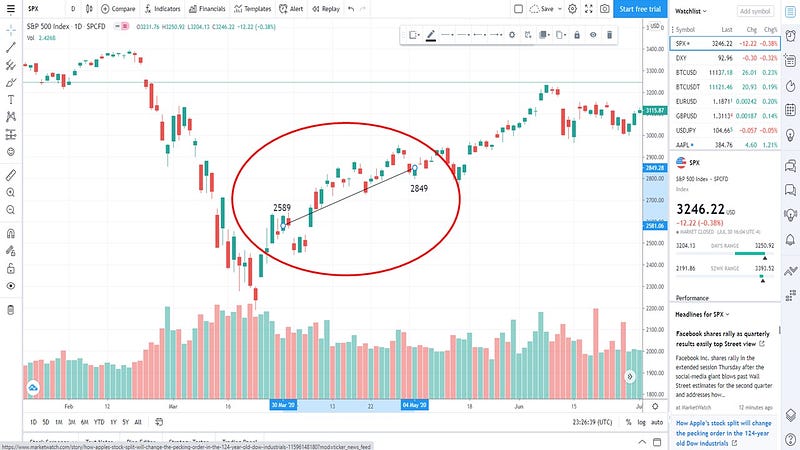
The key is to leave your stocks alone especially if your stocks are down from when you bought them. If you are up, then this might be a good time to take your earning and reinvest them.
In the 2008 crash, I sold a few stocks. If I could go back in time, I would have left the stocks alone. During this time period, the market was crazier than it is today. Companies were getting bailed out, banks closed up, and consolidated with bigger banks. Car companies went out of business. You could also find many stocks in the penny stock range.
A year or two later during this crash, I started to buy good quality companies that were beaten down. Some of them were Bank of America and JP Morgan Chase. I held on to them and sold them for 100 to 200% gains.
Unless you’re a very experienced investor, timing the market could be one of the worst mistakes you’ll make.
3. Continue to educate yourself
So if you have invested for a year or five years and your investment is doing very well, always continue to educate yourself. There is always more to learn. The market goes through cycles.
The stock market is affected not only by how the company itself is performing but outside factors can hurt the stock. High unemployment or inflation could affect how much money is going into the market. It’s good to have a general understanding of what is going on. So when your stocks are down for a year, you have an idea why. The stock could have a change in leadership. The majority of stocks in the car industry are down as they react to Tesla and other Electic Vehicle cars coming to the market. It’s good to have a general understanding of what other factors are affecting your investment.
Many financial news sources give a quick update every day. If you have an investment brokerage account, many of these platforms tell you what is going in with your stock with the latest news. If you don’t have this, you can easily do a Google search to find out what is the latest news on a stock.
4. Invest every month
If you are serious and want a million-dollar nest egg one day, then I strongly encourage you to keep investing every month. Make investing one of your top monthly priorities. So you need to make sure you have this included in your budget along with your bills. I firmly believe that you need to pay yourself first. You earned the money so you need to make sure you have this money available in the future whether it’s to buy a house or for your days in retirement.
5. Do your due diligence after hearing an investment recommendation
Whether your friend or a financial expert tells you to invest in a stock, I encourage you to step back and do your own research as well. Other people may say Tesla may be a good investment but does Tesla fit in your portfolio today? Tesla (TSLA) is sitting at $1500.49 at the time of this writing. This past month Tesla’s price has taken off so you may want to wait for a dip before buying this stock.
Stock analysts have their own reasons for making a recommendation. They may look at a stock with a different timeframe in mind than you. They could be looking 20 years down the road when you may be looking at five years. The number of years will have a big effect on what you decide to do.
6. Attend investment seminars
If you have invested and read two dozen books, sometimes it’s good to hear a different perspective. I encourage you to attend investment seminars. Most likely these groups will pitch you to buy their course at the end of the event but you’ll learn what other information is available that you weren’t aware of. Sometimes the information will be useful while other times it may not be. Just learning one piece of information from a seminar could put thousands of dollars in your pocket.
A few years ago, I attended an options trading seminar and learned that I could trade stocks in my ROTH retirement portfolio and not suffer any tax consequences. Once I Iearned this, I made small changes in my portfolio buying and selling stocks that were in my account.
Fortunately, this was at the right time as I was also taking advantage of the market earlier this year as I was buying and selling Boeing stock. I saw Boeing dropped to $100 which I thought was a steal at that price. So I picked up a few shares and then sold the stock after it rose to $170.
If you have a chance to attend an investment seminar or two, I encourage you to attend the event. It is well worth it.
7. Avoid penny stocks
You may see an advertisement or someone sharing a screenshot of the money they made with penny stocks. Penny stocks look exciting with the possibility of walking away with thousands of dollars. Be careful since this may not tell you how much this investor lost before they made their money.
Penny stocks are a fast way to trade and make money but they are also a fast way to lose a lot of money very quickly. I have tried penny stock investing a few times. You get really excited when you win but then really mad when you lose.
I think unless you have a lot of time and money to lose, you should just stick to the boring lifestyle of investing. Stock investing may not always be exciting but there is a lot more safety when you invest as compared to trading penny stocks.
If you decide to try this out one day, I encourage you to trade with a small account balance and not get too involved. This is an easy way to lose a lot of money fast. You might even compare this to gambling in the stock market.
8. Don’t listen to the news when we’re in a recession or depression
When the economy is doing bad, the stock market may be following right behind. This is the time you need to limit your dose of the financial news and the news in general. The media likes to repeat the doom and gloom 100 times to make sure everyone is aware.
As an investor, you don’t need to hear this. You already see it in your portfolio that dropped a couple of percentage points. This is the time you need to remember why you invested and stay the course. If you keep listening to the news, you’ll react and want to sell your stock. This can be a very tempting time for you to get off course.
Before the crash happened, you thought you had the best portfolio. So why would you make changes when the market changes as well?
If the company made some changes you don’t agree with, then you may want to sell and put your money in a different stock. If the numbers don’t look promising for the next few years or if another competitor created a better product, then it may be time to park your money somewhere else.
When you initially picked your investment, you picked them for a reason. Go back and analyze that reason again. Are the numbers still consistent? Did your portfolio take a dip as all of the other stocks did? This may be the time to stay the course. Over the history of the stock market, stocks are always going up despite the dips in the market.
9. Watch what the smart investors are buying
When Warren Buffett is sitting on a lot of cash, that is a sign to me. He thinks the market is overvalued and waiting for a correction to buy a new business or two. That is exactly what happened in 2020. As Warren Buffett was selling airlines and other stocks, he turned around a few months later and bought $4 billion of Dominion Energy. Buffett did the same during the 2008 crash as he bought General Electric and Goldman Sachs.
You may not have billions to spend like Buffett, but you can get an idea when the stock market may be overvalued to pick up stocks in the future during the next downturn. The stock market has been on an upward climb since 2008 with very few corrections during this time.
10. Have an emergency fund
Though this last one isn’t an investment, it’s extremely important to have money available in your emergency fund. For many people, an emergency fund can be just as important if not more important than your investments.
An emergency fund will cover you when your car breaks down or you need to make an emergency trip to the hospital or you have to make a last minute flight to visit family or friends. All of these expenses are not planned and will cost you money, now or later. If you have the money sitting in an emergency fund, then you’ll cover yourself without a problem. If you don’t have an emergency fund, then it could be an emergency for you and then forcing you to use Go Fund Me to bail yourself out.
Emergencies happen whether you like them or not. Plan for an emergency to happen, they always do.
On your investing journey, there is never a sure path on how to invest. You have to be comfortable and spend a little time educating yourself if you don’t pay for someone to invest for you.
To recap, the top 10 tips you need to have are:
- Have a goal for your investment
- Don’t try to time the market
- Continue to educate yourself
- Invest every month
- Do your due diligence after hearing an investment recommendation
- Attend investment seminars
- Avoid penny stocks
- Don’t listen to the news when we’re in a recession or depression
- Watch what the smart investors are buying
- Have an emergency fund
What tip do you think is the most important?
Tom Handy is a top Finance, Investment, Bitcoin, and Parenting writer on Medium, and the father of two kids. He retired from the Army and sits on several non-profit boards. You can find him on Twitter @tomhandy1.
This article is for informational purposes only. It should not be considered Financial or Legal Advice. Not all information will be accurate. Consult a financial professional before making any significant financial decisions.
Gain Access to Expert View — Subscribe to DDI Intel