
10 Cute and Exotic Cat Breeds
Is your kitty one of them?
Not a member? Join and earn money writing on 👉 Medium, or read this story for free here 👈
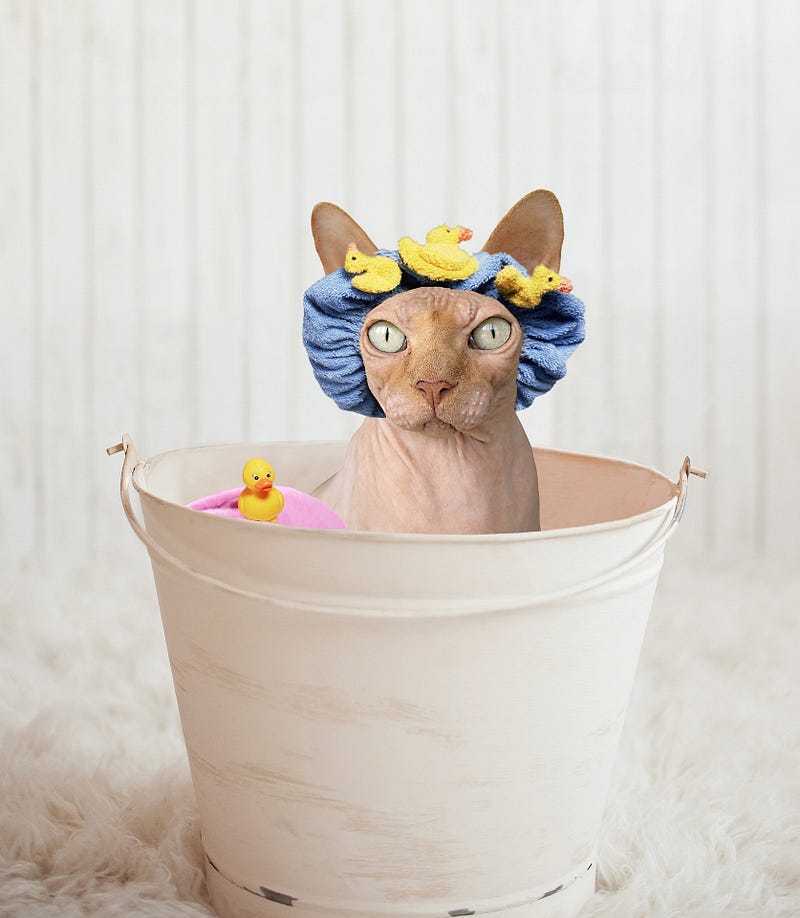
They say that no cat is alike, and that is true. Every cat owner knows, or should I say cat’s-human because it is a fact that you don’t own your cat; your cat owns you.
However, what is the most exotic cat breed? What makes them unique? And what you can expect by owning one of them.
Here is the answer to some of those questions.
1. Bengal
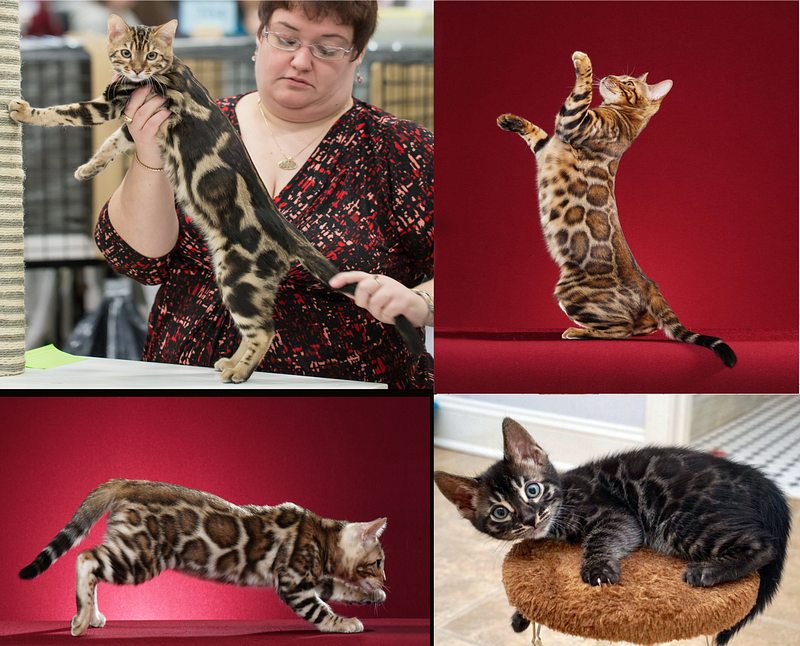
This hybrid cat breed is popular due to its patterns and personality. It has the same size as a large domestic house cat. They come from crossbreeding an Asian leopard cat with a domestic house cat such as an Abyssinian, Egyptian Mau, or American shorthair.
The International Cat Association (TICA) officially accepted the Bengal cat in 1984, gaining championship status in 1991.
Bengals have a wild appearance with their leopard cat look due to spots, rosettes, arrowhead markings, or marbling outlined in black, chocolate, or gray/silver on their bodies and green or gold eyes.
They are an energetic breed needing much exercise and play, so you should provide a climbing tree or playroom where they can jump or climb and many toys to engage with your cat. You can even train them to fetch and follow a laser dot.
There are restrictions on owning Bengals in the United States. In Connecticut, New York City, and Hawaii, Bengal cats are prohibited by law, and other states require special permits.
This exotic breed of cats loves water, so better be careful that your aquarium does not become their fishing pond.
2. Caracal
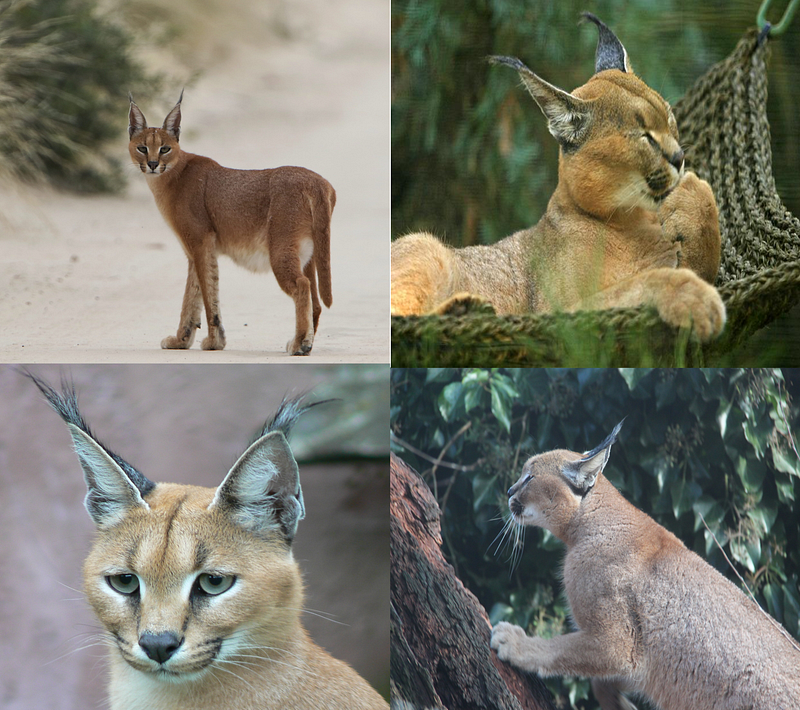
This exotic breed, also called the African lynx, is medium-sized, reaching between 16–20 in (40–50 cm) at the shoulder and weighs 18–42 lb (8–19 kg).
It has a robust build, long legs, a short face, long tufted ears, and long canine teeth. Its fur is reddish tan or sandy, with ventral parts lighter and small reddish markings.
Discovered in 1776 by German naturalist Johann Christian Daniel von Schreber, three subspecies are now recognized.
They are nocturnal and highly secretive, which makes them difficult to observe. Caracals are very territorial, living alone or in pairs. It is a carnivore hunter with excellent eyesight and hearing who loves to prey on birds and small mammals. They can jump over 10 ft (3 mt) and catch birds in midair.
Although there are people who have it as a domestic cat, it must be said Caracals do not make good pets and are better off living in their natural habitat where they can roam, run, jump, and hunt.
3. Egyptian Mau
Ancient Egyptians revered cats as gods (many cats now still do) and believed they were magical creatures, carrying good luck to those who housed them. Wealthy families used to dress them with jewels and fed them royalty food.
They called them “miu or “miut (meaning he or she who mews) and worshiped Bastet, goddess of cats, or Protector of lower Egypt, patron goddess of cats and firefighters, goddess of the sun, war, fertility, music, and celebration.
This exotic cat breed is the fastest domestic cat, with speeds up to 30 mph (48.28 kilometers per hour).
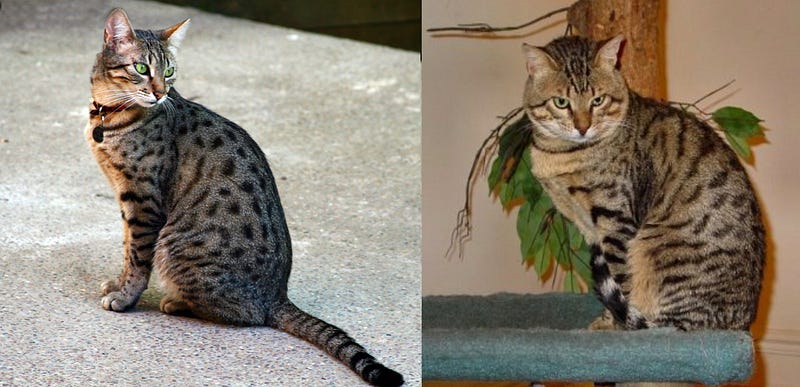
They can be silver, bronze, smoke, black, caramel, and blue/pewter, with green eyes, sometimes amber in kittens up to eighteen months old. Part of their characteristics is that they are mottled with uniform spots and dark-colored stripes running from their head to their tail along their spine.
It is a medium-sized cat 7–11 inches (18–30 cm), weighing about 6–15 pounds (2.7–6.8 kg), stylized and athletic, with hind legs somewhat longer than the front ones.
Although they are generally loving and affectionate cats, like any breed, they can become aggressive sporadically.
4. Maine Coon
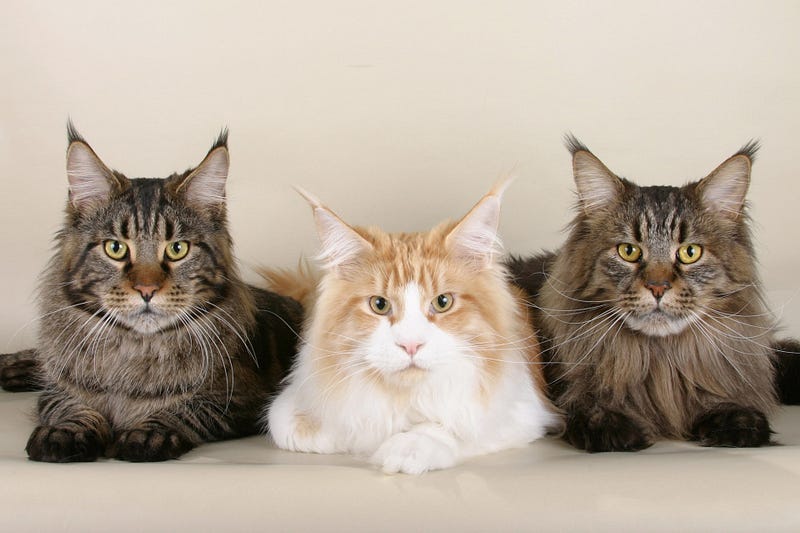
This cute and beautiful cat breed is one of North America’s distinctive breeds.
It is a large breed of cats, with some weighing between 10 and 25 pounds (4 kg to 11 kg) and measuring from 10 to 40 inches (.30 m to 1.02 m) depending on whether it is female or male.
The biggest Maine Coon cat Guinness record of all time belongs to Mymains Stewart Gilligan or Stewie, as they called him, with a verified measure of 48.5 inches (1.23 m) long in 2010. Sadly, he died in 2013.
They have long and pointed ears, as well as their tails, and have a peaceful character. Some people call them gentle giant cats, who are very loyal to the family and wary of strangers.
Due to their personality, they can live with other animals such as dogs and also with children.
This breed is perfect for those who can't decide between having a medium dog or a big cat.
5. Munchkins
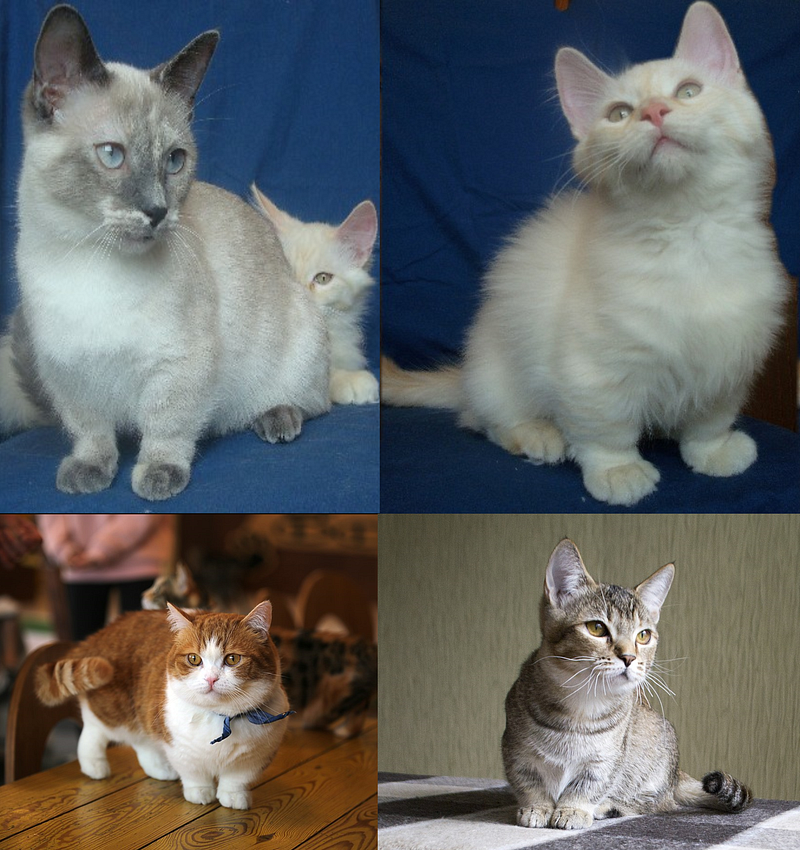
The name Munchkin comes from L. Frank Baum’s diminutive inhabitants in The Wonderful Wizard of Oz novel. This relatively new exotic breed of cats has very short legs caused by a genetic mutation, which makes them an original breed of dwarf cats.
Many cat associations refuse to recognize this breed, arguing they represent a high risk of issues that compromises overall health, such as genetic diseases and achondroplasia. The Governing Council of the Cat Fancy in the UK considers this breed unacceptable since they are based on an abnormal structure or development. The only registries that recognize Munchkins as a breed are The International Cat Association in the US and the Southern Africa Cat Council.
There are several records of short-legged cats worldwide. The first was in 1944 when a British veterinarian reported four generations, but this line disappeared during the Second World War. The second time was in Russia in 1956 and later in the United States in the 1970s
Sandra Hochenedel, a music teacher in Louisiana, found two pregnant cats and kept one, naming her Blackberry. Some of her kittens were short-legged, and she gave one to Kay LaFrance, who named the kitten Toulouse. Now, most of the Munchkin cats descend from Blackberry and Toulouse.
They have different colors, with similar characteristics to other domestic cats, due to their use as outcrosses. It is a small to medium-size cat, weighing between 6 and 9 lb (2.7 and 4.1 kg) and 5–7 in (12-15 cm) tall, with a life span of 12–15 years.
Munchkins are well adapted to living in houses or apartments, where they are very curious and playful, friendly and silent.
This breed of exotic cat is like having a Dachshund or a Corgy.
6. Savannah
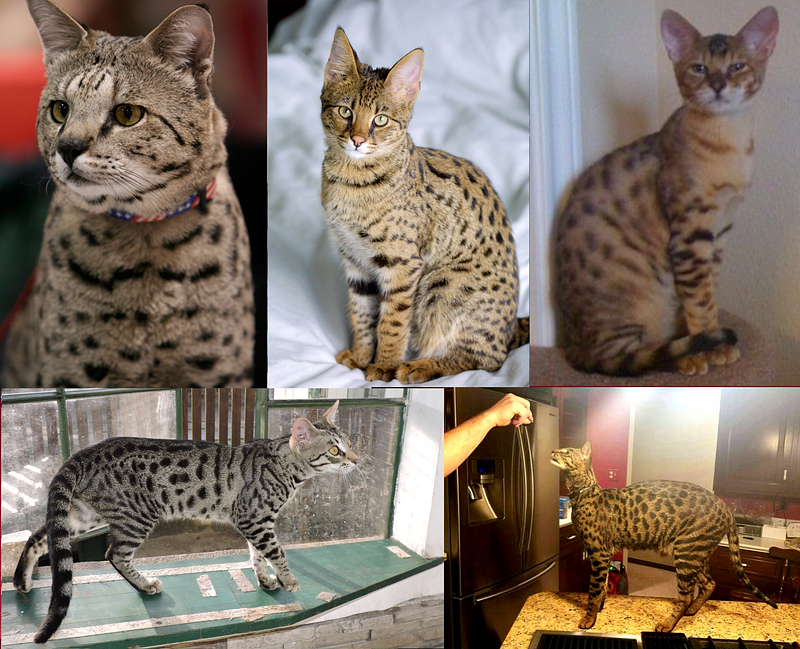
This is the largest domestic cat. It is a cross between a domestic cat and a Serval wild African cat. They became popular in the late 1990s, and The International Cat Association (TICA) accepted them as a new registered breed in May 2012.
On April 7, 1986, crossbreeding a male Serval with a Siamese domestic cat produced the first of its kind, and they called her (you guessed) “Savannah.” In 1996, Patrick Kelley presented the breed to the TICA board, and they accepted for registration the Savannah breed.
Savannah cats may have different colors and patterns; however, only spotted patterns with certain color combinations meet the TICA’s breed standards.
There are several grades of Savannah cats generations from F1 to F6, first to six generation crossbreed. The lower the number, the closer the cross between a Serval and a domestic cat.
They have tall and slim bodies, making them look larger than they are. Savannah cats can weigh from 17–50 lb (8 to 23 kg), 12–22 in (30–55 cm) tall, and live from 12–20 years.
Savannah cats are easy to care for, brush them weekly, and trim their nails as often as needed. They tend to be excellent companions, sociable with other pets, intelligent, and love to greet their owners with head bumps.
Like dogs, they love to interact and follow you around, trying to be part of your activities, but only when they seek affection will they climb by your side looking for a warm lap, not before.
Because of their height and agility, be prepared to find them on top of your bookcase or refrigerator, and your back patio fence will be no challenge if they want to jump over it.
Like Serval and Caracal, Savannah cats are illegal in some parts of the United States, and you have to be willing to spend a lot of time training them. Also a couple of thousand dollars getting one since F1s can cost up to 15,000 dollars.
7. Scottish Fold
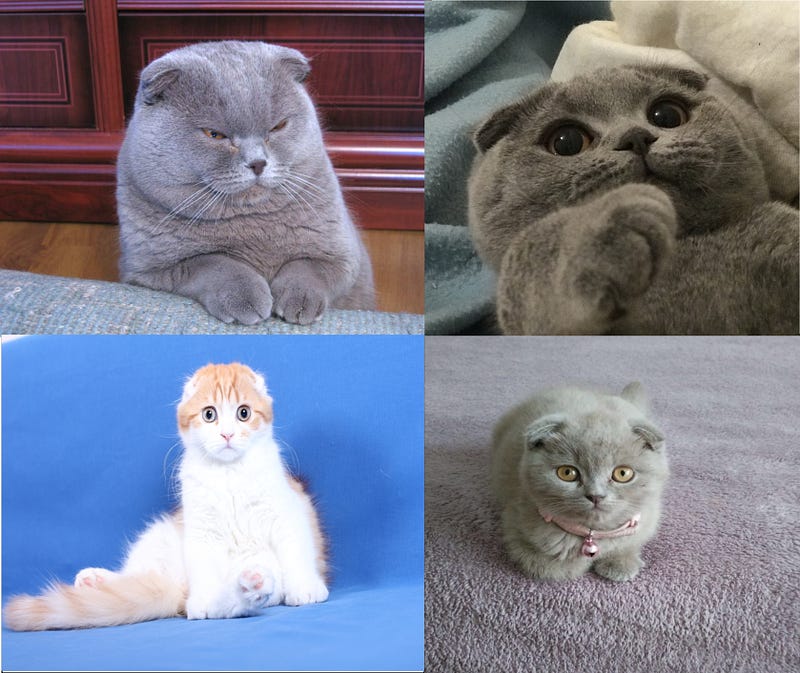
You already guessed from its name that this breed is originally from Scotland in the United Kingdom. Specifically, at a farm near Coupar Angus in Perthshire, where a white barn cat named Susie appeared. Its ears had an unusual fold in their middle, resembling an owl.
Some of her kittens had the same distinctive folded ears, and a neighbor farmer named William Ross bought one and registered the breed in 1966. Ross started to breed them together with geneticist Pat Turner and found that some kittens had folded ears and others didn’t, concluding that the ear mutation is due to a simple dominant gene.
All Scottish Fold cats share a common ancestry with Susie. Many of them have a crippling deformity of the limbs and tail making them prone to genetic difficulties and ear problems such as infection, mites, and deafness.
They are loving companions, making Folds highly sought by pet lovers, but their scarcity makes them cost considerably more than other breeds. Nevertheless, they are popular among celebrities, like Taylor Swift, who has three.
Some folks confuse these cats with some Asian breeds, but they are sweet, trusting, and adaptable companions, although they occasionally have arthritis. This is the reason some veterinaries advise people not to buy them.
Males typically weigh 8.8–13.2 lb (4–6 kg), and females 6–9 lb (2.7–4 kg) with a rounded body, head, and face, large round eyes with a short nose which gives them a sweet and sad-looking expression. The head is domed, and the neck very short.
But don’t let this loving ball of fur trick you. Occasionally, they can be a little moody and do a tantrum, especially when they don’t get what they want.
8. Serval
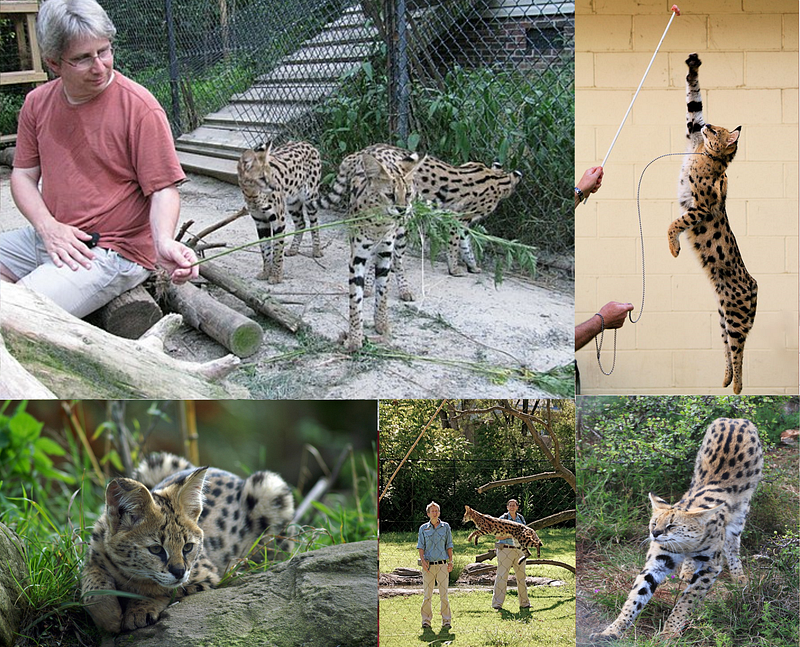
This exotic breed is a slender, medium-sized cat, standing 21–24 in (54 to 62 cm) at the shoulder or 26–39 in (67–100 cm) head to tail. Weighting 18–40 lb (8 to 18 kg), with a small head, large ears, spotted and striped coat, long legs, and black-tipped tail.
They have the longest legs of any cat relative to their body, with golden-yellow to buff marked with black spots and stripes. Servals also have a whitish chin, spots, and streaks on the cheeks and the forehead. Their eyes can be brown or green, with three to four black stripes running from the back of the head onto the shoulders and then breaking into rows of spots.
As the Caracal cats, they don’t make good pets, though there are people who have them at home. They are better off in the wild, living in their natural habitat, where they can roam, run, jump, and hunt.
Many people declawed them to prevent human injuries, but this practice might result in infections and make them vulnerable to other animals. The most common veterinary emergency is by swallowing foreign objects.
Serval cats are illegal in most United States, but check whether you need a license or special permit to own one, depending on the state you live in.
9. Sphynx
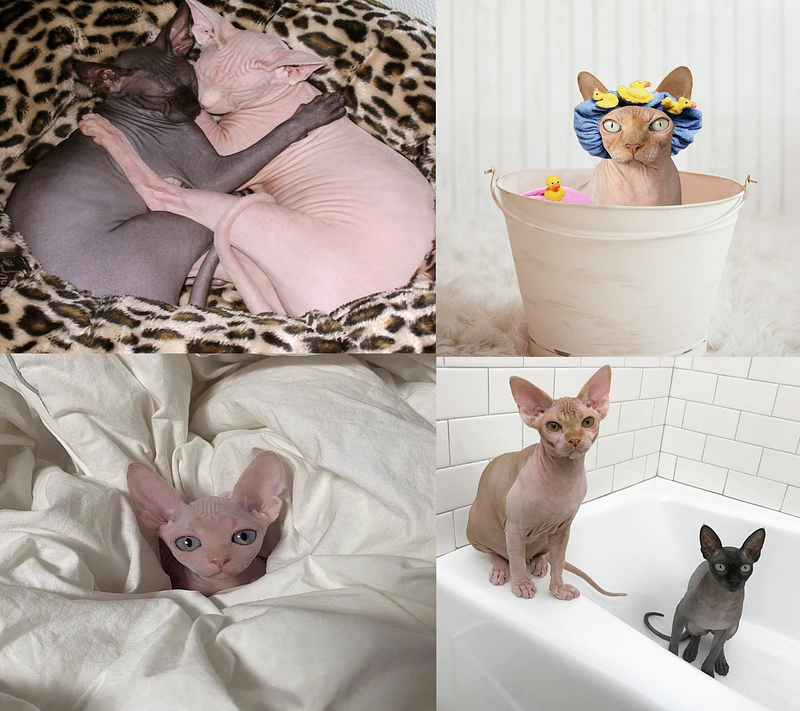
Contrary to what people think, these hairless cars don’t come from Egypt, but from Canada, specifically in Ontario, where because of a genetic mutation, in 1966, among a litter of domestic shorthair cats, a hairless kitten was born, that is why they are also known as Canadian Hairless Cats.
Later in 1975, in Minessota, someone found two more kittens and three more in Toronto in 1978. Now, most modern Sphynx descend from these cats.
Though the most characteristic feature is the lack of a fur coat, Sphynx cats might have some peach-like fur either on the paws or all over their body, with large eyes, a triangular head, and weighing from 7.0 lb 15 lb (3.5 to 7 kg). Contrary to other breeds, these cats show their muscular structure, looking athletic, long, and elegant.
But don't let their hairless skin fool you. This exotic cat breed is unsuitable for all allergic owners, especially those sensitive to cat saliva or dander.
Another characteristic is their wedge-shaped head with large eyes and ears, making them appear like mysterious and devious characters. Instead, they are very peaceful and like to lie in their beds for hours, looking to stay warm.
They are a very athletic breed and love to run, but they are indoor cats because of their hairless body, which might develop rashes, fungal infections, and sunburn. They require a warm home with a cat gymnasium or somewhere to climb.
If you are a “Dragon Ball Z Super” fan, you’ll recognize the character of “Bills,” inspired by the anime’s creator, Akira Toriyama’s Sphynx cat.
10. Sokoke
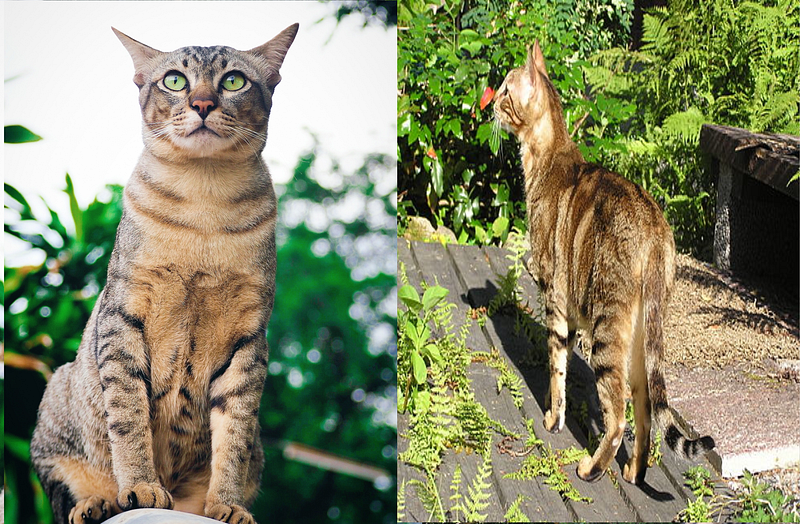
First found in the Arabuko-Sokoke forest by Jeni Slater, who found a litter in her backyard. They seemed bold, domestic, and used to human interaction.
This breed of exotic cats is said to be one of the rarest. There are a few registered with the Governing Council of the Cat Fancy in the UK, Canada, and the United States.
Sokokes are long with slender legs, long tails, defined cheekbones, large pointy ears, and large, almond-shaped greenish eyes. They are easy to care for. A cat brush will be the perfect tool for grooming and bonding.
They weigh 5–10 lb (3–5 kg), 7–8 in (17–20 cm) tall, and live from 12 to 20 years. They are great with mild manners and a sparky mood with young kids since they love attention and will be happy to play along.
If you live with babies, older children, or seniors, this breed might be too much to have at home.
Due to their origin, Sokokes love to hide and climb high places, where they will observe you from there. Moreover, they tend to tiptoe, especially when they are excited.
Take Away
If you are a cat lover, these breeds of exotic cats will be perfect for you. But be prepared to spend more money adopting and taking care of them.
Many have special diets (raw meat and chicken for Servals, Caracals, and Savannah). Others you might say are high maintenance, with continuous visits to the vet, for checkups.
Before you decide to adopt one, check your local and state restrictions, permits, and special needs. Some of them require large spaces to run, climb, and hide.
Moreover, look for established breeders, cat associations, or with your vet to find a pure breed, or you will pay top dollar for a stray cat that might be too wild to have at home.
“I had been told that the training procedure with cats was difficult. It’s not. Mine had me trained in two days.”
— Bill Dana
© Copyright Jose Luis Ontanon, 2022


