
10 Life-Changing Lessons I Learned From Steven Pressfield
#1. There is an enemy.
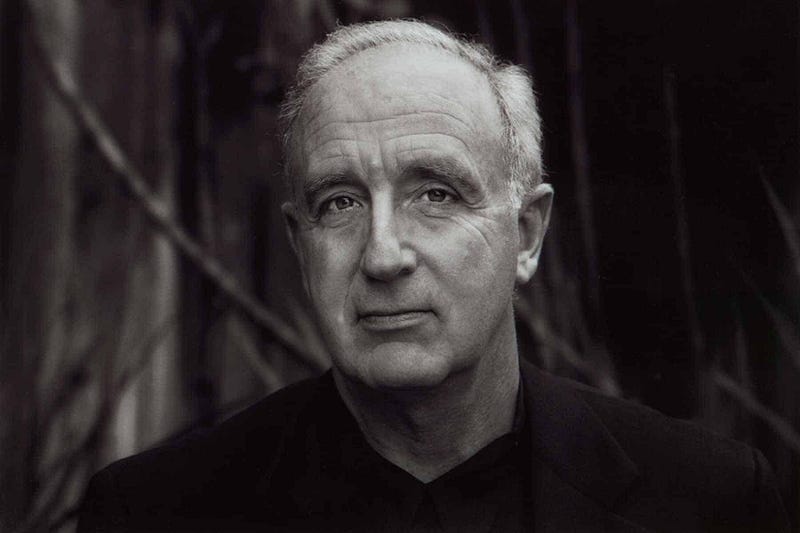
Steven Pressfield has made a professional life in five different writing arenas — advertising, screenwriting, fiction, narrative nonfiction, and self-help. He is the best-selling author of The Legend of Bagger Vance, Gates of Fire, The Afghan Campaign, and The Lion’s Gate, as well as the cult classics on creativity, The War of Art, Turning Pro, and Do the Work.
He is one of my heroes, and here are the ten lessons I’ve learned from him.
#1. There is an enemy
It’s inside each of us. It’s inside you, too. And it wants to kill you.
This enemy is called ‘Resistance,’ and Steven talks about it in his short and inspiring book on creativity, War of Art (and in all his other books on creativity).
Resistance cannot be seen, touched, heard, or smelled. But it can be felt. We experience it as an energy field radiating from a work-in-potential. It’s a repelling force. It’s negative. Its aim is to shove us away, distract us, prevent us from doing our work.
It’s the force you’ve been experiencing each time you wanted to start a project, but procrastinated and failed. It’s the same force you’ve felt when you decided to get on a diet regimen, but got off track.
Resistance is real; it exists. It doesn’t want you to become successful. It’s the reason why so many talented people become drug addicts.
It’s fear. It’s fear that you’ll actually make it. But if you feel it, there is a good chance you might.
The key thing I learned from Steven is that we can use it Resistance as an internal compass.
“The rule of thumb,” writes Steven, “is the more important a call or action is to our soul’s evolution, the more Resistance we will feel toward pursuing it.”
#2. Do the work (and stay stupid)
The only way you battle the Resistance is through action.
Work is an antidote to Resistance. Work is what matters. Doing daily writing ritual matters. Rehearsing each day matters. Momentum is your best friend as a creative.
But you don’t want to get your rational thought in front of the work. You don’t want it to stop you.
Steven has a short book with a simple title: Do The Work, in which he writes:
Ignorance and arrogance are the artist and entrepreneur’s indispensable allies. She must be clueless enough to have no idea how difficult her enterprise is going to be — and cocky enough to believe she can pull it off anyway.
How do we achieve this state of mind? By staying stupid. By not allowing ourselves to think (or, overthink).
Steven reminds us, “In writing, ‘action’ means putting words on paper. ‘Reflection’ means evaluating what we have on paper. NEVER act and reflect at the same time.”
Kevin Kelly gave similar advice to writers: separate editing and writing. You have two modes: writing (in a flow state) and editing (when you cut stuff out). You switch between the modes, but you never do them at the same time.
#3. Pursue your real career — not a ‘shadow’ one
In Turning Pro, Steven writes:
Sometimes, when we’re terrified of embracing our true calling, we’ll pursue a shadow calling instead. That shadow career is a metaphor for our real career. Its shape is similar, its contours feel tantalizingly the same. But a shadow career entails no real risk. If we fail at it, the consequences are meaningless to us.
Are you pursuing a ‘shadow career’?
A ‘shadow career’ is studying literature instead of writing it. It’s helping someone else achieve their dreams instead of achieving your own. It’s getting a Ph.D. in ‘business studies’ instead of going out there and building your own venture.
“In my experience, when we project quality or virtue onto another human being, we ourselves almost always already possess that quality, but we’re afraid to embrace (and to liv) that truth,” writes Steven about not giving away your creative power to others.
It’s fear of failure (Resistance) that makes us take the second chair instead of being in charge (and taking the risk involved, too).
In my life, I found that a metaphor for my true calling is blogging. ‘Blogger’ is a metaphor for ‘writer.’ Whenever I get too absorbed in writing a blog, I know that I’ve been put off track by Resistance.
If you’re dissatisfied with your current life, ask yourself what your current life is a metaphor for. That metaphor will point you toward your true calling.
#4. Difference between an amateur and a professional is in their habits
We are all creatures of habit. Everything we do is a habit. Even our thoughts are habits.
An amateur has amateur habits, and a professional has habits of a pro. A professional does the work; an amateur finds excuses. A professional does not allow the Resistance to consume her.
Even though we can’t get rid of our habits, we can replace them with others.
The key to becoming a professional (turning pro) is to replace amateur habits with habits of a pro. Read Steven’s books to know what those are.
As Steven Pressfield writes, “The amateur tweets, the pro works.”
#5. Never train your animal to exhaustion
I used to think that running horses are trained like Navy Seals — with brutal force.
In Turning Pro, Steven tells the story of a friend who trains horses. The friend explained that “a horse is a naked nervous system…picture the most sensitive person you’ve ever known; a horse is ten times more sensitive.”
The training looks more like play, because “a horse that loves to run will beat a horse that’s compelled, every day of the week.” A good trainer will want their horses to love the track, not to hate it.
There’s a lesson here, for us, humans — especially for Type-A overachievers. Never train your animal to exhaustion. Leave yourself wanting for more tomorrow.
#6. Finishing is a habit
I used to come up with ideas and abandon them. Start writing books and not finish them. Outline my business ideas and forget about them.
I’ve read more than 100 books on creativity in my life. Any creative person I’ve read had this one rule: ship.
Professionals ship. They deliver. They make it a rule. Whatever happens — once the deadline comes, they ship their work.
Hitting ‘Publish’ is scary. I know. I trained myself not to hit ‘submit’ unless I feel scared, vulnerable, exposed.
Steven says, “finishing is a critical part of any project. If we can’t finish, all our work is for nothing.”
“The great news is, once you finish once, you won’t have trouble finishing ever again. It will become a habit.”
But once I made myself finish my first book, I felt different. I felt an inner sense of satisfaction that I’ve (probably) never felt in my creative life. Since that moment, I make it a point to ship — no matter what.
Once the deadline comes, shit has to be shipped.
#7. Resistance has two questions for us
Question #1: “How bad do you want it?” You’ve got to want it bad. You need to be totally committed.
I found out that Resistance usually hits harder to the end. It’s hard to finish because finishing means you might achieve success.
Question #2 (more important, in my opinion): “Why do you want it?” You’ve to want it for the right reasons.
Steven Pressfield reminds us that the only two reasons why we should want it are:
- For fun and beauty of art.
- Because you have no choice.
That’s it. Not because you want the money. Not for fame. Not to prove anything to anyone. Until you’ve got the right attitude, you’re vulnerable to Resistance’s forces.
#8. Nobody wants to read your shit
My mother read my first ten blog posts on Medium. Once I started posting every single day, she stopped reading them.
“There are too many of them, dear,” she said. I learned my lesson.
Steven’s first job was in advertising. And the first lesson you learn in advertising is that nobody wants to read your shit. Ads. People hate them. Nobody wants to read them.
You’re essentially interrupting people from their leisure time because you want something (to sell, to tell, to make them click, etc.)
“Nobody — not even your dog or your mother — has the slightest interest in your commercial for Rice Krispies or Delco batteries…it isn’t that people are mean or cruel, they’re just busy,” talks Steven about his first lessons as a creative.
Just like advertising, in writing, no one is waiting to read what you’ve written.
Once you start with the mindset that nobody wants to read your shit, you have more chances of writing something that people actually will.
#9. Addiction and art are the same things
An artist has a hole deep inside of her that needs to be filled. It can be either through art or it can be through addiction. I learned from Steven that both of them are different sides of the same coin.
There are many things you can become addicted to. They don’t have to be serious, life-threatening addictions.
You can be addicted to money, fame, gambling, distraction, yourself, failure, success, texting, sexting, web-surfing, Instagram scrolling, etc.
I’ve learned that if you stop creating — Resistance will still take over you, in the form of addiction. In order to lead a full life, we’ve got to make it a point to work.
After learning this lesson (and realizing that my self-destructive behavior is nothing but Resistance trying to get to me), I started to write every single day.
“Both addicts and artists are dealing with the same material, which is the pain of being human and the struggle against self-sabotage,” says Steven, “The addict is the amateur; the artist is the professional.”
#10. Start at the end
Whatever you’re writing — whether it’s a fiction children’s book, historical non-fiction, or inspirational self-help, you’re telling a story. Any story, as I learned from Steven, can be broken into three acts:
- Act one — Setup
- Act two — Conflict
- Act three — Resolution
There’s a hero’s journey in everything. That’s the way our minds work. That’s the way we (consciously or not) tell stories and gossip to each other.
The key to writing a good story is to start at the end by asking a question, “What is this really about?” and then working backward.
That’s how Hollywood movies are made. That’s how fiction is written. That’s how theatre plays work. That’s how self-help is written — even porn.
Steven Pressfield is an amazing human being because he has done all of it. There is so much to learn from him.
Thank you for reading! Join my email newsletter to stay in touch, and I’ll send you meaningful books to read each week!


