
10 Lessons From 800 Days Of Meditation
I’ve been trying to meditate ever since I first learned what it was. Meditation seemed too good to be true — like a magical cure-all for everything.
By allegedly sitting down and doing nothing, one could achieve better clarity, creativity, productivity, focus, sleep, and peak performance. Celebrities, CEOs, and athletes like Oprah, Bill Gates, and Kobe Bryant all jumped on the meditation bandwagon. Tim Ferriss even touted it as a “‘meta-skill’ that improves everything else.”
The hype was real, and I was utterly convinced that I should join in.
So, I tried. But — for the greater part of a decade — I failed.
Over time, my inability to meditate became a source of anxiety and insecurity rather than peace of mind. “Meditate more” became something I added to my list of New Year’s resolutions and goals — it was not something I actually did. No matter how much I read about the benefits of meditation, the Resistance always won.
I’m too busy; I’m too tired; I don’t have time; it’s too late.
I’ll do it tomorrow…
If you can relate, keep reading. I’ll share how I started, what I’ve learned, and link to a few resources that may help you, too.
How I Finally Started Meditating
At this point, you’re probably wondering how the hell I went from hot mess to experienced meditator. After all, this article is about what I learned from 800 days of meditating, not zero. Well, I’ll tell you. And — clearly — if I could do it, you can too.
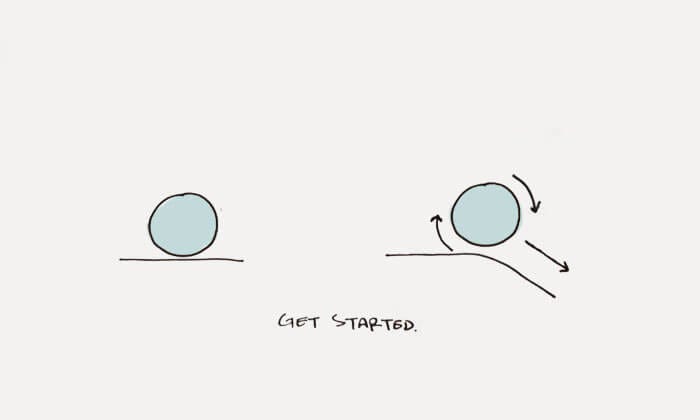
One small change made the difference: Instead of holding out for all the *amazing* benefits of meditation, I lowered my standards.
I downloaded an app called Insight Timer to track my progress and chose a new strategy — meditating for one minute at a time.
That’s it — one minute.
What I found was that it wasn’t the one minute of meditating that was hard — it was sitting down to meditate. Once I did that, it got easier.
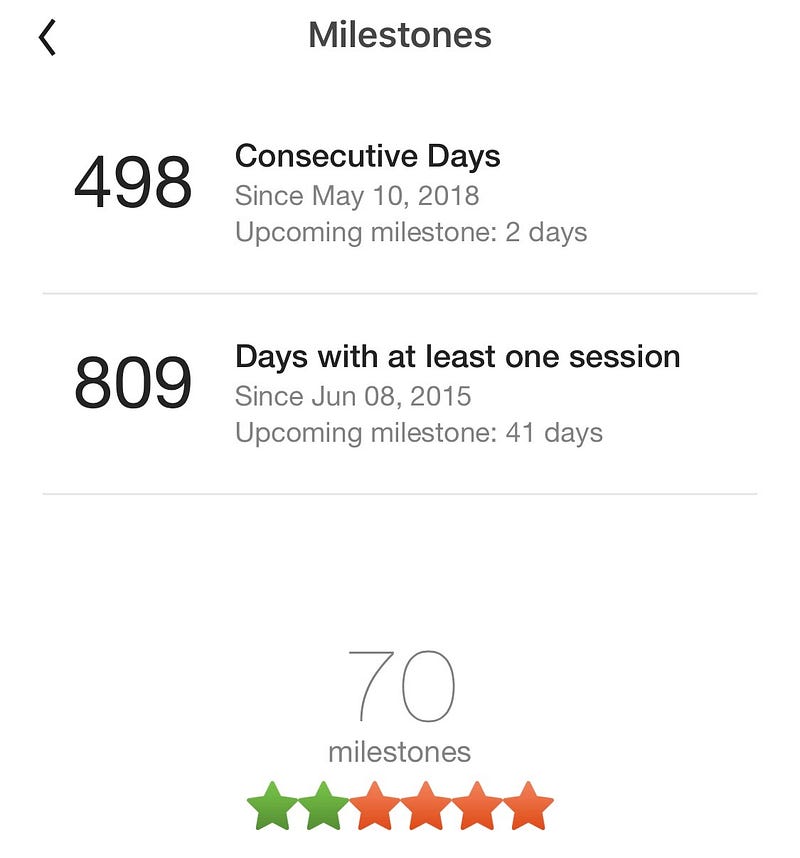
Eventually, one minute turned into twenty or thirty — sometimes an hour or more. Once I surpassed a certain milestone, I knew I would never “break the chain” again, as Jerry Seinfeld puts it.
For the first few years, I was still admittedly inconsistent with my practice. But in May of 2018, I committed 100%.
Whoever said that 100% is easier than 90% is right, because this week will mark 500 consecutive days of meditation, with more than 800 logged to-date.
At this point, meditating every day is like brushing my teeth — I probably hated it when I was a toddler, I like it now, I never consider skipping it, and I can’t imagine my life without it.
So, without further ado, let’s get to the lessons, shall we?
Lessons From Meditating for 800+ Days

1. You have time to meditate.
The only thing that helped me start meditating was making it so easy that it was embarrassing.
Can I meditate for one minute?
What if I sit and close my eyes for one second? Does that count?
Meditating is about embracing the present moment — a moment that is continually passing us by.
To find time to meditate, focus on a single moment.
When you decide to meditate for one second instead of unlocking your phone, you’ve won.
2. You can meditate anywhere.
I first learned to meditate through a friend who held a free workshop in the middle of downtown San Jose, Costa Rica. This seemed like a horrible idea at the time, but she later revealed that the location was intentional. She wanted to prove that you can meditate anywhere — even amidst honking horns and blaring reggaeton.
I’ve since meditated in buses, planes, metros, and airport terminals. On cruise ships, park benches, and high-speed trains. I’ve meditated while waiting in lines and waiting for my Uber.
When you commit to meditating every day, you’ll realize that you, too, can meditate anywhere. Just tune in.
3. You’ll start to look forward to it.
Like any habit, there are stages of adoption. A new habit feels foreign and awkward at first, but it eventually becomes a part of who you are rather than what you do. At first, I had to set meditation reminders on my phone, but these days, it’s part of my routine.
Once you start meditating, your subconscious will raise red flags if you miss a session. You know, in a did-I-leave-the-garage-open? kind of way.
Meditation will become a soothing, grounding part of your day and your identity. Without it, you’ll feel like something is missing.
What you repeatedly do (i.e. what you spend time thinking about and doing each day) ultimately forms the person you are, the things you believe, and the personality that you portray.— James Clear
4. You don’t have to be sitting down to meditate.

Meditation is a practical tool to use in your daily life. That means you don’t have to be sitting cross-legged in the privacy of your bedroom, chanting Om while incense wafts around your head.
You can meditate while walking, standing in line in the grocery store, or gazing through a window.
Meditation is about being present in the moment. It doesn’t involve any kind of preparation, space, silence, money, or music. You just do it.
5. The peace comes.
Eventually. Over time, you’ll realize it was always there, underneath the bullshit and busyness of daily life.
Meditation is a tool to help you access the peacefulness and stillness that constantly surrounds you.
When you start meditating, you’ll realize that you don’t “gain” peace-of-mind. It’s always there if you let everything else fall away.
Fellow Medium writer, Niklas Göke, had this insight to share following his first week of meditating for an hour a day.
Meditation isn’t about spirituality or wisdom or finding some elusive nirvana state. It’s about making peace in the here and now. Not finding peace. Making.
He’s right. Whether you gain this insight within the first day, week, or year of meditation, it’s a universal truth that benefits us all.
6. You will change.
In a good way. When you meditate regularly, you become more of who you are. External events will have less of an impact on you.
For the first year or so that I tried meditating, I thought nothing was happening. It is only looking back now that I can see evidence of how I’ve changed, and how I’m more unapologetically myself. It feels good.
Through meditation, you get the opportunity to re-connect with your natural essence, soul, being, higher self, or whatever you want to call it. It’s a chance to get to know an inner awareness that is always there and will always be there.
7. You will be able to focus better and longer.
While I usually live and work alone, I’m currently staying at a co-working lodge in Norway. My new housemates have marveled at how long I can sit and concentrate for.
It’s true — deep work is easier lately. I can focus for hours at a time. My college self would be proud.
8. You will be less reactive.
Whether it’s disturbing news, some asshole on Twitter, or something that happened at work, the things that used to rile me up just don’t anymore.
When you meditate long-term, you’ll be able to see things more objectively and control your reaction, rather than letting it control you.
9. Ideas will pour through you.
Each time you meditate, you create space for thoughts to arise that have been floating (or fighting) their way to the surface for years or even decades.
As you process and release things that happened the same day or last week, less stuff will get buried. There will be more space for ideas to flow in, unencumbered.
Far from lacking inspiration, you may find yourself with more ideas than you can write down.
Through meditation, you’ll also be in a better position to evaluate your ideas and more apt to act on them without as much self-judgment holding you back.
10. Meditation doesn’t make you special or unique. (You already are).
This is a tough one to explain, but basically — meditation serves as a neutral backdrop to life. Everything in the universe is what it is. We are the observers who attribute meaning to things that cross into our awareness.
This morning, I meditated facing a fjord that has been there for 3 billion years. While I perceived it as a beautiful and majestic mountain, it’s technically a giant pile of rocks that exists whether I’m here to appreciate it or not.

The act of meditating doesn’t make you “better” than someone who doesn’t meditate. But, through meditation, you may realize that your existence means something.
You’re special because you exist. Everyone is.
You’re occupying an important space in the fabric of the universe, but ultimately, you choose what you do with it.
You have the power to act and attribute meaning to the world around you.
You can express yourself and your unique gifts, or blend in with the landscape. Whatever you decide is “okay.”
How to Meditate
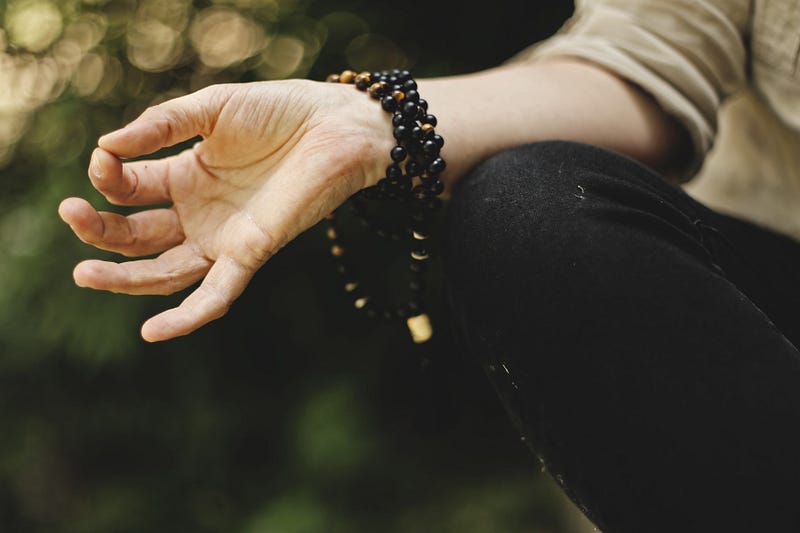
I hope you leave this article knowing that there’s no wrong way to meditate.
If you’ve always wanted to start a meditation practice but struggled to maintain it, start small. Ignore the hype.
Let go of the anxiety that you’re doing it “wrong.” Release the need to meditate perfectly, or even to know what you’re doing at all.
Forget about results. Don’t worry what Oprah is doing. Just sit.
As Naval Ravikant says, meditation is a chance to “sit in self-examination.” That’s it.
Meditation is also a human right. You don’t need to follow a guru to do it or shell out thousands of dollars for a certification course. It’s free, it’s accessible to everyone, and it’s worth making time for.
Think of it this way — if you have thirty minutes to spend on social media, you have at least one minute free to meditate. If a minute seems too long, start with closing your eyes for one second.
One day, you may be surprised to realize that you’ve meditated for the last 800 days. Or, for the rest of your life.

Bonus: Meditation Resources
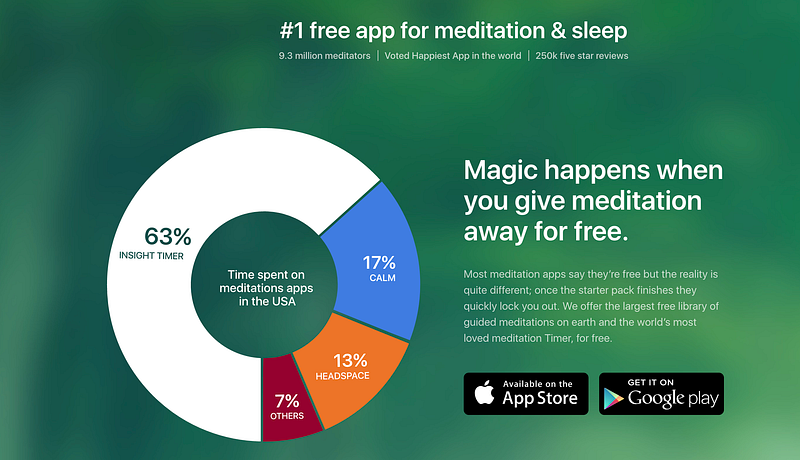
If you’d like some help or guidance meditating, I recommend starting with InsightTimer (I’m not affiliated in any way). With more than 9 million meditators, it’s the most popular app out there. You can explore their meditation library, or use the timer and sit in stillness.
People spend more time on InsightTimer than all the other meditation apps combined. If it helped someone like me start meditating, it could help you!
Finally, if meditation still seems intimidating, check out this TED Talk by some guy named Dandapani. It started auto-playing on my YouTube account one day, and I’m glad it did. He presents a simple, relatable explanation of how to focus your attention. There’s a reason it has nearly 3 million views.
Have you ever struggled to start a meditation practice? How did it go? Let me know in the comments.
If you have more questions about meditation, come hang out on my weekly live stream, every Sunday on YouTube.


