
10 Leadership Lessons We Can Learn from Steve Jobs
Innovation distinguishes between a leader and a follower —Steve Jobs
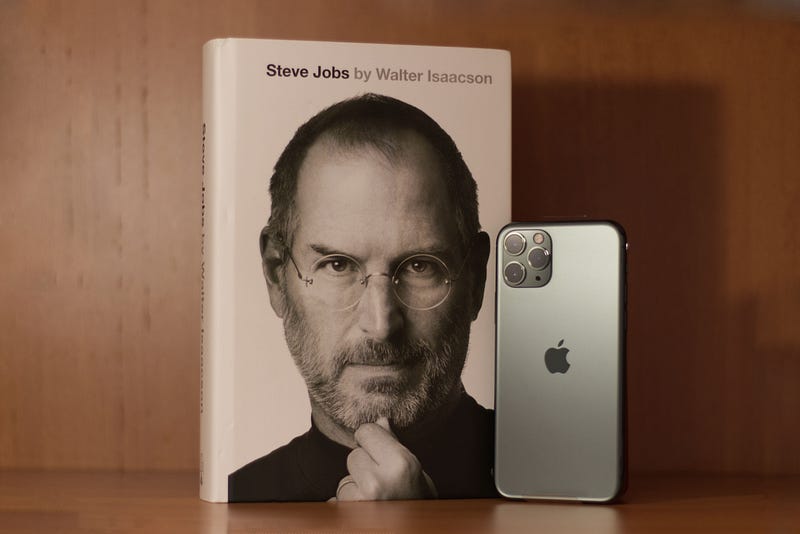
In 1985 Apple Inc. established itself in the desktop industry. It was all made possible by the two co-founders.
One engineering wizard Steve Wozniak, and another a college dropout with amazing skills and even better ideas, Steve Jobs.
In his career of over 3 decades, Jobs earned a position of a ‘Repo man’. One might doubt how a man with serious aggression problems and major temper issues turned out to be an amazing leader.
We all agree on his leadership abilities; the one who saved Apple Inc. from going Bankrupt just after he returned from his 11 years of exile.
For some he was an unconventional leader, to others he was just a high maintenance co-worker. But actually, he was an exceptional genius with vision and ability to articulate and show his vision to co-workers, investors, and the people.
These traits combined with his passion and perfectionism resulted in the creation of products that revolutionized not only Apple but multiple Industries all to gather and alter our lifestyle.
There are definitely a few things we can learn and use from his life and his work:
1. Focus — His work was his love. His company, his life.
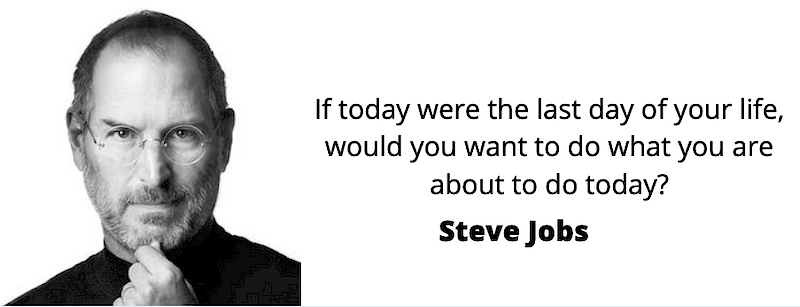
Steve Jobs one of the various famous quotes by Jobs was ‘The only way to do great work is to love what you do’, that’s what he did.
He loved his work and was crazy passionate about it. Leaving everything else, throughout his lifetime he focused on doing what he loved.
And the results, an array of world-changing revolutionary products that impacted our entire way of living.
Jobs’s focus on ‘Think different’ made him an exceptional visionary. Even when he was not with Apple Inc. for a decade, he never left his passion behind, Pixar and NeXT came to light.
2. Uncompromising- Do it my way or highway
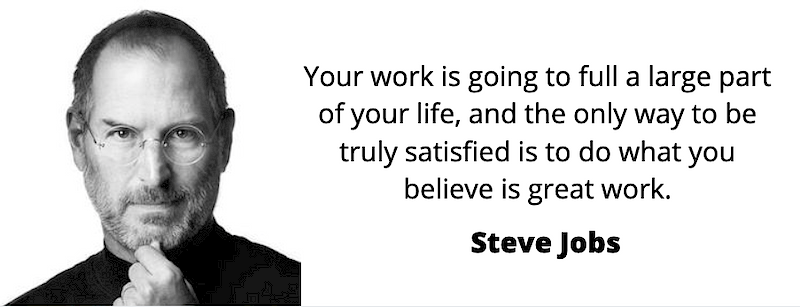
Jobs had serious issues with the board of Apple Inc by 1985 and was planning to overthrow the then CEO John Sculley but couldn’t, and instead, he was fired by the board.
After having created the very successful Macintosh line this decision of the board left him with no ‘executive power’.
It was obviously against his ‘control seeking’ way of getting things done. He once himself said that ‘Deciding what not to do is as important as deciding what to do’.
He did not want to just control stakes and be the chairman having no involvement in the creative process of the company, therefore backed out, sold his shares, and went out to start NeXT after a summer break.
For the next 11 years, he was away from Apple and leading NeXT and Pixar.
In the meantime, Apple lost its innovative edge and was almost bankrupt, but finally made one good decision and bought Job’s NeXT Computers and hired him again. This time he moved on to become the CEO of the company.
3. Inspiring in your own way — be a leader, not a manager
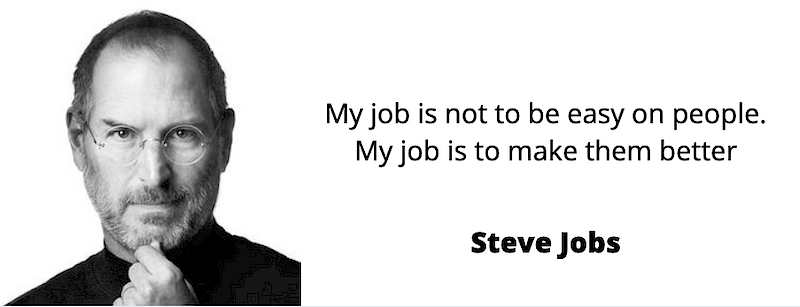
Steve Jobs knew very well the importance of brilliant people coming together in the process of creating revolutionary products. He once said “My job is not to be easy on people. My job is to take these great people we have and to push them and make them even better.” Contrary to what most management books say about being effective as a leader Steve was blunt and harsh in criticizing and that played a great role in getting out amazing results in the form of awesome gadgets.
4. Think from the user’s perspective, not maker’s Steve Jobs

Jobs believed that customers dream of a better, easier, and happier life, therefore, he worked to enrich lives with really amazing products that gave consumers what they truly wanted (even though they didn’t know they wanted it) rather than creating big bulky tech-savvy products that frightened the common people.
This way of thinking played a vital role in creating products that rule over the customer’s hearts. Sometimes Jobs critiqued himself in most absurd ways (like when he said ”people don’t know what they want until you show it to them”) because he knew that people’s imaginations are limited to what’s already present out there.
People can truly know what they want, only when they start thinking with a presumption that they can create whatever they imagine/envision.
If it was not for Steve’s imaginative and aesthetic talents the newer sleek designed gadgets and smartphones and the iPad could not have existed.
5. Focus on Vision, Not competitors — Can’t compete then change the game itself

One of the most shrewd acts one can remember Jobs by his tactic to handle competition, it is because of this vision that Apple was able to come up with new technologies no one was thinking about.
Apple iTunes came to existence because of this vision of Jobs.
Everyone was in a hurry to give better devices to listen to music, Apple went on a different track and gave people the simplest tool to manage their music and subsequently giving them easier and safer access to music of their choice.
Thus it saved the music industry at that time and proved that people would willingly pay for an easier, simpler, and safer alternative.
When many brands came into the PC business and tried to provide PCs rampantly filled with features at very low prices, Apple stood its core values of perfection in design and quality (Which represent Apple’s brand value, even today) then Apple changed its course of action and started making smartphones boosting another market for itself, and all under the leadership of Steve Jobs.
6. Taking end to end responsibility — Best ideas only work when you find the best ways to implement them:

Steve Jobs ‘Inventing is not important but inventing ways to make things better is important’. This was the description that Jobs went with when he launched iPods for music lovers around the world.
The circular trackpad and ability to make complex stuff like playlists on any computing device and then adding it to the iPod not only made the iPod better but easy to understand.
Jobs did it with all the products he brought to the market, every single time.
As per Steve’s Biographer, With the iPhone, Jobs wanted a robust look, not some delicate device and thus used the technological advancement by Corning, dubbed as ‘Gorilla Glass’, he ordered a major shipment of the Gorilla glass knowing exactly that they were nowhere near making the glass but just said to the CEO that he can do it if gets his mind around!
Surprisingly the shipment was completed in a matter of 6 months only for the iPhone and hence Jobs got his way again.
7. Presentation — People do judge a book by its cover

Jobs learned it from his early mentor Mike Markkula and was deeply influenced by this fact therefore he always craved to make sure that his stylish devices have beautiful and yet minimal, simple, and deeply adorable zen-like packaging.
Boxes for the iPhone and iPod were designed with the same desire of simplicity in the presentation.
Unpacking is the first moment of truth for the consumer when he gets to touch, what he has received and thus it is the starting point of the experience of the product for the consumer.
What influence someone feels while unpacking a product sets his expectations from the device.
To describe his obsession with packaging for his devices he said “Innovation distinguishes between a leader and a follower”, he took innovation to a whole new level when it mirrored the device as well as their packaging.
8. Importance of Family — There comes a time when your work makes you realize you had a family

Jobs revealed a lot about his personal life to his biographer and accepted that it was after resignation from Apple he realized what he has been doing wrong in his personal life.
He used that time trying to mend those mistakes.
The break from Apple gave him time to reflect upon himself.
After which he went on to accept his daughter with Chrisann Brennan, that happened because of his biological sister Mona Simpson who he found during the same time when in hope of having better family ties he started to search for his biological mother.
This sudden change in his attitude towards his family affected his work positively and he grew as a person and as a leader.
9. Simplification
The mantra of Success for Steve Jobs has always been — focus and simplicity but he believed that sometimes simple can be difficult than complex but simplicity always yields better results.
That’s what happened when Apple’s engineers were working on the iPod, Jobs was adamant that he wanted the design to be sleek with options to navigate and change tracks with volume options as well but normal Walkman design or keypad didn’t ever do anything like that.
The engineers faced his wrath, finally, the born leader of Apple Inc. introduced to the world, this beautiful small pocket device with a circular trackpad instead of the keypad and the iPod beat all expectations.
All its features from the capacity to design to functionality were simple, minimal, and AMAZING.
10. Management — One can’t be taught how to manage, it comes to you with time.
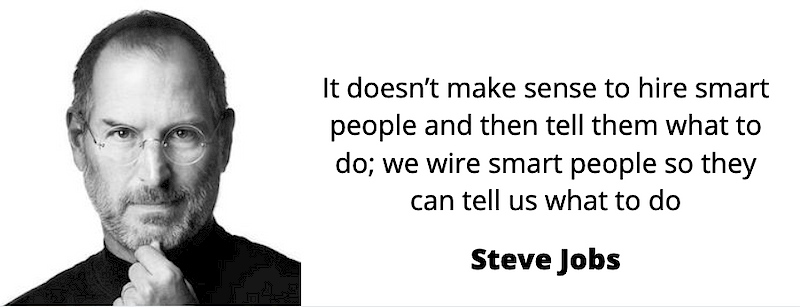
Jobs was not a management scholar but he had certain beliefs.
He knew exactly how to have an environment where excellence is achieved.
Not settling for anything but only the best in even the smallest of details were the most important instruction to the people who worked around him and his job was to make sure everything is just perfect and nothing less.
He never had these ideas in mind but he learned them with time experience over his long career when he was constantly trying to teach himself.
His push for perfection is a way he adopted while handling the company to get people to give their best efforts toward creating perfect results.
It was the case with the iPhone when he called up his team and told them that he was really proud of what they had done in 9 months but didn’t like the design.
So they need to work day and night to re-do the whole thing until it’s perfect.
Want to keep updated when new stories appear? Join my reader’s list. :)


