
10 Large Language Models Projects To Build Your Portfolio
Build end-to-end applications and showcase your skills with large language models (LLMs)
In the dynamic landscape of today’s technology, large language models (LLMs) have emerged as transformative tools, capable of understanding and generating human-like text.
Harnessing their power can open up a realm of possibilities for building innovative applications that not only demonstrate your expertise but also leave a lasting impact.
In this article, we present an enticing array of 10 project ideas centered around LLMs, each designed to help you construct end-to-end applications and curate a captivating portfolio. From content generation that sparks creativity to healthcare solutions that promote well-being, and from language translation with cultural sensitivity to tackling social issues, we explore diverse avenues that let your skills shine.
Whether you’re an aspiring developer looking to bolster your portfolio or a seasoned enthusiast seeking to broaden your horizons, this article is your gateway to exploring the remarkable world of LLM-driven projects. Let’s embark on this journey of innovation, learning, and showcasing the potential of large language models.
Table of Contents:
1. Content Generation
1.1. Academic Motivation Letter Generation
2. Language Translation and Localization
1.2. Cultural Context Integration
3. Entertainment and Gaming
1.3. Character Creation
4. Healthcare and Well-being
1.4. Medical Bot
5. Social Good
1.5. Access to Information
2.5. Fake News Detection
6. Productivity and Utility
1.6. Topic Clustering of Social Media Posts and Podcast Episodes
2.6. Podcast Summarizer
3.6. Question answering over documents
4.6. YouTube Questions and answering
1. Content Generation
Large Language Models (LLMs) have gained significant recognition for their remarkable generative capabilities, enabling them to produce diverse and contextually relevant text. In the following section, we’ll delve into project ideas that leverage these capabilities for distinct use cases.
1.1. Academic Motivation Letter Generation
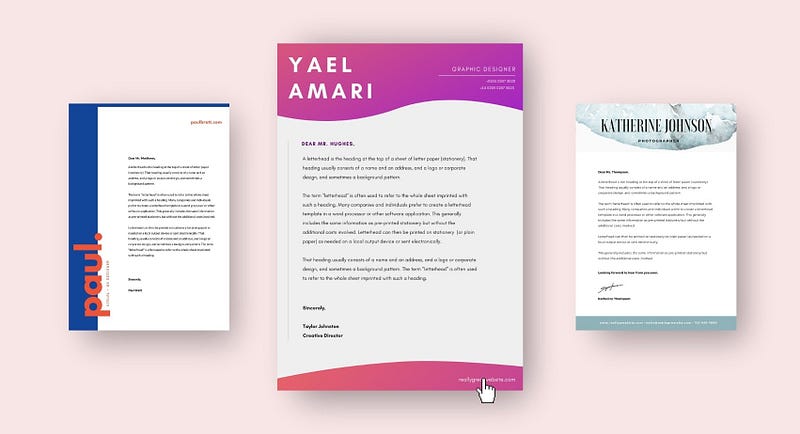
The main and the most used feature of LLMs’ is their ability to generate coherent bodies of text. Although there are a lot of discussions in the media and in the research communities about its usage, this technology is already being widely adapted in copywriting or programming to increase productivity.
When you are applying to an educational program whether it's a bachelor's, master's, or even doctoral degree one of the main requirements is to write a motivational letter. Although you can build this project by only engineering the prompt and filling in the relevant information about the role or using ChatGPT for it, this is a great small project to practice prompt engineering and using prompt templates.
Project Guide:
- Model Selection: Choose a suitable pre-trained LLM-based model, like GPT-3 or similar, with capabilities for text generation and summarization.
- Develop User Interface: Design a user-friendly web or desktop interface for easy content input and summarization output.
- Prompt Design: Ultize the prompt to generate content for an academic motivational letter
Technology Stack:
- LLM-based Model: Select a powerful language model such as GPT-3.
- Backend: Python or Node.js for handling API requests and responses.
- Frontend: Create a responsive UI using HTML, CSS, and JavaScript.
2. Language Translation and Localization
1.2. Cultural Context Integration
Language translation often goes beyond mere word-for-word conversion; it involves understanding cultural nuances, idiomatic expressions, and context to provide accurate and culturally sensitive translations. This project aims to enhance traditional language translation systems by incorporating cultural context understanding into the translation process. The goal is to create translations that not only convey the literal meaning but also capture the intended cultural implications and nuances of the original text.
Project Guide:
- Research and Understanding:
- Gain insights into various cultures, idiomatic expressions, and cultural nuances that affect language usage and interpretation.
- Understand the challenges of translating idiomatic expressions and cultural-specific terms.
2. Data Collection and Analysis:
- Collect bilingual datasets that include both literal and culturally nuanced translations.
- Analyze the data to identify recurring idiomatic expressions and cultural context cues.
3. Model Selection:
- Choose a suitable machine translation model as the base, such as a neural machine translation model.
- Explore pre-trained language models that have demonstrated proficiency in understanding context and generating culturally sensitive content.
4. Cultural Context Annotation:
- Develop a system for annotating cultural context cues and idiomatic expressions in the training data.
- Annotate instances where a literal translation might not capture the cultural meaning accurately.
5. Model Training and Fine-Tuning:
- Train the selected model using the annotated dataset.
- Fine-tune the model to account for cultural variations and idiomatic expressions.
6. Evaluation Metrics:
- Define evaluation metrics that consider both the accuracy of translations and the preservation of cultural context.
- Develop a test dataset containing texts with varying degrees of cultural subtleties.
7. Testing and Iteration:
- Test the model’s translations against the evaluation metrics and the test dataset.
- Iterate on the model architecture and fine-tuning process to improve translation quality.
8. Integration and Deployment:
- Integrate the enhanced translation model into an accessible platform, such as a web application or mobile app.
- Allow users to input text for translation and receive culturally sensitive translations.
Tech Stack:
- Python: For coding the translation model, data processing, and annotation tools.
- Machine Translation Libraries: Libraries like
transformersfor fine-tuning pre-trained language models for translation tasks. - Web Framework (optional): If you’re creating a web application, frameworks like Flask or Django can be used for building the user interface.
- Database (optional): If user data is collected, a database may be employed to store translations and improve the system over time.
- Natural Language Processing (NLP) Tools: NLP libraries like NLTK or spaCy for text analysis and processing.
- Annotation Tools: Custom or existing annotation tools for marking cultural context cues in the training data.
3. Entertainment and Gaming
1.3. Character Creation
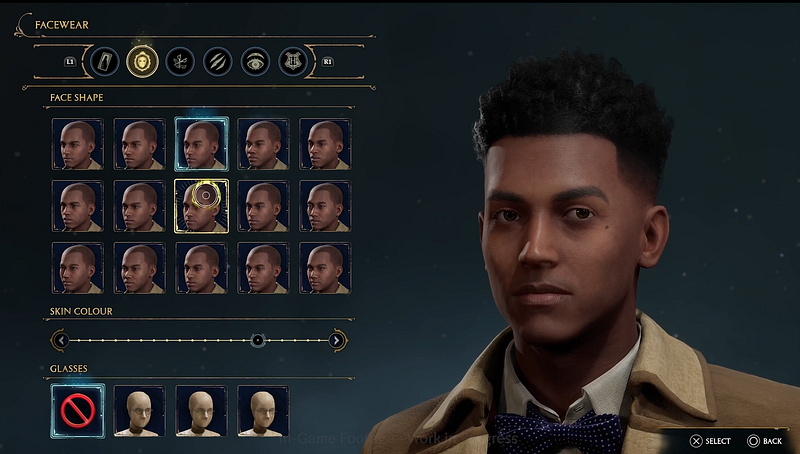
The Fictional Character Generator is designed to automate the process of creating rich and diverse characters for various forms of storytelling, including literature, games, and screenplays. The generator produces not only basic traits but also delves into detailed backstories, personalities, motivations, and quirks that make characters feel authentic and engaging.
Project Guide:
- Design and Planning: Define scope, traits, and information to generate.
- Data Collection: Gather data from existing characters in various media.
- Model Choice: Select a generative model like GPT-3.5 for character descriptions.
- Input and Output: Create a user interface for inputting preferences and displaying character profiles.
- Trait Synthesis: Develop algorithms for combining traits creatively.
- Backstory and Personality: Design prompts for generating character histories and personalities.
- User Customization: Allow users to customize generated characters.
- Quality Evaluation: Develop metrics to measure the quality and uniqueness of characters.
Tech Stack:
- Backend: Python for development and data processing.
- Web Framework: Flask or Django for user-friendly web application creation.
- Database (optional): For saving and modifying characters.
- NLP Libraries: spaCy for text processing.
- Generative Models: Utilize GPT-3.5 for text generation.
- Frontend: HTML, CSS, and JavaScript for interactive user interfaces.
4. Healthcare and Well-being
The medical field can benefit greatly from LLMs by utilizing them for medical applications. By training an LLM on extensive medical literature and patient data, you can develop a system that assists healthcare professionals in various medical tasks.
1.4. Medical Bot: Medical Diagnosis and Treatment Recommendations
In this project, you will develop a medical chatbot to diagnose the patient's disease based on his medical reports and history and recommend treatment for his case.
Project Guide:
- Medical Data Collection: Gather a diverse collection of patient diagnoses, medical literature, research papers, and patient data to train the LLM.
- LLM Training: Train the LLM on the medical dataset collected to learn disease patterns, treatment options, and relevant medical knowledge.
- Diagnosis Assistance: Implement the LLM to assist healthcare professionals in diagnosing diseases based on patient symptoms and medical history.
- Treatment Recommendations: Utilize the LLM to suggest appropriate treatment options for diagnosed conditions, considering medical guidelines and patient specifics.
Technology Stack:
- LLM-based Model: Utilize powerful language models like GPT-3 or similar for medical diagnosis and treatment recommendations.
- Backend: Python or Node.js for handling API requests and responses.
- Frontend: Design a secure and user-friendly web-based interface using HTML, CSS, and JavaScript.
5. Social Good
1.5. Access to Information

Build a tool that converts complex information (legal documents, medical literature) into easily understandable language. The goal of this project is to leverage the capabilities of a large language model, such as GPT-3.5, to develop a tool that converts complex information from various domains (e.g., legal documents, medical literature) into easily understandable language.
This tool aims to bridge the gap between technical, specialized content and laypeople who may not have expertise in the respective field. By simplifying complex information, this tool can democratize access to critical knowledge and empower individuals to make informed decisions.
Project Guide:
- Understanding the Domain: Before starting the technical development, it’s important to understand the specific domains you’ll be working with, such as legal documents and medical literature. Familiarize yourself with common terminologies, complex sentence structures, and the overall tone of the content.
- Data Collection and Preprocessing: Gather a diverse set of text data from the chosen domains. This could include legal contracts, medical research papers, or other relevant documents. Preprocess the data by cleaning the text, removing unnecessary formatting, and segmenting the content into smaller units like paragraphs or sentences.
- Choosing the Language Model: Select a suitable language model for this task. GPT-3.5 is a powerful option due to its ability to generate human-like text and handle various writing styles. You might need access to the OpenAI API to integrate the model into your tool.
- Fine-tuning (Optional): Depending on your specific requirements, you might consider fine-tuning the language model on a smaller dataset related to your chosen domains. Fine-tuning can help the model adapt better to the specific language patterns and terminologies used in legal and medical contexts.
- Developing the Tool: The core of your project involves creating an application or tool that takes in complex text as input and generates simplified, easily understandable output. The tool could be a web application, a mobile app, or a command-line tool. Integrate the selected language model into your application’s backend.
- User Interface (UI): Design a user-friendly interface that allows users to input complex text and receive the simplified output. The UI should be intuitive and straightforward, requiring minimal effort from the user’s side.
- Text Simplification Strategies: Implement text simplification strategies within the tool. These might include sentence restructuring, paraphrasing, definition provision for technical terms, and breaking down complex concepts into simpler explanations.
- Testing and Iteration: Thoroughly test your tool with a variety of input texts from the chosen domains. Collect feedback from users and iterate on the tool’s performance and user experience. This iterative process will help you refine the tool’s output quality.
- Privacy and Security: Ensure that the tool handles sensitive information (e.g., medical records) with the utmost care. Implement data encryption, user authentication, and other security measures to protect users’ privacy.
- Documentation and Deployment: Prepare comprehensive documentation that explains how to use the tool, its features, and any limitations. If applicable, deploy the tool to a web server or app store so that users can access it easily.
2.5. Fake News Detection

The objective of this project is to harness the capabilities of a large language model, such as GPT-3.5, to create a tool that can effectively detect fake news. With the proliferation of misinformation on the internet, the ability to automatically identify unreliable or deceptive information is crucial for maintaining informed decision-making and a well-informed public.
Project Guide:
- Data Collection: Collect a diverse dataset comprising both genuine news articles and fake news samples. The dataset should span different topics and domains to ensure the tool’s effectiveness across various contexts. Ensure that the dataset is labeled, indicating whether each piece of content is genuine or fake.
- Data Preprocessing: Clean and preprocess the collected data. Remove any irrelevant information, correct inconsistencies, and standardize the formatting of the text. This step is crucial for ensuring the quality of the training data.
- Selecting a Language Model: Choose an appropriate language model for this task. GPT-3.5 is well-suited due to its understanding of context and the ability to generate coherent text. You may require access to the OpenAI API to integrate the model into your tool.
- Training and Fine-tuning: Depending on the availability of a labeled dataset, you might consider fine-tuning the language model on your fake news detection task. Fine-tuning allows the model to learn specific patterns related to fake news and genuine news articles.
- Feature Extraction: Extract relevant features from the text, such as linguistic patterns, sentiment, and writing style. These features will be used as inputs to the fake news detection model.
- Developing the Detection Tool: Build an application that takes news text as input and provides a likelihood score indicating the probability of the input being fake. This could be a web application, browser extension, or API. Integrate the language model and any additional machine-learning components.
- Model Evaluation: Assess the performance of your fake news detection tool using appropriate evaluation metrics such as accuracy, precision, recall, and F1-score. Use a separate validation dataset that the model has not seen during training.
- Feedback Loop and Iteration: Continuously improve the tool’s performance by collecting user feedback and iteratively enhancing the model’s accuracy and reliability.
- User Interface and Interpretability: Design a user interface that facilitates easy input of news text and clearly presents the tool’s output. It might also be valuable to provide explanations for the model’s decisions, increasing user trust and transparency.
- Scaling and Deployment: Prepare the tool for deployment on a platform of your choice. Ensure that the deployment environment is secure, and consider scalability to handle a potentially large user base.
Technology Stack:
- LLM-based Model: Utilize powerful language models like GPT-3 or similar for medical diagnosis and treatment recommendations.
- Backend: Python or Node.js for handling API requests and responses.
- Frontend: Design a secure and user-friendly web-based interface using HTML, CSS, and JavaScript.
6. Productivity and Utility
1.6. Podcast summarize

Summarization is one of the popular applications of LLMs. Using LLMs we not only can summarize text but also audio and videos. Due to the large amount of content generated by people and AI nowadays this become an important productivity tool.
Project Guide:
- Download the video or podcast transcript and load it into documents
- Split long documents into chunks
- Summarize the transcript with an LLM
- Wrap it all in a user-friendly command line interface or even a web application.
Technology Stack:
- LLM-based Model: Utilize powerful language models like GPT-3 or similar for medical diagnosis and treatment recommendations.
- Backend: Python or Node.js for handling API requests and responses.
- Frontend: Design a secure and user-friendly web-based interface using HTML, CSS, and JavaScript.
2.6. Topic clustering of social media posts and podcast episodes
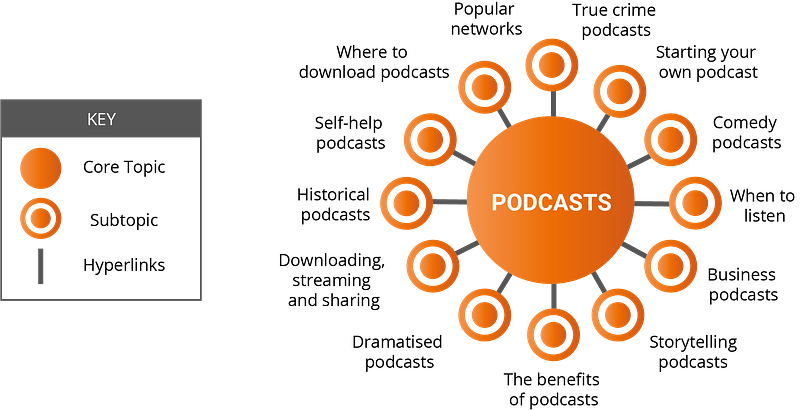
Another application that you can use LLMs to increase your productivity is to build an application to cluster social media posts and podcast episodes into clusters.
Project Guide:
- Load content into documents
- Split long documents into chunks
- Generate and store the embeddings from the documents with an embeddings model
- Use the embeddings as the input for a clustering algorithm
Technology Stack:
- LLM-based Model: Utilize powerful language models like GPT-3 or similar for medical diagnosis and treatment recommendations.
- Backend: Python or Node.js for handling API requests and responses.
- Frontend: Design a secure and user-friendly web-based interface using HTML, CSS, and JavaScript.
3.6. Question answering over documents
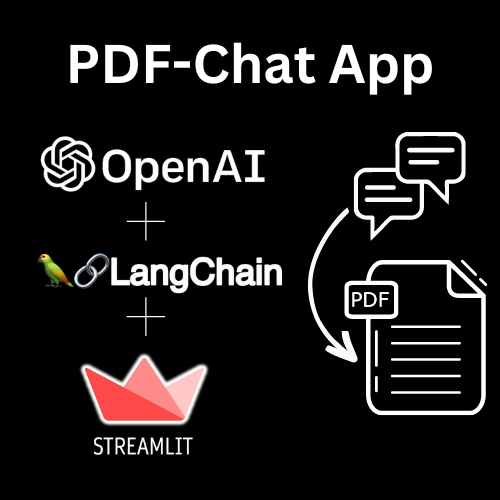
The “Question Answering over Documents” project involves building a system that can read and comprehend textual documents, and then answer questions related to the content of those documents. This project is a practical application of natural language processing and information retrieval, with various potential use cases, from educational platforms to search engines.
Project Guide:
- Load content into documents
- Split long documents into chunks
- Generate and store the embeddings from the documents with an embeddings model
- Use the embeddings as the input for a clustering algorithm
Tech Stack:
- Python: For coding and data preprocessing.
- Natural Language Processing Libraries: Libraries like spaCy for text processing and analysis.
- Deep Learning Frameworks: TensorFlow or PyTorch for training and fine-tuning models.
- Pre-trained Models: Utilize models like BERT, T5, or other transformer-based architectures for document understanding.
- Web Framework (optional): Flask or Django for creating a user-friendly web application.
- Frontend Technologies (optional): HTML, CSS, and JavaScript for building an interactive user interface.
Here is a step-by-step guide to build it:
4.6. YouTube Questions and answering
Similar to the previous project you can build a question-and-answer application for YouTube videos. It is similar to the previous project instead of the fact that you will have to convert the video first into text.
Project Guide:
- Load content into documents
- Split long documents into chunks
- Generate and store the embeddings from the documents with an embeddings model
- Use the embeddings as the input for a clustering algorithm
Technology Stack:
- LLM-based Model: Utilize powerful language models like GPT-3 or similar for medical diagnosis and treatment recommendations.
- Backend: Python or Node.js for handling API requests and responses.
- Frontend: Design a secure and user-friendly web-based interface using HTML, CSS, and JavaScript.


