avatarWalter Bowne

Free AI web copilot to create summaries, insights and extended knowledge, download it at here

14934

Abstract

in punk. Punk is angry. Think Sex Pistols, but The Clash has a brain and a heart and empathy. It’s not just rushing “angst.”</p><p id="175d"><a href="https://www.google.com/search?q=police+and+thieves+lyrics+clash&amp;rlz=1C5CHFA_enUS795US795&amp;oq=Police+and+Thieves+lyrics&amp;aqs=chrome.0.0i20i263i512j69i57j0i512l2j0i22i30l5.8371j0j4&amp;sourceid=chrome&amp;ie=UTF-8">The song opens</a>:</p><blockquote id="45cf"><p>Police and thieves in the street (Oh Yeah) Scaring the nation with their guns and ammunition Police and thieves in the street (Oh Yeah) Fighting the nation with their guns and ammunition.</p></blockquote><p id="d3d9">The second verse starts:</p><blockquote id="ea35"><p>And all the crimes come in, day by day And no one stops it in any way All the peace maker turn war officers Hear what I say!</p></blockquote><p id="1e7c">Doesn’t this feel like 2021? All this ammunition? All this violence? Too scared to demonstrate? Or go out of the house? Peacemakers are turned into military war officers? Squad cars are now tanks and Humvees? Can we hear what he’s saying?</p><p id="49f1">The song ends with a repetition of the word “police.”</p><blockquote id="6a61"><p>But you got trapped in the middle of police, police, police Police, police, police, police Police, police, police, police</p></blockquote><p id="eec6">Why do we have so few social protest songs anymore, I wonder? I have seen episodes of <a href="https://www.amazon.com/Small-Axe-Season-1/dp/B08J4HRR4P">Small Axe</a> on Amazon. The West Indian population in London, from the late 60s through the 80s faced discrimination and racism. There are five short films — all worth watching.</p><figure id="83e8"><img src="https://cdn-images-1.readmedium.com/v2/resize:fit:800/1*OAD88nMWiATOm8TAwntgdg.png"><figcaption>Joe Strummer at Oakland, October 23, 1982. Photo by <a href="https://www.flickr.com/photos/ian_e_abbott/">Ian Abbot</a>. <a href="https://www.flickr.com/photos/ian_e_abbott/10952232626">Link</a>.</figcaption></figure><h1 id="74be">4. “Career Opportunities” (1977 — The Clash)</h1><p id="bdda">I know how difficult it is for my students with degrees to get jobs. So many with degrees are working side gigs and side hustles, trying to get insurance, and start a life. And then add student loans! OMG. Crazy.</p><p id="f11e">In 1977, it may have been worse — with the recession, inflation, and the growing tensions in Iran. So what type of job do you want? It may be an awful job, but you “better take anything they got” — like making “tea at the BBC” or being a “cop.” I think of “A Clockwork Orange” where Alex’s “Droogies” become the “police” at the end — and give him the old “ultra-violence.”</p><blockquote id="a955"><p>Career opportunities, the ones that never knock Every job they offer you is to keep you out the dock Career opportunity, the ones that never knock.</p></blockquote><p id="7582">How about military service? Well, Strummer and Jones say —</p><blockquote id="1a18"><p>I hate the army and I hate the R.A.F. I don’t wanna go fighting in the tropical heat I hate the civil service rules I won’t open a letter bomb for you!</p></blockquote><p id="8118">If these are the types of careers you’re offering —</p><p id="4d87"><i>I’m never gonna knock!</i></p><p id="9518"><a href="https://www.youtube.com/watch?v=MsE5NAAU39k">The song is straight-up</a> (live version here) in-your-face punk. It starts fast. And doesn’t let up at all. It’s full of raw rage. It’s a no-hope sort of thing.</p><p id="c51d">For those curious about the chords in the song:</p><figure id="53ee"><img src="https://cdn-images-1.readmedium.com/v2/resize:fit:800/1*GymrHf7OYcgZQV2MD9_rZg.png"><figcaption><a href="https://tabs.ultimate-guitar.com/tab/the-clash/career-opportunities-chords-169923">Link.</a></figcaption></figure><p id="b30d">On the website <a href="https://economicsociology.org/"><b>Economic Sociology & Political Economy</b></a>, an essay by <i>André Vereta Nahoum in 2016 states that —</i></p><blockquote id="8173"><p>For youngsters, entering the labour market for the first time is challenging. Complying with rules and routines of a workplace and facing the lack of opportunities to work in meaningful activities can be quite frustrating. The situation in the United Kingdom in 1977 was particularly bad.</p></blockquote><p id="eefd">The article was named <a href="https://economicsociology.org/2016/05/16/career-opportunities-the-ones-that-never-knock/">Career opportunities: the ones that never knock</a>. What types of opportunities were there, really? It’s all ironic and sad.</p><p id="c191">Here is a chart of the job market in 1977:</p><figure id="b6a3"><img src="https://cdn-images-1.readmedium.com/v2/resize:fit:800/1*KK6y-7dCAEQiEXpNfpld8g.png"><figcaption><a href="https://economicsociology.org/2016/05/16/career-opportunities-the-ones-that-never-knock/">Link</a></figcaption></figure><h1 id="ab0a">5. “Wrong ’Em Boyo” (1979 — London Calling)</h1><p id="3403">According to <a href="https://www.songfacts.com/facts/the-rulers/wrong-em-boyo">SongFacts</a>:</p><blockquote id="629b"><p>Bassist Paul Simonon in particular really loved the song, hence why the idea of a cover was mooted. The Clash jammed on a cover version with Bill Price in the <i>London Calling </i>sessions, and it became a Ska-influenced rave with an infectious skanking beat.</p></blockquote><p id="9e3f"><a href="http://www.staggerlee.com/">Many artists</a> have covered this song about a real story — or “American myth” about Stagger Lee — Wilson Pickett, Tina Turner, James Brown. The story revolves around two small-town criminals who got into a fight over a Stetson hat. This was Christmas, 1895. A man named Lyons stole “Stag O E’s” hat, and then Stag shoots Lyons while getting back his hat. He died in prison in 1912. It all took place in a St. Louis saloon. Even the Black Keys have a version — “<a href="https://www.youtube.com/watch?v=YVvwNGEnEaA">Stack Shot Billy</a>” from their incredible <i>Rubber Factory</i> album.</p><p id="6cb0">First, here’s <a href="https://www.youtube.com/watch?v=m463sDOYxPY">the remastered song</a>.</p><p id="4039"><a href="https://genius.com/The-clash-wrong-em-boyo-lyrics">The Clash song opens with a false-start</a>-narrative —</p><blockquote id="2444"><p>Stagger Lee met Billy and they got down to gambling Stagger Lee throwed seven, Billy said that he throwed eight, hey So Billy said, “Hey Stagger! I’m gonna make my big attack I’m gonna have to leave my knife in your back.” (C’mon, let’s start all over again)</p></blockquote><p id="31d7">The song is a series of rhetorical questions, wondering —</p><blockquote id="5de8"><p>Why do you try to cheat? And trample people under your feet (Don’t ya’ know it is wrong?) To cheat the tryin’ man (Don’t ya’ know it is wrong?) To cheat the tryin’ man But you better stop It is the wrong ’em boyo</p></blockquote><p id="2430">Well, that’s a fun way of saying, “That’s the wrong way, boy.”</p><figure id="bc6a"><img src="https://cdn-images-1.readmedium.com/v2/resize:fit:800/1*bqCyk-ONrq4E4KfiWoPJjg.png"><figcaption>New Yorkers still mourn the passing of Joe Strummer. Photo by <a href="https://www.flickr.com/photos/yourdon/">Ed Yourdon</a>. <a href="https://www.flickr.com/photos/yourdon/20289853261">Link</a>. <a href="https://web.archive.org/web/20100430131802/http://rockhall.com/inductees/the-clash/bio/">Strummer died</a> of a heart attack on December 22, 2002.</figcaption></figure><h1 id="e0ac">6. “Spanish Bombs” (1979 — London Calling)</h1><p id="1f2c"><a href="https://www.rollingstone.com/music/music-album-reviews/london-calling-2-252761/">Rolling Stone Magazine</a> called “<a href="https://www.youtube.com/watch?v=Ul0uJfhywW8">Spanish Bombs</a>” —</p><blockquote id="4866"><p>“probably <i>London Calling</i>‘s best and most ambitious song. A soaring, chiming intro pulls you in, and before you can get your bearings, Strummer’s already halfway into his tale. Lost and lonely in his ‘disco casino,’ he’s unable to tell whether the gunfire he hears is out on the streets or inside his head.”</p></blockquote><p id="e11b">This is why I adore The Clash. They have a world vision that is not really evident with other “punk bands” like The Ramones and The Sex Pistols. And I hate labeling The Clash punk because they have so many styles that they fuze together into their own sound.</p><p id="cc27"><a href="https://www.youtube.com/watch?v=Ul0uJfhywW8">Spanish Bombs</a>” opens —</p><blockquote id="f2ea"><p>Spanish songs in Andalucía The shooting sites in the days of ‘39 Oh, please, leave the vendanna open Federico Lorca is dead and gone Bullet holes in the cemetery walls The black cars of the Guardia Civil Spanish bombs on the Costa Rica I’m flying in a DC 10 tonight.</p></blockquote><p id="ef9a">Chorus:</p><blockquote id="30fc"><p>Spanish bombs, yo te quiero infinito Yo te quiero, oh mi corazón Spanish bombs, yo te quiero infinito Yo te quiero, oh mi corazón</p></blockquote><p id="c8ea">The song is filled with vivid imagery —</p><blockquote id="6648"><p>Back home the buses went up in flashes The Irish tomb was drenched in blood Spanish bombs shatter the hotels My senorita’s rose was nipped in the bud</p></blockquote><p id="44f0">The song surrounds the Civil War raging in Spain while the rest of the world seemed to be getting ready to escalate World War II. On the website, <a href="https://glickmanonline.com/2021/02/10/spanish-bombs/">“The Punk History Lesson of “Spanish Bombs”</a> by Larry Glickman, he writes:</p><blockquote id="d7f5"><p>Never has such a rough-hewn punk band sounded so good.</p></blockquote><p id="8469">Even though the song reflects scenes from the Spanish Civil War, between General Franco and the Republicans, the blacks and the reds, the song is largely about the struggles in other places in the 1970s.</p><blockquote id="9ae1"><p>“It is really a reflection on battles going on in current-day Spain, England, and Ireland, and how the places of great tragedy and art have come to be treated only as places for tourists to visit on their vacations.” — Larry Glickman.</p></blockquote><p id="23d2">Even casting aside the political message, Glickman writes that the song is “as tight and together as any rock band has ever been.”</p><blockquote id="0e87"><p>The rough, beautifully shoddy musicianship serves the song well, and the combination of the English and Spanish languages in the lyric is poetic, musical and satisfyingly challenging.</p></blockquote><figure id="f704"><img src="https://cdn-images-1.readmedium.com/v2/resize:fit:800/1*LyZ3SVkA3rbOLs56Js7htA.png"><figcaption>1979 7" single of London Calling, B side — Armagideon Time. <a href="https://www.flickr.com/photos/oddsock/129002638">Link.</a> Photo by <a href="https://www.flickr.com/photos/oddsock/">Ian Burt</a>.</figcaption></figure><h1 id="e44c">7. “Lost in the Supermarket” (1979 — London Calling)</h1><p id="773f"><a href="https://www.youtube.com/watch?v=68dk01GkxDI">I used this song </a>when my wife, who once taught culinary arts, wanted an introductory video to her course. So I took my video camera and mic and followed her through the grocery store. The song also reminds me of Allen Ginsberg’s awesome Beat poem “<a href="https://www.poetryfoundation.org/poems/47660/a-supermarket-in-california">Supermarket in California</a>.”</p><blockquote id="f02e"><p>What peaches and what penumbras! Whole families shopping at night! Aisles full of husbands! Wives in the avocados, babies in the tomatoes! — and you, Garcia Lorca, what were you doing down by the watermelons?</p></blockquote><p id="de41">In The Clash song, which has elements of pop and soul, we have the same idea — lost in a world of commercialism and dehumanization.</p><p id="da7c">The chorus opens with a feeling perhaps we all feel — lost — enticed with discounts and “special offers.”</p><blockquote id="da68"><p>I’m all lost in the supermarket. I can no longer shop happily. I came in here for the special offer. Guaranteed personality.</p></blockquote><p id="2d11">Can any market that’s geared toward the masses guarantee personality? Maybe the corner deli or the grocer — but not in the era of these supermarket complexes. The word “super” implies that, right?</p><p id="23c6">In the first verse, the dehumanization starts at birth with dark humor, and then in the dehumanized suburbs, where we have walled ourselves in with our privacy hedges. The irony of people living on the ceiling accelerates the upside-down world. People fight and scream. And it’s always been this way for the narrator:</p><blockquote id="e66b"><p><i>I wasn’t born, so much as I fell out. Nobody seemed to notice me. We had a hedge back home in the suburbs. Over which I never could see I heard the people who live on the ceiling Scream and fight, most scarily Hearing that noise was my first ever feelin’ That’s how it’s been, all around me</i></p></blockquote><p id="69bb">The second verse brings us from the alienated home and neighborhood back to the cold comfort of the supermarket with its “make me happy” things. The narrator empties some bottle for self-medication — and it’s like “mother’s little helper” with its momentary freedom from pain. But even the kids are not friends — and they scream, too, making noise for company. And the people close to the narrator can only talk “long distance.” Ironic, yes? And all of this, of course, in the Modern Era, is a cause for loneliness and alienation:</p><blockquote id="46fc"><p>I’m all tuned in, I see all the programs. I save coupons from packets of tea. I’ve got my giant hit, discotheque album. I empty a bottle, I feel a bit free. The kids in halls and the pipes in the walls Making noises for company Long distance callers make long distance calls And the silence makes me lonely.</p></blockquote><p id="85fc">The song reminds me so much of Simon and Garfunkels’ “The Sounds of Silence.” And this is supposed to be punk? Or post-punk?</p><p id="bfa9">Oh, btw, if you’re also in literature, too, John Updike has a great story called “<a href="https://littletonpublicschools.net/sites/default/files/HHS-2015-Eng-10%20Honors%20Summer%20reading_1.pdf">A&P</a>” — all about pathetic white knighting and grocery store hilarity.</p><h1 id="992b">8. “Guns of Brixton”</h1><figure id="23a0"><img src="https://cdn-images-1.readmedium.com/v2/resize:fit:800/1*WA0ZnYftfOyoIE7LraDaTw.png"><figcaption>I’m on the waiting list for this shirt in large. <a href="https://www.merchbar.com/rock-alternative/the-clash/the-clash-t-shirt-guns-of-brixton-logo-the-clash-shirt">Link to page</a>.</figcaption></figure><p id="c643">Bassist Paul Simonon sings on “The Guns of Brixton.” Again, a song that seems so now and ridiculously painful with our battle of racism and poverty. Have we learned nothing? It was also his first song that he composed and sang. In an interview with Scott Rowley in October 1999 for <i>Bassist Magazine</i>, he said:<

Options

/p><blockquote id="fd25"><p>“You don’t get paid for designing posters or doing the clothes, you get paid for doing the songs.”</p></blockquote><p id="1183">The reggae influence is immediately noticeable. So w<a href="https://www.britannica.com/art/reggae">hat is reggae</a>?</p><blockquote id="7190"><p>Reggae, style of popular music that originated in Jamaica in the late 1960s and quickly emerged as the country’s dominant music. By the 1970s it had become an international style that was particularly popular in Britain, the United States, and Africa. It was widely perceived as a voice of the oppressed.</p></blockquote><p id="5022">So it makes sense, right, that The Clash who sings about the oppressed would use a style of music about resistance to colonial rule and racism and injustice.</p><p id="3bdc">The song begins with rhetorical questions. It’s not a matter of if — it’s all a matter of “when.”</p><blockquote id="2ce2"><p>When they kick at your front door How you gonna come? With your hands on your head Or on the trigger of your gun?</p></blockquote><blockquote id="bd41"><p>When the law break in How you gonna go? Shot down on the pavement Or waiting on death row?</p></blockquote><p id="693b">Every year we study Martin Luther King. This year, thanks to the recommendation of Ta-Nehisi Coates in his amazing book, <i>Between the World and Me</i>, we also study Malcolm X’s speech “The Ballot or The Bullet.” There are two ways to resist oppression: civil disobedience or violent disobedience. The American and French and Russian Revolutions were violent. And I don’t think the Nazis would care a tinker’s cuss about civil disobedience. That would just make it easier for them to gas us, right?</p><p id="16fa">Paul Simonon adds to the powerful chorus a voice of disobedience:</p><blockquote id="5566"><p>You can crush us You can bruise us But you’ll have to answer to Oh, the guns of Brixton.</p></blockquote><p id="4400">Okay. If you’ve visited the great city of London, as I have many times, perhaps you have not crossed over the Thames and ventured into Brixton. It’s not on the tourist maps unless you’re on The Clash Tour.</p><p id="74f8">To get from the “West Side of the Thames,” take Vauxhall Bridge in Pimlico, and take South Lambeth Road, and then the A203 to Brixton.</p><figure id="a6d2"><img src="https://cdn-images-1.readmedium.com/v2/resize:fit:800/1*VLHSs1ITHaCnzjPnM_jLJg.png"><figcaption>Electric Avenue in Brixton in 2007. <a href="https://commons.wikimedia.org/wiki/File:Brixton,_Electric_Avenue,_sumer_2007.jpg">Link.</a> Yes — that’s the <a href="https://www.youtube.com/watch?v=IuwxZSIS__4">Eddy Grant song of fame</a>.</figcaption></figure><p id="2bb7">It’s an eerie song all because the song predates the actual Brixton riots that occurred in 1981. The song was recorded in 1979.</p><p id="0c82">In a feature story “<a href="https://web.archive.org/web/20080307195354/http://www.time.com/time/magazine/article/0,9171,952979,00.html">Bloody Saturday</a>” in <i>Time Magazine</i> on April 20, 1981 —</p><blockquote id="b50e"><p>At the peak of the violence, more than 1,000 police in riot gear, huddled like Roman legionnaires behind shields, battled some 600 black West Indian youths, interspersed with a few masked white rioters.</p></blockquote><blockquote id="2dc0"><p>When the hurricane of violence ended after five brutal hours, the toll was heavy: 165 policemen injured — 26 requiring hospitalization — along with scores of civilians. Nearly 100 rioters were arrested. Estimates of property damage ran to more than $2.2 million. Beyond the burnt buildings and ravaged streets twinkling with shards of glass from shattered storefront windows, however, London now bears a more lasting scar: the psychic damage from the worst race riot in British history, an ugly explosion reminiscent of the violence that tore apart dozens of American cities in the ’60s and, only eleven months ago, left whole sections of Miami in flames.</p></blockquote><blockquote id="cb01"><p>Said one Brixton dweller: “This is not a race riot. We are not here to hurt white people. It is about jobs, money, all the rest. You can only take so much.” But the fact is that tension has been building for months in Brixton, home of many of the 620,000 black West Indians who have immigrated to Britain, or been born there, since the 1950s. As in the U.S., racial friction and unemployment often seem to go together: the jobless rate in areas like Brixton is twice Britain’s 10.3% national average.</p></blockquote><p id="6907">Imagine a jobless rate of 10.3% — and then double that. But The Clash always had their fingers on the pulse of inequality.</p><p id="0402">In another verse,</p><blockquote id="ee4c"><p>You know it means no mercy They caught him with a gun No need for the Black Maria Goodbye to the Brixton sun.</p></blockquote><p id="6e5e">The “Black Maria” is a term for a black police van transporting prisoners.</p><figure id="5c53"><img src="https://cdn-images-1.readmedium.com/v2/resize:fit:800/1*vZ-YPXco_zCYPcAVcYbOng.png"><figcaption>A “back maria” — or paddywagon. <a href="https://en.wikipedia.org/wiki/Police_van#/media/File:Paddywagon_1909.jpg">Link</a>. The term paddy is derogatory because it refers to the Irish in NYC in the 1840s and 50s who were often arrested.</figcaption></figure><h1 id="2961">9. “Car Jamming” (Combat Rock — 1982)</h1><p id="ff8f">Is this the most underrated great song from The Clash? Perhaps. Combat Rock as an album gets better as I get older. Some albums are like that. I’m like — wait — there are more great songs on the album others the two monster hit?</p><p id="5b50">Can we say that New Wave influenced the sound of The Clash on Combat Rock — this double-platinum album? The album “charted at number 2, spending 23 weeks in the UK charts and peaked at number 7 in the United States, spending 61 weeks on the chart.”</p><p id="e9e2">You know — the likes of Adam and the Ants, Devo, or The Talking Heads, Combat Rock. But maybe on this song — and definitely the “hits” like “Rock the Casbah” and “Should I Stay or Should I Go.”</p><p id="7096">The song has such a funky, jungle beat. Makes sense — because Strummer and Jones use so many animal metaphors about the urban jungle and the zookeeper ‘executives’ who are:</p><blockquote id="5ec4"><p>Selling is what selling sells But only saints on the seven avenues Can sell the seven hells Fanning out the drug afflicted leperising zone Once inside the executive He never leaves his home.</p></blockquote><p id="2f5a">Madison Avenue and 7th Avenue can definitely sell what the phony alleged “saints” — these con men — can sell hell to the people foolish enough to buy. These executives become hyenas and gorillas and snakes — dragging victims away in the “car jam” — a metaphor for, perhaps, urban class warfare.</p><p id="7060">In the first verse, we hear of a shy boy from Missouri whose</p><blockquote id="65f2"><p>Boots blown off in a ’60s war Riding aluminum crutches Now he knows the welfare kindness <a href="https://www.history.com/topics/vietnam-war/agent-orange-1">Agent Orange</a> colour blindness As we works from door to door The violence in the carpets The error of his wife Drives the slum-bum dweller To grind his hunting knife In homesteads of cigar box The radios hive like bees The body in the ice box has no date for freeze.</p></blockquote><p id="8b24">So many allusions to Vietnam, right? Agent Orange — a defoliant chemical used by the US in the Vietnam War. It’s a jungle, after all. And how can one spot the enemy underneath the flourishing trees? But now Agent Orange has left this poor boy blind and living in the slums. That last line is powerful, too, and all too ironic. We stack dead bodies in an icebox until burial, but this poor boy cannot freeze, even though he has been abused and traumatized by “King Kong multi-nationals” He doesn’t have the freedom to die properly. Is he just the walking dead?</p><p id="1d3a">That’s what I love about The Clash. You rock out to the beat, and then, take the time to study the lyrics — and you’re like — wow! It’s a hard-hitting social commentary about the poor and the oppressed — a message right out of Bruce Springsteen or John Steinbeck or Woody Guthrie.</p><p id="a37e">I had to research the meaning of Missa Lubba. It has an African setting that is sung in Latin. To show just how much The Clash fuses various genres of music together — consider what <a href="https://urresearch.rochester.edu/institutionalPublicationPublicView.action?institutionalItemId=19641&amp;versionNumber=1">Jim Farrington writes at the University of Rochester</a> about the Missa Lubba:</p><blockquote id="f658"><p>Elements of both pure African style and Western influence are evident in the Missa Luba. The open-ended forms, scale types, melodic contours, choral textures, accompaniment, adherence to tempo, and duple metric organization heard in the Kyrie, Gloria, Credo, and Agnus Dei movements are typically African.</p></blockquote><p id="d660">And what about Lauren Bacall — the famous American actress? Wasn’t she in the famous film with Bogart called <i>The African Queen</i>? No — that was Katherine Hepburn, but Bacall “tagged” along with her husband — Mr. Bogart to Africa. And then — I guess — it all makes sense.</p><h1 id="cc4e">10. “Straight to Hell” (1982 — Combat Rock)</h1><p id="0c4b">Before reading, listen to “<a href="https://www.youtube.com/watch?v=ewRjZoRtu0Y">Paper Planes</a>” from M.I.A. It was featured in the award-winning film, <i>Slumdog Millionaire.</i> Then listen to “<a href="https://www.youtube.com/watch?v=t7SvtikTkrM">Straight to Hell</a>” from the 1982 album, <i>Combat Rock</i>.</p><p id="61ef">Yep — some great sampling there, right? It makes sense that M.I.A would use the “sound” of The Clash for such an urban, Indian sound. That’s what The Clash does so well.</p><p id="7998">Jones and Strummer write:</p><blockquote id="9d47"><p>If you can play on the fiddle How’s about a British jig and reel? Speaking King’s English in quotation As railhead towns feel the steel mills rust Water froze In the generation Clear as winter ice This is your paradise.</p></blockquote><p id="b758">This ain’t no paradise. Does “The Man” have any need for the poor? Even if the poor in rusted steel mills can dance a British “jig and reel,” you know where the Man tells you to go:</p><blockquote id="5649"><p>Go straight to hell boys Go straight to hell boys</p></blockquote><p id="ad5e">Okay — let’s take a shot at the Yanks and Vietnam. The Clash cannot tolerate any country or culture or political system that abuses its own people.</p><blockquote id="2682"><p>Wanna join in a chorus, of the Amerasian blues? When it’s Christmas out in Ho Chi Minh city Kiddie say papa papa papa papa papa-san take me home See me got photo, photo, photograph of you And mamma mamma mamma-san Of you and mamma mamma mamma-san Lemme tell ya ‘bout your blood bamboo kid It ain’t coca-cola it’s rice.</p></blockquote><p id="f439">So it’s not the “jig and reel” anymore. The next superpower, The United States, will allow you to sing the “Amerasian blues” — a great satirical adjective there, right? It’s a portmanteau word — American and Asian. And your blood, kid is not filled with Coca-Cola. It’s rice. Think <a href="https://www.youtube.com/watch?v=cwB3Zxh2gSE"><i>Miss Saigon</i></a><i> </i>here, a show I’ve seen twice in London and wept copious tears all over my wife who was mad at me for not bringing her tissues and not warning her.</p><p id="597e">And of course, The Clash cares for the immigrants, as much as Tom Joad and John Steinbeck from <i>The Grapes of Wrath:</i></p><blockquote id="873e"><p>Can you cough it up loud and strong The immigrants, they wanna sing all night long It could be anywhere Most likely could be any frontier Any hemisphere No man’s land There ain’t no asylum here King Solomon he never lived ‘round here</p></blockquote><p id="9cd1">The allusion to King Solomon refers to a lack of justice and wisdom. The immigrants, the vast diaspora, victims of colonialism, whether from British, French, or American powers, find no asylum. They exist in a “no man’s land.”</p><p id="ad0f">And The Clash doesn’t mince words: They can all “go straight to hell.”</p><p id="9da0">Yeah, this song came out in the 1980s, but Duran Duran and Wham and Culture Club it’s not.</p><p id="58c2">In the liner notes in the double-disc collection — <i>The Story of the Clash</i>, Volume 1, Albert Transom recounts his days with the band in a rather long, stream-of-consciousness narrative. He wrote it in 1988 from Florida. He was their valet. He writes:</p><blockquote id="9bc6"><p>Splendid piles of masonry some of those theaters there in the British Isles, The Electric Circus in Manchester, almost like an abandoned cinema in a sea of rubble. What great nights we all had there. Punk was like an earthquake. People were screaming and shouting. It was blazing hot inside in the middle of winter…</p></blockquote><blockquote id="d77a"><p>If I had to sum it up, I say we played every gig on the face of the Earth and that’s what it’s all about.”</p></blockquote> <figure id="b2a4"> <div> <div> <img class="ratio" src="http://placehold.it/16x9"> <iframe class="" src="https://cdn.embedly.com/widgets/media.html?src=https%3A%2F%2Fopen.spotify.com%2Fembed%2Fplaylist%2F3RC3DCONCjlBwXfxIQbEpC%3Futm_source%3Doembed&amp;display_name=Spotify&amp;url=https%3A%2F%2Fopen.spotify.com%2Fplaylist%2F3RC3DCONCjlBwXfxIQbEpC&amp;image=https%3A%2F%2Fmosaic.scdn.co%2F300%2Fab67616d0000b27325a4df452a3c42ccc2e9288bab67616d0000b27346db502388d44edb43ebb261ab67616d0000b2736b32a59fcc8bcd8172bd54d6ab67616d0000b273cd9d8bc9ef04014b6e90e182&amp;key=a19fcc184b9711e1b4764040d3dc5c07&amp;type=text%2Fhtml&amp;schema=spotify" allowfullscreen="" frameborder="0" height="380" width="456"> </div> </div> </figure></iframe></div></div></figure><h1 id="b0b3">The Clash</h1><ul><li>Joe Strummer — lead and backing vocals, rhythm guitar</li><li>Mick Jones — lead guitar, backing vocals, lead vocals on “Stay Free”</li><li>Paul Simonon — bass guitar, backing vocals</li><li>Topper Headon — drums</li></ul><div id="2d88" class="link-block"> <a href="https://the4bownes.medium.com/membership"> <div> <div> <h2>Join Medium with my referral link - Walter Bowne</h2> <div><h3>As a Medium member, a portion of your membership fee goes to writers you read, and you get full access to every story…</h3></div> <div><p>the4bownes.medium.com</p></div> </div> <div> <div style="background-image: url(https://miro.readmedium.com/v2/resize:fit:320/0*qTZVUHMfjx2C65b7)"></div> </div> </div> </a> </div></article></body>

10 Incredible Songs from The Clash You Probably Won’t Hear on the Radio

Pirate satellite is not needed to enjoy this Radio Clash Mix (Part 1)
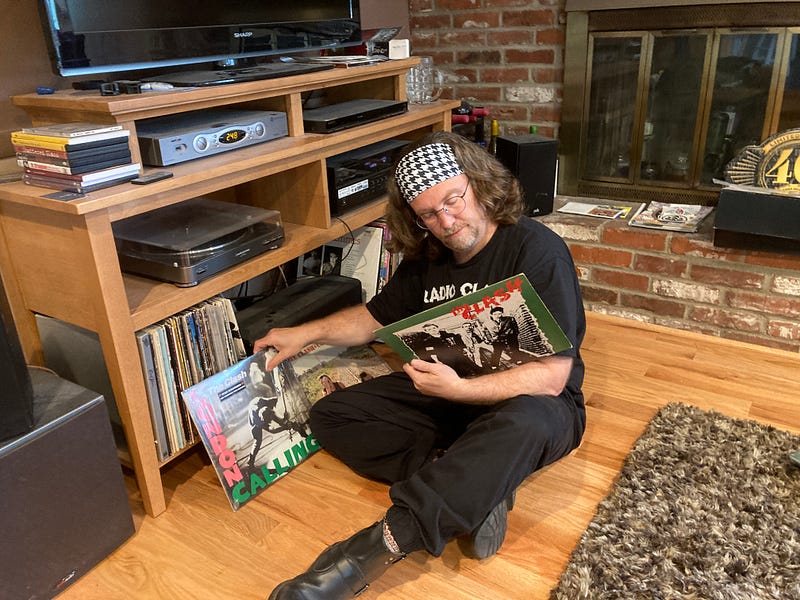
Interrupting all programs!

If you’ve “discovered” The Clash after watching the popular Stranger Things and the recurring song which fits the theme of the first season well, “Should I Stay or Should I Go,” you’re not alone.

Perhaps you were not alive in 1982. Or in the “glory days” of punk — the late 1970s. But there is so much more to explore. And I’m here to help. I’m 52, but when I play The Clash, I return to my roots as a “shit-kicker and rabble-rouser” who just loves honesty, sincerity, sweat, and love in music — and music that has a message to Authority.

Like “We’re Not Gonna Take It” from Twisted Sister— but just the sentiment, and not that awful song.

For me, The Clash tore me away from the excesses of Progressive Rock

I was young in 1984, only fifteen, but when “Combat Rock” came out in May 14, 1982, with the two smash hits — “Should I Stay or Should I Go” and “Rock the Casbah.” I was like — hey — a song can kick ass and not be thirty minutes long. The Clash also turned me on to other punk bands — like the one-toxic-trick pony of The Sex Pistols and pulsating adrenaline of The Ramones — where a 15 song concert would take about a half-an-hour.

And of course, I would “discover” other bands never played on the radio, like The Buzzcocks, MC5, Television. And then in 1994, in graduate school for English, and two months before meeting my future wife — Green Day’s Dookie debuted in February — and that became one of my perennial soundtracks for the rest of my life.
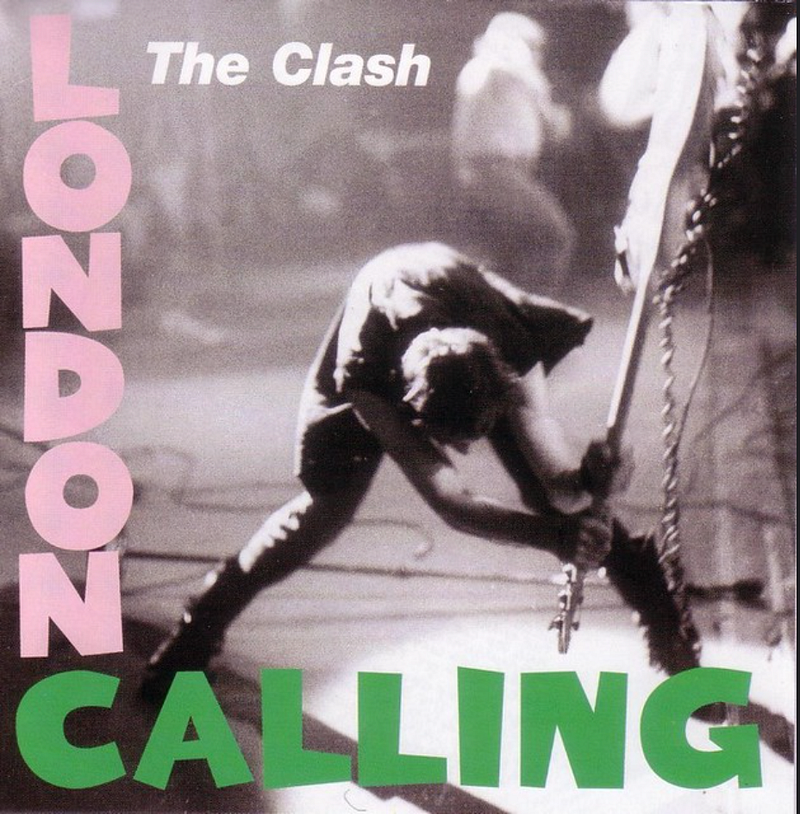
The Clash paid tribute to Elvis Presley’s first album by having the same font and lettering. Link.

It’s incredible how well it has held up. And I think. Are we really that old?

While I love punk and even the pop-punk of Social Distortion and blink-182 and Rancid, no band in the genre can come close to the Clash. Who else can blend funk, rockabilly, dub, New Orleans Blues, Ska, gospel, Blues Ska, reggae, 3-chord power punk, pop, straight-up rock and roll, and even a love song here and there?

For instance, there is the ever-popular “Train in Vain” that was recorded after the cover proofs were sent to the printer. It’s the reason the song does not appear on the list of songs.

All of these sounds —and yet — they have a sound that’s totally The Clash.

In fact, I agree with many rock historians who place the songwriting power duos Lennon/McCartney and Jagger/Richards right up there with Jones/Strummer from The Clash.

Unequaled. Unparalleled. And perhaps, since 1977 —the Only Band that Mattered.

In the UK, The Clash released its self-titled ‘The Clash” with its “In-Your-Face-We-Take-No Prisoners” cover — iconic in punk circles.

The album is only thirty-five minutes long — about the length of an early Beatles album — and really, there’s not a bad song on that album. The fantastic “Police and Thieves” was added after the sessions when the band had realized the album was too short.

Too short? I guess they didn’t know about The Ramones, yet.

It’s like “Dookie” that way. Or the debut album from “The Cars,” if they dropped that awful “I’m in Touch with Your World.”

The debut disk “The Clash” in 1977 received critical acclaim. On the UK charts, it reached number 12.

A great book is Martin Popoff’s The Clash: All the Albums, All the Songs.

The American rock critic Robert Christgau wrote in the Consumer Guide:

“The U.K. version of The Clash is the greatest rock and roll album ever manufactured anywhere in some small part because its innocence is of a piece — it never stops snarling, it’s always threatening to blow up in your face.”

Likewise, the British music magazine, New Musical Express in 1993

“ranked the album number 13 on its list of the greatest albums of all time. NME also ranked The Clash number three on its list of the Greatest Albums of the ’70s, and wrote in the review that “the speed-freaked brain of punk set to the tinniest, most frantic guitars ever trapped on vinyl. Lives were changed beyond recognition by it.”

Two years later, the debut “The Clash” was released in the United States — after “Give ’Em Enough Rope” in 1978. The US version is quite different than the UK version. Listen, song for song, to the original 1977 UK version, okay?

After all, there is a reason why Rolling Stone magazine named “London Calling” the best album of the 1980s, even though it came out in 1979.

Rob Sheffield in Rolling Stone in November of 2020 wrote —

The Clash set out to make history on London Calling — and that’s exactly what they did. London Calling is the punk upstarts’ bold double-vinyl statement, on a death-or-glory scale. With their classic 1977 debut, the Clash proved they could blow away any band when it came to passion and intensity.
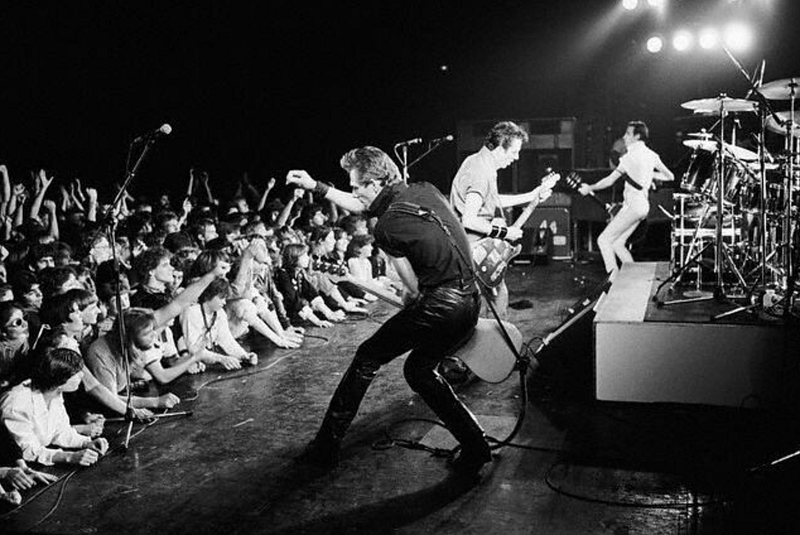
The Clash performs in concert during a U.S. tour. Ca. 1980s. Photo by Sarah W. Link.

For me, as a writer, poet, and English teacher, lyrics are so essential

It’s why I love Dylan and Paul Simon and John Fogerty. I can enjoy a song with horrible lyrics because of the beat, but to be a classic, the lyrics need to match the passion and the musicianship.

One music critic from The Philadelphia Inquirer, Dan DeLuca wrote something like, and I’m paraphrasing here, that there are bad rock lyrics and there are lyrics from Yes. What’s worse than bad? Terrible? Dreadful? Disagreeable? Unfortunate? Distressing?

Like a song that I used to love, like “Roundabout.”

“Mountains climb out of the sky and they stand there.”

That’s actually nauseating. But hey — rock lyrics can be notoriously substandard:

“I got soul but I’m not a soldier” — The Killers.

“I smell like I sound” — Duran Duran. Is this even rock?

“You were in a car crash. And you lost your hair.” — The Beatles (Ringo)

Okay, so if you know classic rock, you’ve mostly heard the hits

London Calling,” “Train in Vain,” “I Fought the Law” (a cover of the song Sonny Curtis of the Crickets in 1966), “Rock the Casbah,” and “Should I Stay or Should I Go,” and maybe if you’re lucky, “The Magnificent Seven,” “Guns of Brixton,” and “Spanish Bombs,” but probably not.

So here are my first 10 of 20 songs that really stand out for me — and it’s almost impossible to do this because like a Beatles fan, can I really pick 20 when there are only a few I dislike — like “Mr. Moonlight”? (sorry for the link).

Don’t get me started on that one. lol. Wait? What was the headline for this article, anyway? My Sweet Lord, I almost forgot the 10 songs!
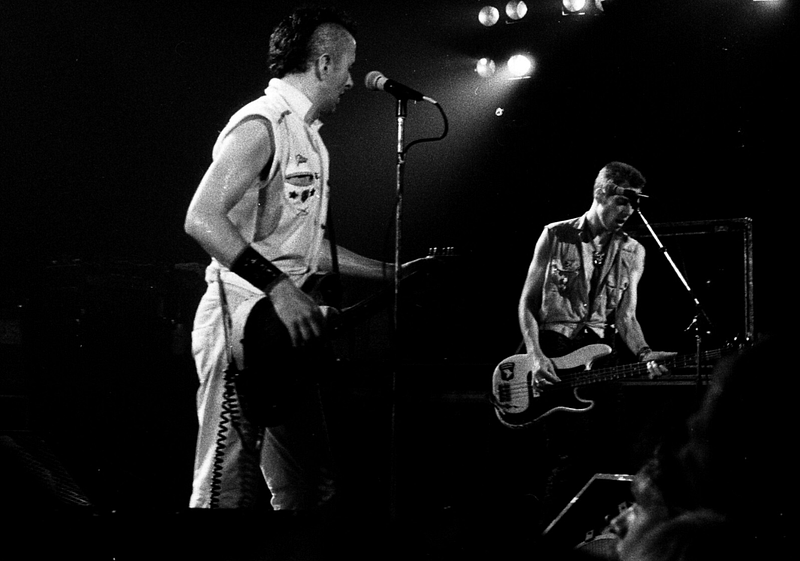
The Clash at Brixton Academy — July 1982 — Strummer/Simenon. Photo by Jon Jackson. Link.

In particular order:

1. “Janie Jones” (1977 — The Clash)

For all this praise about lyrics, I start with a song about rock and roll, getting stoned, hating your job, and hooking with a prostitute in a Ford Cortina.

Janie Jones” is played in 4/4 time.

The song kicks in overdrive in a Ramone second with a five-second abuse of the drum kit— courtesy of drummer Terry Chimes, and then Strummer and Jones rhyme with whoa and no — and then for all of us out there where “meet the new boss, same as the old boss,” — he says, “Tell the boss really how you feel.” Is there any time for romance and love in such a world? No — except for release with Janie Jones:

And he knows what he like to do He knows he’s gonna have fun with you You lucky lady And he knows when the evening comes When his job is done, he’ll be over in his car for you.

Catch the wicked bassline from Paul Simonon.
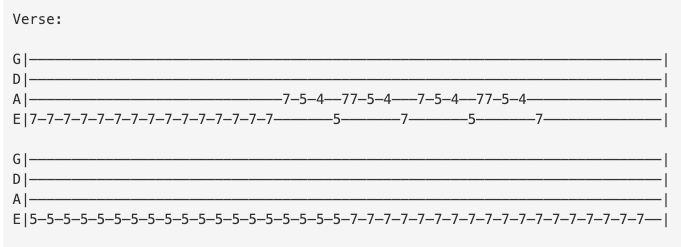
Bass Tab for “Janie Jones” Link.

After all —

He’s in love with Janie Jones, whoa He don’t like his boring job, no, no, no Let them know, let them know!

In fact, the song is named after the real Janie Jones, also known by her real name, Marion Jones, who was an English singer, held sex games in the 1970s, and controlled prostitutes like a Madam. She served three of her seven years in jail. As far as I can find out, she’s still alive. Maybe not knowing the lyrics is better, lol.

2. “English Civil War” (1978 — Give ’Em Enough Rope)

This tune will sound very familiar. Think:

The ants go marching one by one, hurrah, hurrah. The ants go marching one by one, hurrah, hurrah. The ants go marching one by one, The little one stops to suck his thumb. And they all go marching down, To the ground, to get out of the rain. BOOM! BOOM! BOOM!

And like the Boom! — this song is one of ill omen — especially with that five-second bass solo — a song of ominous portents about the dangers of home-grown fascism. And the UK doesn’t have to worry about that, right, mates, with the very middle-of-the-road Boris Johnson?

Johnny is an informal British term for a chap or a boy. The song conjures images of a soldier coming home from the war:

When Johnny comes Marching home again He’s coming by bus or underground A woman’s eye will shed a tear To see his face so beaten in fear An’ it was just around the corner in the English civil war.

But Johnny wasn’t fighting the Germans or the Italians. This is a homegrown, “War of the Roses” sort of thing — mid-to-late fifteenth century. The House of Lancaster v. The House of York.

But the enemy now seems to be a right-wing fascist state. Strummer sings:

But who hid a radio under the stairs An’ who got caught out on their unawares? When that new party army came marching right up the stairs.

Who is this “new party”? Why do they want to control what we listen to? And then the end of the song warns that “it can happen here.” And that’s it up to the youth — the crack in the cloud — with kids shouting loud — to keep the shadows of fascism from darkening the UK.

When Johnny comes marching home again Nobody understands it can happen again The sun is shining an’ the kids are shouting loud But you gotta know it’s shining through a crack in the cloud And the shadows keep falling when johnny comes marching home

3. “Police and Thieves” (1977 — The Clash)

This song still seems so now. And painfully fresh.

It’s impossible to turn on the telly without seeing scenes of police and protestors and rioters and demonstrators, right? And as Strummer and Jones warn in the chorus, from the beginning of time to the end of time, we will have these types of struggles:

From Genesis to Revelation The next generation will be, hear me From Genesis to Revelation The next generation will be, hear me

Police and Thieves” was added to the session mix to extend the 1977 UK version. It has a great “ska” feel with lots of drum fills and the bass fills and echo effects. It also has a political message, one that is oftentimes missing in punk. Punk is angry. Think Sex Pistols, but The Clash has a brain and a heart and empathy. It’s not just rushing “angst.”

The song opens:

Police and thieves in the street (Oh Yeah) Scaring the nation with their guns and ammunition Police and thieves in the street (Oh Yeah) Fighting the nation with their guns and ammunition.

The second verse starts:

And all the crimes come in, day by day And no one stops it in any way All the peace maker turn war officers Hear what I say!

Doesn’t this feel like 2021? All this ammunition? All this violence? Too scared to demonstrate? Or go out of the house? Peacemakers are turned into military war officers? Squad cars are now tanks and Humvees? Can we hear what he’s saying?

The song ends with a repetition of the word “police.”

But you got trapped in the middle of police, police, police Police, police, police, police Police, police, police, police

Why do we have so few social protest songs anymore, I wonder? I have seen episodes of Small Axe on Amazon. The West Indian population in London, from the late 60s through the 80s faced discrimination and racism. There are five short films — all worth watching.

Joe Strummer at Oakland, October 23, 1982. Photo by Ian Abbot. Link.

4. “Career Opportunities” (1977 — The Clash)

I know how difficult it is for my students with degrees to get jobs. So many with degrees are working side gigs and side hustles, trying to get insurance, and start a life. And then add student loans! OMG. Crazy.

In 1977, it may have been worse — with the recession, inflation, and the growing tensions in Iran. So what type of job do you want? It may be an awful job, but you “better take anything they got” — like making “tea at the BBC” or being a “cop.” I think of “A Clockwork Orange” where Alex’s “Droogies” become the “police” at the end — and give him the old “ultra-violence.”

Career opportunities, the ones that never knock Every job they offer you is to keep you out the dock Career opportunity, the ones that never knock.

How about military service? Well, Strummer and Jones say —

I hate the army and I hate the R.A.F. I don’t wanna go fighting in the tropical heat I hate the civil service rules I won’t open a letter bomb for you!

If these are the types of careers you’re offering —

I’m never gonna knock!

The song is straight-up (live version here) in-your-face punk. It starts fast. And doesn’t let up at all. It’s full of raw rage. It’s a no-hope sort of thing.

For those curious about the chords in the song:
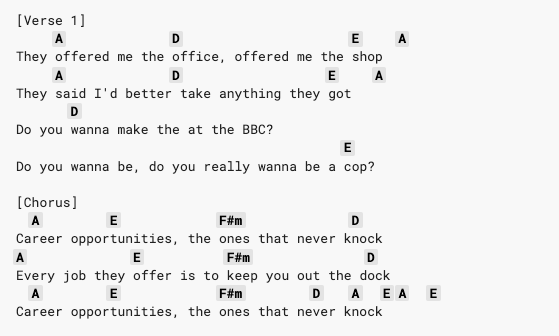
Link.

On the website Economic Sociology & Political Economy, an essay by André Vereta Nahoum in 2016 states that —

For youngsters, entering the labour market for the first time is challenging. Complying with rules and routines of a workplace and facing the lack of opportunities to work in meaningful activities can be quite frustrating. The situation in the United Kingdom in 1977 was particularly bad.

The article was named Career opportunities: the ones that never knock. What types of opportunities were there, really? It’s all ironic and sad.

Here is a chart of the job market in 1977:
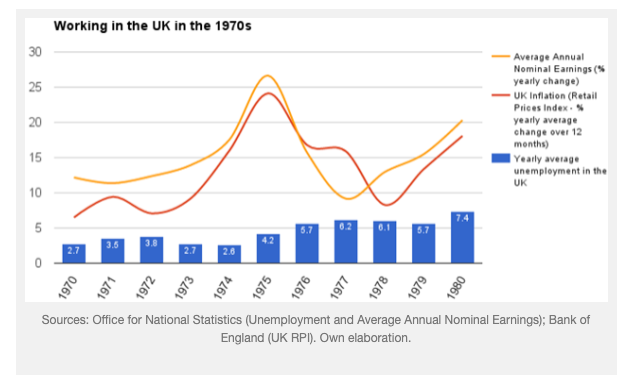
Link

5. “Wrong ’Em Boyo” (1979 — London Calling)

According to SongFacts:

Bassist Paul Simonon in particular really loved the song, hence why the idea of a cover was mooted. The Clash jammed on a cover version with Bill Price in the London Calling sessions, and it became a Ska-influenced rave with an infectious skanking beat.

Many artists have covered this song about a real story — or “American myth” about Stagger Lee — Wilson Pickett, Tina Turner, James Brown. The story revolves around two small-town criminals who got into a fight over a Stetson hat. This was Christmas, 1895. A man named Lyons stole “Stag O E’s” hat, and then Stag shoots Lyons while getting back his hat. He died in prison in 1912. It all took place in a St. Louis saloon. Even the Black Keys have a version — “Stack Shot Billy” from their incredible Rubber Factory album.

First, here’s the remastered song.

The Clash song opens with a false-start-narrative —

Stagger Lee met Billy and they got down to gambling Stagger Lee throwed seven, Billy said that he throwed eight, hey So Billy said, “Hey Stagger! I’m gonna make my big attack I’m gonna have to leave my knife in your back.” (C’mon, let’s start all over again)

The song is a series of rhetorical questions, wondering —

Why do you try to cheat? And trample people under your feet (Don’t ya’ know it is wrong?) To cheat the tryin’ man (Don’t ya’ know it is wrong?) To cheat the tryin’ man But you better stop It is the wrong ’em boyo

Well, that’s a fun way of saying, “That’s the wrong way, boy.”
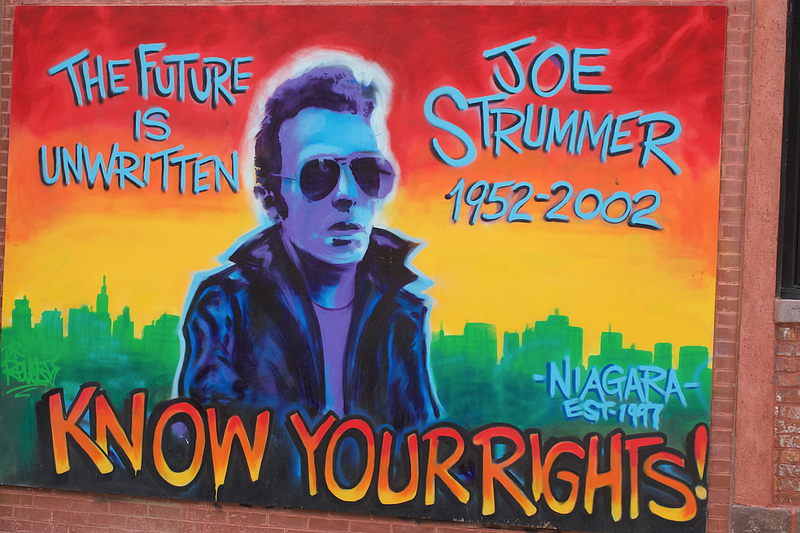
New Yorkers still mourn the passing of Joe Strummer. Photo by Ed Yourdon. Link. Strummer died of a heart attack on December 22, 2002.

6. “Spanish Bombs” (1979 — London Calling)

Rolling Stone Magazine called “Spanish Bombs” —

“probably London Calling‘s best and most ambitious song. A soaring, chiming intro pulls you in, and before you can get your bearings, Strummer’s already halfway into his tale. Lost and lonely in his ‘disco casino,’ he’s unable to tell whether the gunfire he hears is out on the streets or inside his head.”

This is why I adore The Clash. They have a world vision that is not really evident with other “punk bands” like The Ramones and The Sex Pistols. And I hate labeling The Clash punk because they have so many styles that they fuze together into their own sound.

Spanish Bombs” opens —

Spanish songs in Andalucía The shooting sites in the days of ‘39 Oh, please, leave the vendanna open Federico Lorca is dead and gone Bullet holes in the cemetery walls The black cars of the Guardia Civil Spanish bombs on the Costa Rica I’m flying in a DC 10 tonight.

Chorus:

Spanish bombs, yo te quiero infinito Yo te quiero, oh mi corazón Spanish bombs, yo te quiero infinito Yo te quiero, oh mi corazón

The song is filled with vivid imagery —

Back home the buses went up in flashes The Irish tomb was drenched in blood Spanish bombs shatter the hotels My senorita’s rose was nipped in the bud

The song surrounds the Civil War raging in Spain while the rest of the world seemed to be getting ready to escalate World War II. On the website, “The Punk History Lesson of “Spanish Bombs” by Larry Glickman, he writes:

Never has such a rough-hewn punk band sounded so good.

Even though the song reflects scenes from the Spanish Civil War, between General Franco and the Republicans, the blacks and the reds, the song is largely about the struggles in other places in the 1970s.

“It is really a reflection on battles going on in current-day Spain, England, and Ireland, and how the places of great tragedy and art have come to be treated only as places for tourists to visit on their vacations.” — Larry Glickman.

Even casting aside the political message, Glickman writes that the song is “as tight and together as any rock band has ever been.”

The rough, beautifully shoddy musicianship serves the song well, and the combination of the English and Spanish languages in the lyric is poetic, musical and satisfyingly challenging.
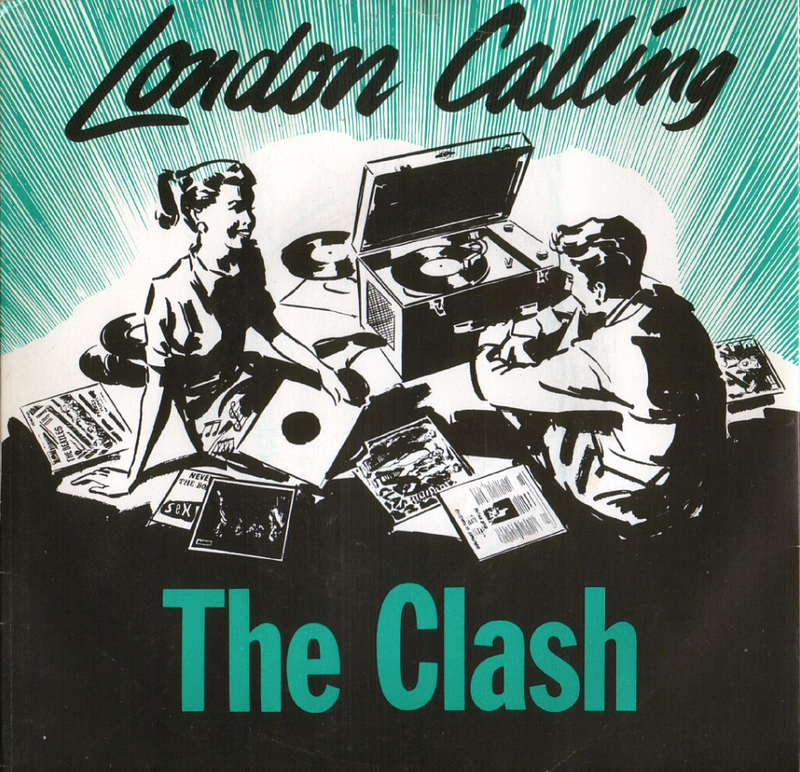
1979 7" single of London Calling, B side — Armagideon Time. Link. Photo by Ian Burt.

7. “Lost in the Supermarket” (1979 — London Calling)

I used this song when my wife, who once taught culinary arts, wanted an introductory video to her course. So I took my video camera and mic and followed her through the grocery store. The song also reminds me of Allen Ginsberg’s awesome Beat poem “Supermarket in California.”

What peaches and what penumbras! Whole families shopping at night! Aisles full of husbands! Wives in the avocados, babies in the tomatoes! — and you, Garcia Lorca, what were you doing down by the watermelons?

In The Clash song, which has elements of pop and soul, we have the same idea — lost in a world of commercialism and dehumanization.

The chorus opens with a feeling perhaps we all feel — lost — enticed with discounts and “special offers.”

I’m all lost in the supermarket. I can no longer shop happily. I came in here for the special offer. Guaranteed personality.

Can any market that’s geared toward the masses guarantee personality? Maybe the corner deli or the grocer — but not in the era of these supermarket complexes. The word “super” implies that, right?

In the first verse, the dehumanization starts at birth with dark humor, and then in the dehumanized suburbs, where we have walled ourselves in with our privacy hedges. The irony of people living on the ceiling accelerates the upside-down world. People fight and scream. And it’s always been this way for the narrator:

I wasn’t born, so much as I fell out. Nobody seemed to notice me. We had a hedge back home in the suburbs. Over which I never could see I heard the people who live on the ceiling Scream and fight, most scarily Hearing that noise was my first ever feelin’ That’s how it’s been, all around me

The second verse brings us from the alienated home and neighborhood back to the cold comfort of the supermarket with its “make me happy” things. The narrator empties some bottle for self-medication — and it’s like “mother’s little helper” with its momentary freedom from pain. But even the kids are not friends — and they scream, too, making noise for company. And the people close to the narrator can only talk “long distance.” Ironic, yes? And all of this, of course, in the Modern Era, is a cause for loneliness and alienation:

I’m all tuned in, I see all the programs. I save coupons from packets of tea. I’ve got my giant hit, discotheque album. I empty a bottle, I feel a bit free. The kids in halls and the pipes in the walls Making noises for company Long distance callers make long distance calls And the silence makes me lonely.

The song reminds me so much of Simon and Garfunkels’ “The Sounds of Silence.” And this is supposed to be punk? Or post-punk?

Oh, btw, if you’re also in literature, too, John Updike has a great story called “A&P” — all about pathetic white knighting and grocery store hilarity.

8. “Guns of Brixton”
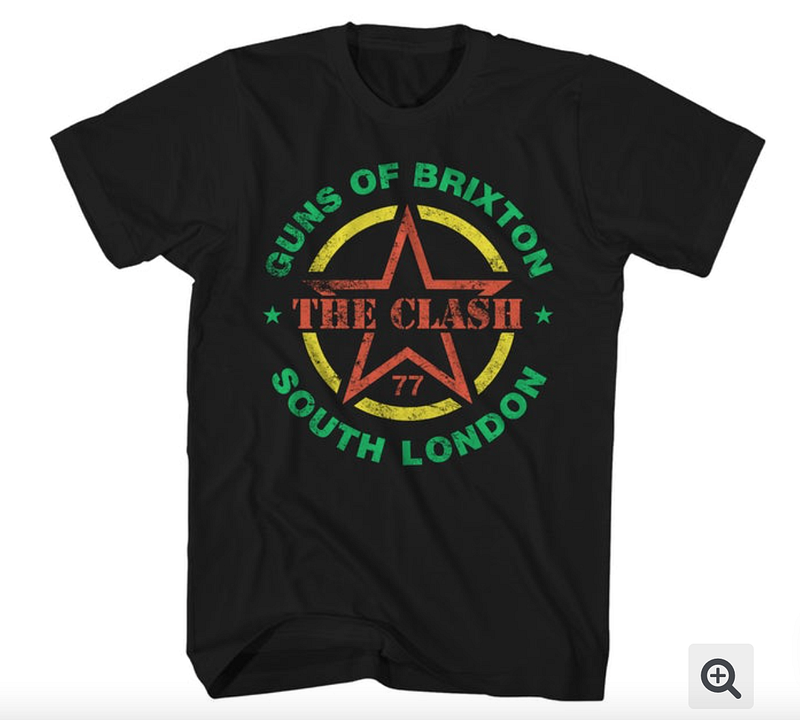
I’m on the waiting list for this shirt in large. Link to page.

Bassist Paul Simonon sings on “The Guns of Brixton.” Again, a song that seems so now and ridiculously painful with our battle of racism and poverty. Have we learned nothing? It was also his first song that he composed and sang. In an interview with Scott Rowley in October 1999 for Bassist Magazine, he said:

“You don’t get paid for designing posters or doing the clothes, you get paid for doing the songs.”

The reggae influence is immediately noticeable. So what is reggae?

Reggae, style of popular music that originated in Jamaica in the late 1960s and quickly emerged as the country’s dominant music. By the 1970s it had become an international style that was particularly popular in Britain, the United States, and Africa. It was widely perceived as a voice of the oppressed.

So it makes sense, right, that The Clash who sings about the oppressed would use a style of music about resistance to colonial rule and racism and injustice.

The song begins with rhetorical questions. It’s not a matter of if — it’s all a matter of “when.”

When they kick at your front door How you gonna come? With your hands on your head Or on the trigger of your gun?

When the law break in How you gonna go? Shot down on the pavement Or waiting on death row?

Every year we study Martin Luther King. This year, thanks to the recommendation of Ta-Nehisi Coates in his amazing book, Between the World and Me, we also study Malcolm X’s speech “The Ballot or The Bullet.” There are two ways to resist oppression: civil disobedience or violent disobedience. The American and French and Russian Revolutions were violent. And I don’t think the Nazis would care a tinker’s cuss about civil disobedience. That would just make it easier for them to gas us, right?

Paul Simonon adds to the powerful chorus a voice of disobedience:

You can crush us You can bruise us But you’ll have to answer to Oh, the guns of Brixton.

Okay. If you’ve visited the great city of London, as I have many times, perhaps you have not crossed over the Thames and ventured into Brixton. It’s not on the tourist maps unless you’re on The Clash Tour.

To get from the “West Side of the Thames,” take Vauxhall Bridge in Pimlico, and take South Lambeth Road, and then the A203 to Brixton.

Electric Avenue in Brixton in 2007. Link. Yes — that’s the Eddy Grant song of fame.

It’s an eerie song all because the song predates the actual Brixton riots that occurred in 1981. The song was recorded in 1979.

In a feature story “Bloody Saturday” in Time Magazine on April 20, 1981 —

At the peak of the violence, more than 1,000 police in riot gear, huddled like Roman legionnaires behind shields, battled some 600 black West Indian youths, interspersed with a few masked white rioters.

When the hurricane of violence ended after five brutal hours, the toll was heavy: 165 policemen injured — 26 requiring hospitalization — along with scores of civilians. Nearly 100 rioters were arrested. Estimates of property damage ran to more than $2.2 million. Beyond the burnt buildings and ravaged streets twinkling with shards of glass from shattered storefront windows, however, London now bears a more lasting scar: the psychic damage from the worst race riot in British history, an ugly explosion reminiscent of the violence that tore apart dozens of American cities in the ’60s and, only eleven months ago, left whole sections of Miami in flames.

Said one Brixton dweller: “This is not a race riot. We are not here to hurt white people. It is about jobs, money, all the rest. You can only take so much.” But the fact is that tension has been building for months in Brixton, home of many of the 620,000 black West Indians who have immigrated to Britain, or been born there, since the 1950s. As in the U.S., racial friction and unemployment often seem to go together: the jobless rate in areas like Brixton is twice Britain’s 10.3% national average.

Imagine a jobless rate of 10.3% — and then double that. But The Clash always had their fingers on the pulse of inequality.

In another verse,

You know it means no mercy They caught him with a gun No need for the Black Maria Goodbye to the Brixton sun.

The “Black Maria” is a term for a black police van transporting prisoners.
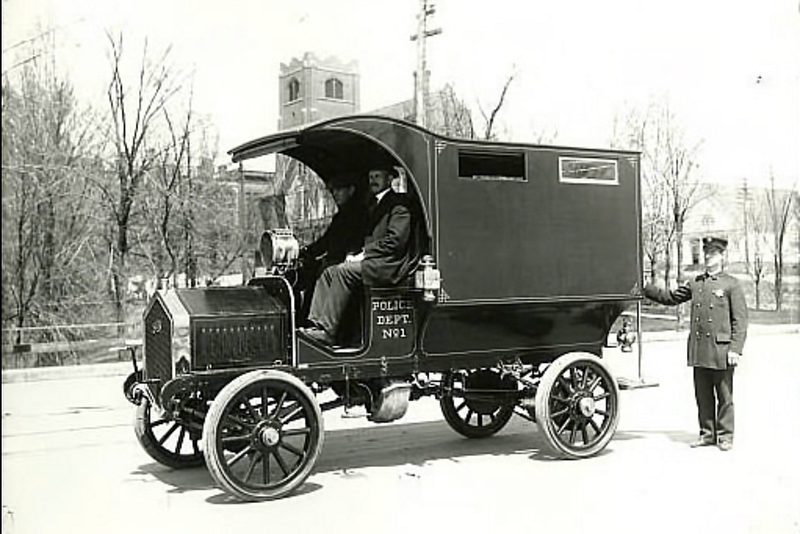
A “back maria” — or paddywagon. Link. The term paddy is derogatory because it refers to the Irish in NYC in the 1840s and 50s who were often arrested.

9. “Car Jamming” (Combat Rock — 1982)

Is this the most underrated great song from The Clash? Perhaps. Combat Rock as an album gets better as I get older. Some albums are like that. I’m like — wait — there are more great songs on the album others the two monster hit?

Can we say that New Wave influenced the sound of The Clash on Combat Rock — this double-platinum album? The album “charted at number 2, spending 23 weeks in the UK charts and peaked at number 7 in the United States, spending 61 weeks on the chart.”

You know — the likes of Adam and the Ants, Devo, or The Talking Heads, Combat Rock. But maybe on this song — and definitely the “hits” like “Rock the Casbah” and “Should I Stay or Should I Go.”

The song has such a funky, jungle beat. Makes sense — because Strummer and Jones use so many animal metaphors about the urban jungle and the zookeeper ‘executives’ who are:

Selling is what selling sells But only saints on the seven avenues Can sell the seven hells Fanning out the drug afflicted leperising zone Once inside the executive He never leaves his home.

Madison Avenue and 7th Avenue can definitely sell what the phony alleged “saints” — these con men — can sell hell to the people foolish enough to buy. These executives become hyenas and gorillas and snakes — dragging victims away in the “car jam” — a metaphor for, perhaps, urban class warfare.

In the first verse, we hear of a shy boy from Missouri whose

Boots blown off in a ’60s war Riding aluminum crutches Now he knows the welfare kindness Agent Orange colour blindness As we works from door to door The violence in the carpets The error of his wife Drives the slum-bum dweller To grind his hunting knife In homesteads of cigar box The radios hive like bees The body in the ice box has no date for freeze.

So many allusions to Vietnam, right? Agent Orange — a defoliant chemical used by the US in the Vietnam War. It’s a jungle, after all. And how can one spot the enemy underneath the flourishing trees? But now Agent Orange has left this poor boy blind and living in the slums. That last line is powerful, too, and all too ironic. We stack dead bodies in an icebox until burial, but this poor boy cannot freeze, even though he has been abused and traumatized by “King Kong multi-nationals” He doesn’t have the freedom to die properly. Is he just the walking dead?

That’s what I love about The Clash. You rock out to the beat, and then, take the time to study the lyrics — and you’re like — wow! It’s a hard-hitting social commentary about the poor and the oppressed — a message right out of Bruce Springsteen or John Steinbeck or Woody Guthrie.

I had to research the meaning of Missa Lubba. It has an African setting that is sung in Latin. To show just how much The Clash fuses various genres of music together — consider what Jim Farrington writes at the University of Rochester about the Missa Lubba:

Elements of both pure African style and Western influence are evident in the Missa Luba. The open-ended forms, scale types, melodic contours, choral textures, accompaniment, adherence to tempo, and duple metric organization heard in the Kyrie, Gloria, Credo, and Agnus Dei movements are typically African.

And what about Lauren Bacall — the famous American actress? Wasn’t she in the famous film with Bogart called The African Queen? No — that was Katherine Hepburn, but Bacall “tagged” along with her husband — Mr. Bogart to Africa. And then — I guess — it all makes sense.

10. “Straight to Hell” (1982 — Combat Rock)

Before reading, listen to “Paper Planes” from M.I.A. It was featured in the award-winning film, Slumdog Millionaire. Then listen to “Straight to Hell” from the 1982 album, Combat Rock.

Yep — some great sampling there, right? It makes sense that M.I.A would use the “sound” of The Clash for such an urban, Indian sound. That’s what The Clash does so well.

Jones and Strummer write:

If you can play on the fiddle How’s about a British jig and reel? Speaking King’s English in quotation As railhead towns feel the steel mills rust Water froze In the generation Clear as winter ice This is your paradise.

This ain’t no paradise. Does “The Man” have any need for the poor? Even if the poor in rusted steel mills can dance a British “jig and reel,” you know where the Man tells you to go:

Go straight to hell boys Go straight to hell boys

Okay — let’s take a shot at the Yanks and Vietnam. The Clash cannot tolerate any country or culture or political system that abuses its own people.

Wanna join in a chorus, of the Amerasian blues? When it’s Christmas out in Ho Chi Minh city Kiddie say papa papa papa papa papa-san take me home See me got photo, photo, photograph of you And mamma mamma mamma-san Of you and mamma mamma mamma-san Lemme tell ya ‘bout your blood bamboo kid It ain’t coca-cola it’s rice.

So it’s not the “jig and reel” anymore. The next superpower, The United States, will allow you to sing the “Amerasian blues” — a great satirical adjective there, right? It’s a portmanteau word — American and Asian. And your blood, kid is not filled with Coca-Cola. It’s rice. Think Miss Saigon here, a show I’ve seen twice in London and wept copious tears all over my wife who was mad at me for not bringing her tissues and not warning her.

And of course, The Clash cares for the immigrants, as much as Tom Joad and John Steinbeck from The Grapes of Wrath:

Can you cough it up loud and strong The immigrants, they wanna sing all night long It could be anywhere Most likely could be any frontier Any hemisphere No man’s land There ain’t no asylum here King Solomon he never lived ‘round here

The allusion to King Solomon refers to a lack of justice and wisdom. The immigrants, the vast diaspora, victims of colonialism, whether from British, French, or American powers, find no asylum. They exist in a “no man’s land.”

And The Clash doesn’t mince words: They can all “go straight to hell.”

Yeah, this song came out in the 1980s, but Duran Duran and Wham and Culture Club it’s not.

In the liner notes in the double-disc collection — The Story of the Clash, Volume 1, Albert Transom recounts his days with the band in a rather long, stream-of-consciousness narrative. He wrote it in 1988 from Florida. He was their valet. He writes:

Splendid piles of masonry some of those theaters there in the British Isles, The Electric Circus in Manchester, almost like an abandoned cinema in a sea of rubble. What great nights we all had there. Punk was like an earthquake. People were screaming and shouting. It was blazing hot inside in the middle of winter…

If I had to sum it up, I say we played every gig on the face of the Earth and that’s what it’s all about.”

The Clash

  • Joe Strummer — lead and backing vocals, rhythm guitar
  • Mick Jones — lead guitar, backing vocals, lead vocals on “Stay Free”
  • Paul Simonon — bass guitar, backing vocals
  • Topper Headon — drums
Music
Rock
Rock And Roll
Review
Punk
Recommended from ReadMedium