avatarArslan Mirza

Free AI web copilot to create summaries, insights and extended knowledge, download it at here

6289

Abstract

        </div>
        </div>
      </a>
    </div><h1 id="5c92">#4: The Travelling Salesman Problem</h1><p id="bb80">The next stop on our coding safari is the legendary Travelling Salesman Problem (TSP). The problem is simple: given a list of cities and the distances between each pair of cities, what is the shortest possible route that visits each city exactly once and returns to the origin city?</p><p id="5764">If you thought brute force is the way to go, well… imagine a salesman with 15 cities to visit. That’s 1,307,674,368,000 (15!) possible routes. Good luck, brute force!</p><figure id="7354"><img src="https://cdn-images-1.readmedium.com/v2/resize:fit:800/1*rYI_u91Qr4Jex6oJTDGrbw.png"><figcaption><a href="https://media.geeksforgeeks.org/wp-content/cdn-uploads/Euler12.png">Image Source</a></figcaption></figure><p id="792e">Enter dynamic programming, again! By utilizing a ‘memoization table’ (remember, memory isn’t just about RAM), you can store solutions to subproblems — in this case, shortest paths between cities — to be reused instead of recalculated. We are essentially trading space for time, a popular bargain in computer science.</p><p id="f174">Phew! All this traveling and packing can leave you weary. Still, don’t throw in the towel just yet! Onward, we traverse the treacherous terrains of concurrency.</p><div id="d5e6"><pre>Parallel Coding Puzzles: A Race You Don<span class="hljs-number">'</span>t Want to Win</pre></div><h1 id="10fa">#5: Unraveling the Threads of Race Conditions</h1><p id="0ab3">What do Olympic sprinters and codes have in common? They both hate false starts!</p><p id="1faa">In the coding world, this is known as a race condition — when two or more threads can access shared data and try to change it simultaneously. If you’re not careful, this can lead to unpredictable and hilarious (or disastrous) results.</p><figure id="fcc3"><img src="https://cdn-images-1.readmedium.com/v2/resize:fit:800/1*-j2fJoh4BZkiY9W7orX1Vg.png"><figcaption><a href="https://media.cheggcdn.com/media/812/812fd48c-7a52-46cc-b9df-c232ec25fe4e/phpOZatB0.png">Image Source</a></figcaption></figure><p id="6710">Imagine two roommates who share a joint bank account. They both check the account balance at the same time, see $500, and simultaneously withdraw $300 each for a night out on the town. Now, if you paid attention in math class, you’d know that $500 minus $300 twice does not equal a happy bank account.</p><p id="eac2"><b>The cure for this headache?</b></p><p id="8799">Synchronization mechanisms like mutexes or semaphores can be used to ensure that only one thread accesses shared data at a time, maintaining your bank account, sanity, and living situation intact.</p><div id="3c7e" class="link-block">
      <a href="https://levelup.gitconnected.com/the-dark-side-of-software-engineering-ee412b306ae9">
        <div>
          <div>
            <h2>The Dark Side of Software Engineering</h2>
            <div><h3>Why I Regret My Career Choice</h3></div>
            <div><p>levelup.gitconnected.com</p></div>
          </div>
          <div>
            <div style="background-image: url(https://miro.readmedium.com/v2/resize:fit:320/1*KuNBHRhbuS0HIFw55D0sRw.png)"></div>
          </div>
        </div>
      </a>
    </div><h1 id="0735">#6: The Dining Philosophers' Problem</h1><p id="d69b">The Dining Philosophers Problem is another classical concurrency problem, where five philosophers sit at a round table, with a chopstick between each pair.</p><p id="646f">Each philosopher must alternately think and eat. However, a philosopher can only eat when they have both left and right chopsticks. This problem is an analogy for a common deadlock situation in concurrent programming.</p><figure id="d5f9"><img src="https://cdn-images-1.readmedium.com/v2/resize:fit:800/1*rsrWPEWFTnVn9VbYhZ7jow.png"><figcaption><a href="https://media.geeksforgeeks.org/wp-content/uploads/dining_philosopher_problem.png">Image Source</a></figcaption></figure><p id="5f8f"><b>How do we solve this gourmet dilemma?</b></p><p id="7f08">Several solutions exist, but the simplest may be to introduce an ‘arbiter’ (like a stern dining room monitor). The philosophers must ask the arbiter for permission before picking up their chopsticks, ensuring that only four philosophers can eat at once. This simple rule effectively avoids the deadlock.</p><p id="27ac">Concurrency problems can be like a Herculean knot, convoluted and intricate. But with the right approach, they can be unraveled.</p><div id="e395"><pre><span class="hljs-attr">The Headache of Heavy Computations:</span> <span class="hljs-string">Algorithmic</span> <span class="hljs-string">Complexity</span></pre></div><h1 id="e5fc">#7: Solving the Subset Sum Problem</h1><p id="842e">Sometimes coding problems have less to do with your code’s correctness and more to do with how fast or efficiently it can run. Let’s explore this with the Subset Sum problem: given a set of integers, does any non-empty subset sum exactly to zero?</p><p id="6df5">Brute force seems an easy option, just check all possible subsets, right?</p><p id="0e4f">But wait, the number of possible subsets is 2^n (where n is the number of integers). For a set of 20 integers, we’re already looking at 1,048,576 possibilities. So, brute force isn’t our friend here. We need to be a little more clever.</p><figure id="2171"><img src="https://cdn-images-1.readmedium.com/v2/resize:fit:800/1*1qd22hacd52kdpNNoMWFMw.jpeg"><figcaption><a href="https://media.geeksforgeeks.org/wp-content/cdn-uploads/Subset-Sum-Problem1.jpg">Image Source</a></figcaption></figure><p id="89a7">One efficient solution is to sort the list, then use two pointers, one starting from the beginning (lowest number), and the other from the end (highest number). If the sum of both elements is greater than zero, we move the end pointer one step back, if it’s less, we move the start pointer one step forward. This way, we avoid checking all subsets and make our code significantly faster.</p><div id="3e8b" class="link-block">
      <a href="https://levelup.gitconnected.com/10-waste-of-time-practices-programmers-should-avoid-3fe4f484977d">
        <div>
          <div>
            <h2>10

Options

Waste-of-Time Practices Programmers Should Avoid</h2> <div><h3>Averting Time-Wasting Traps</h3></div> <div><p>levelup.gitconnected.com</p></div> </div> <div> <div style="background-image: url(https://miro.readmedium.com/v2/resize:fit:320/1*lD9i4IYHNRgYAvcoevHEyA.png)"></div> </div> </div> </a> </div><h1 id="7f39">#8: The N-Queens Problem</h1><p id="d07f">A classic puzzle that often crops up in interviews is the N-Queens Problem. Place N queens on an N×N chessboard so that no two queens threaten each other. It sounds simple, but solving it can be quite tricky.</p><figure id="4957"><img src="https://cdn-images-1.readmedium.com/v2/resize:fit:800/1*VtHmXERKkpYLRC5Q0PnfgA.png"><figcaption><a href="https://media.geeksforgeeks.org/wp-content/uploads/N_Queen_Problem.jpg">Image Source</a></figcaption></figure><p id="3aee">Using a naive approach and trying to place queens on the board one row at a time can lead to a huge number of possibilities to explore. Instead, use a backtracking algorithm, where you incrementally place queens and backtrack whenever you find a position where no queen can be placed.</p><p id="2680">Through these examples, we see that having a correct solution is just the first step. The true challenge lies in optimizing your code for performance, which is an art in and of itself.</p><div id="d6e3"><pre>The Coder<span class="hljs-comment">'s Endgame: Debugging and Beyond</span></pre></div><h1 id="fd6d">#9: Debugging Infinite Loops</h1><p id="57b2">Welcome to the endgame, where we look at challenges not tied to a specific problem but to coding as a whole.</p><p id="249d">Let’s start with the bane of every programmer’s existence: debugging, specifically, the dreaded infinite loops.</p><figure id="7dbc"><img src="https://cdn-images-1.readmedium.com/v2/resize:fit:800/1*Q2Ts4yGR24eIqdTNOLA8jg.png"><figcaption><a href="https://miro.readmedium.com/v2/resize:fit:441/1*9Zprm6bh1roItXCFS1GY3g.png">Image Source</a></figcaption></figure><p id="1133">Infinite loops occur when the loop condition never becomes false. A seemingly innocuous while loop can bring your program (and your sanity) to its knees.</p><p id="8a6d">The remedy?</p><p id="cf2a">Good old-fashioned code review and liberal use of print statements. By checking your loop conditions and inserting print statements, you can usually catch where the loop is going haywire.</p><div id="eb6d" class="link-block"> <a href="https://levelup.gitconnected.com/level-up-your-coding-skills-with-these-10-strategies-c62f317428a4"> <div> <div> <h2>Level Up Your Coding Skills with these 10 Strategies</h2> <div><h3>(A Guide for Aspiring Programmers)</h3></div> <div><p>levelup.gitconnected.com</p></div> </div> <div> <div style="background-image: url(https://miro.readmedium.com/v2/resize:fit:320/1*SVdR2YAcC3rDO0WcOkWqUg.png)"></div> </div> </div> </a> </div><h1 id="2843">#10: Deciphering Cryptic Error Messages</h1><p id="01e4"><b>Error messages:</b> a cryptic collection of words and numbers that are supposed to tell us what’s wrong with our code but often leave us more confused.</p><figure id="2713"><img src="https://cdn-images-1.readmedium.com/v2/resize:fit:800/1*Y03vzD-ux2yk_IXItUgq_A.png"><figcaption><a href="https://i.imgur.com/DfPwa8E.png">Image Source</a></figcaption></figure><p id="b974">To solve this puzzle, divide and conquer. Break down the error message, identify the line number, the type of error, and then use that information to isolate the problematic piece of code.</p><p id="42c9">In many cases, Google (or Stack Overflow) is your best friend. There’s a good chance someone else has faced the same problem and found a solution.</p><h1 id="26db">Wrapping Up — Dealing with Impostor Syndrome</h1><p id="12b2">We’ll end with the most elusive and persistent coding challenge: dealing with impostor syndrome. It’s that nagging feeling that you’re not good enough, that everyone else knows more than you, and that one day you’ll be exposed as a fraud.</p><p id="8a63">This isn’t a problem you solve with a fancy algorithm or a clever hack…</p><p id="cf8a">You tackle it with patience, perseverance, and a healthy dose of self-belief. Always remember, even the best coders were once beginners. With every problem you crack, with every bug you squash, you grow as a coder and inch away from that impostor feeling.</p><p id="54d9">With that, we conclude our whirlwind tour of ten headache-inducing coding challenges and how to solve them. Whether you’re a code newbie or a grizzled veteran, we hope you’ve found something in these challenges to tickle your curiosity and stretch your skills.</p><p id="112f">That’s it…Thanks.</p><p id="f71b">I hope you like it!</p><div id="f154" class="link-block"> <a href="https://levelup.gitconnected.com/i-just-met-a-guy-making-250-000-annually-33179bc5b43a"> <div> <div> <h2>I Just Met a Guy Making $250,000+ Annually</h2> <div><h3>And surprisingly he didn’t write a single line of code</h3></div> <div><p>levelup.gitconnected.com</p></div> </div> <div> <div style="background-image: url(https://miro.readmedium.com/v2/resize:fit:320/1*KG_JM5ypt7fAKZhEdPDAmw.jpeg)"></div> </div> </div> </a> </div><div id="72b5" class="link-block"> <a href="https://levelup.gitconnected.com/life-beyond-the-screen-the-human-side-of-a-software-engineer-53f5378f6094"> <div> <div> <h2>Life Beyond the Screen (The Human Side of a Software Engineer)</h2> <div><h3>The Human Heartbeat in a World of Code</h3></div> <div><p>levelup.gitconnected.com</p></div> </div> <div> <div style="background-image: url(https://miro.readmedium.com/v2/resize:fit:320/1*9iZrSQAkI_-4l6JPeDPl3g.png)"></div> </div> </div> </a> </div></article></body>

10 Headache-Inducing Coding Challenges and How to Solve Them

The Coder’s Endgame

https://www.pexels.com/photo/man-with-hand-on-temple-looking-at-laptop-842554/

So, you think you’re the Picasso of programming, the Mozart of markup languages, or the Shakespeare of shell scripting?

Let’s see if these mind-bending challenges could shake that confidence a bit, shall we? Today, we’re diving headfirst into ten coding challenges that can induce migraines even in the most seasoned coders. But fret not, we’ll also discuss ways to vanquish these brain-boiling beasts.

Recursion, Recursion on the Wall…

#1: Solving the Towers of Hanoi

Remember when your computer science professor turned sadistic and introduced recursion with the Towers of Hanoi problem? Did you feel like a hamster stuck in an infinite loop?
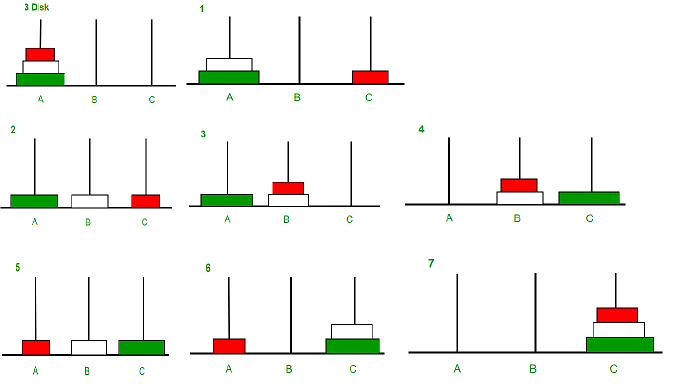
Image Source

To those who just broke into a cold sweat remembering it, here’s a refresher: You have three rods and a certain number of disks of different sizes which can slide onto any rod.

The puzzle starts with the disks on one rod in ascending order of size, the smallest at the top. The objective is to move the entire stack to another rod, obeying two rules:

  • Only one disk can be moved at a time.
  • No disk may be placed on top of a smaller disk.

To solve this, you need to embrace recursion…

Like accepting the inevitability of taxes or random LinkedIn invites from marketers, once you accept recursion, it becomes less terrifying.

Here’s a hint: Try breaking the problem down. Move n-1 disks to an auxiliary rod, then the largest (nth) disk to the destination rod, and move the n-1 disks from the auxiliary rod to the destination rod. See? Recursion is not so bad.

#2: Traversing Maze Problems

What do rats in lab experiments and coders have in common?

They both find themselves traversing mazes more often than they’d like.

Take this scenario: You’re given a 2D grid representing a maze, where 0s indicate open paths, 1s are walls, and you need to find a path from the top-left to the bottom-right corner.
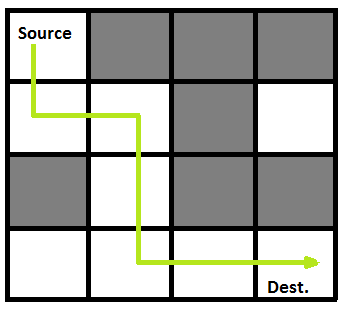
Image Source

Solving this one requires (yes, you guessed it) recursion and some path-finding algorithm, such as Depth-First Search (DFS). However, beware of infinite loops (or becoming the proverbial rat in the maze). Use a way to mark visited grid cells or paths to avoid a recursion-induced Groundhog Day.

There you have it, recursion in all its glory, with enough to make your head spin and your code sparkle. Ready for more? Of course, you are!

When Memory is not Just about RAM

#3: Conquering the Knapsack Problem with Dynamic Programming

Let’s roll up our sleeves and delve into the seemingly intractable realm of dynamic programming, where the uninitiated tread with trepidation. Fear not, dear coders, for you are not alone in this journey.

Say you’re on a mythical treasure hunt (or a Black Friday shopping spree) with a knapsack of a certain capacity, facing a plethora of items, each with its weight and value.

The goal?

Maximize the value of the items in the knapsack, without exceeding its weight capacity. This infamous problem is a poster child for dynamic programming.
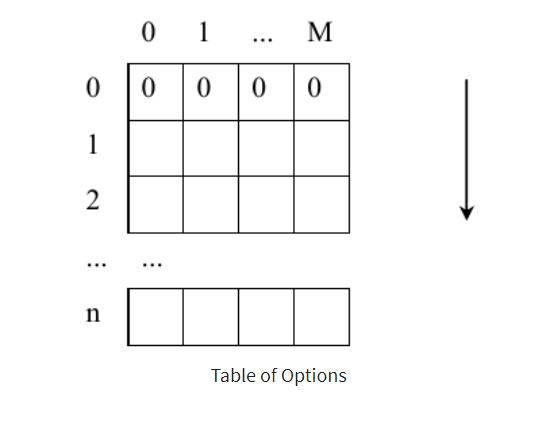
Image Source

This challenge can be overcome by using a 2D array, where each cell represents the maximum value that can be carried, given a certain knapsack capacity and a subset of items.

Start with the simplest subproblem (smallest weight, fewest items), then work your way up to more complex subproblems, storing and reusing solutions as you go along.

#4: The Travelling Salesman Problem

The next stop on our coding safari is the legendary Travelling Salesman Problem (TSP). The problem is simple: given a list of cities and the distances between each pair of cities, what is the shortest possible route that visits each city exactly once and returns to the origin city?

If you thought brute force is the way to go, well… imagine a salesman with 15 cities to visit. That’s 1,307,674,368,000 (15!) possible routes. Good luck, brute force!
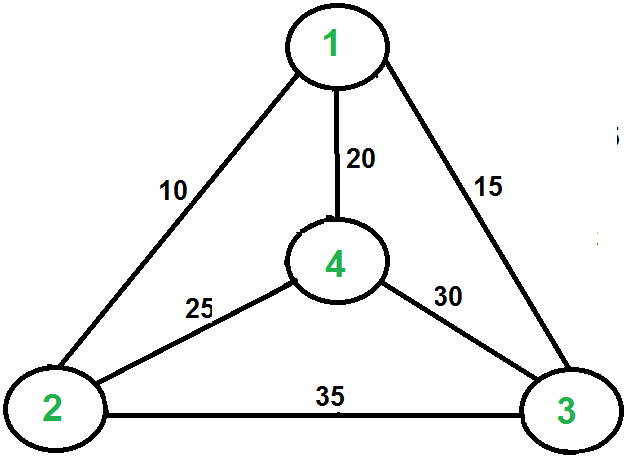
Image Source

Enter dynamic programming, again! By utilizing a ‘memoization table’ (remember, memory isn’t just about RAM), you can store solutions to subproblems — in this case, shortest paths between cities — to be reused instead of recalculated. We are essentially trading space for time, a popular bargain in computer science.

Phew! All this traveling and packing can leave you weary. Still, don’t throw in the towel just yet! Onward, we traverse the treacherous terrains of concurrency.

Parallel Coding Puzzles: A Race You Don't Want to Win

#5: Unraveling the Threads of Race Conditions

What do Olympic sprinters and codes have in common? They both hate false starts!

In the coding world, this is known as a race condition — when two or more threads can access shared data and try to change it simultaneously. If you’re not careful, this can lead to unpredictable and hilarious (or disastrous) results.
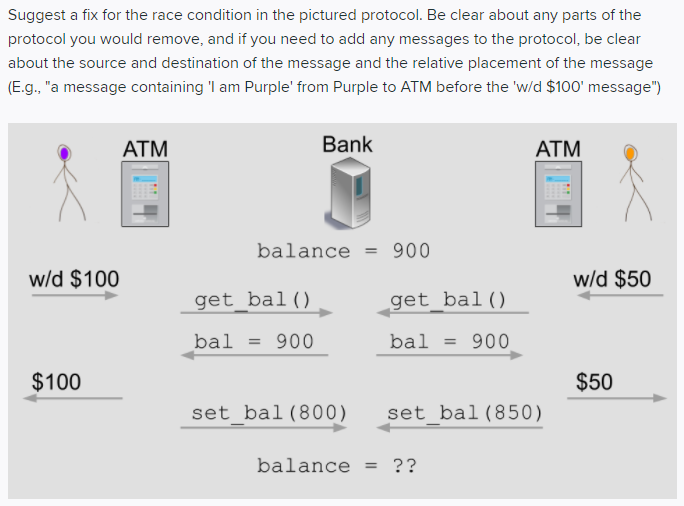
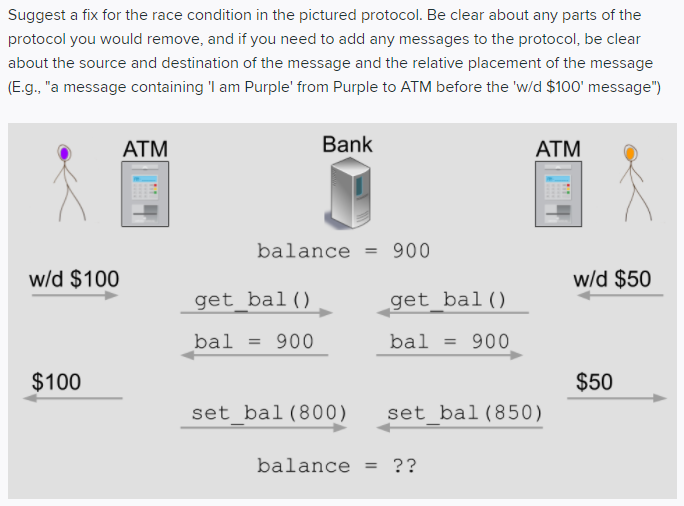
Image Source

Imagine two roommates who share a joint bank account. They both check the account balance at the same time, see $500, and simultaneously withdraw $300 each for a night out on the town. Now, if you paid attention in math class, you’d know that $500 minus $300 twice does not equal a happy bank account.

The cure for this headache?

Synchronization mechanisms like mutexes or semaphores can be used to ensure that only one thread accesses shared data at a time, maintaining your bank account, sanity, and living situation intact.

#6: The Dining Philosophers' Problem

The Dining Philosophers Problem is another classical concurrency problem, where five philosophers sit at a round table, with a chopstick between each pair.

Each philosopher must alternately think and eat. However, a philosopher can only eat when they have both left and right chopsticks. This problem is an analogy for a common deadlock situation in concurrent programming.
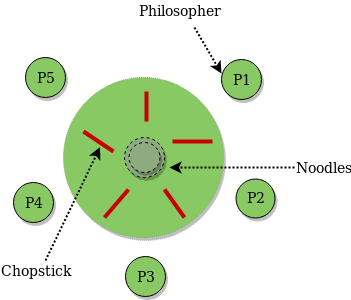
Image Source

How do we solve this gourmet dilemma?

Several solutions exist, but the simplest may be to introduce an ‘arbiter’ (like a stern dining room monitor). The philosophers must ask the arbiter for permission before picking up their chopsticks, ensuring that only four philosophers can eat at once. This simple rule effectively avoids the deadlock.

Concurrency problems can be like a Herculean knot, convoluted and intricate. But with the right approach, they can be unraveled.

The Headache of Heavy Computations: Algorithmic Complexity

#7: Solving the Subset Sum Problem

Sometimes coding problems have less to do with your code’s correctness and more to do with how fast or efficiently it can run. Let’s explore this with the Subset Sum problem: given a set of integers, does any non-empty subset sum exactly to zero?

Brute force seems an easy option, just check all possible subsets, right?

But wait, the number of possible subsets is 2^n (where n is the number of integers). For a set of 20 integers, we’re already looking at 1,048,576 possibilities. So, brute force isn’t our friend here. We need to be a little more clever.
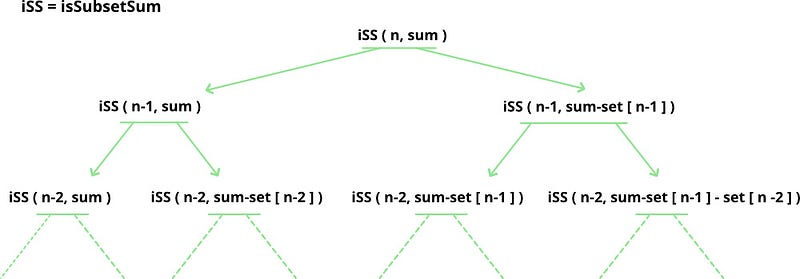
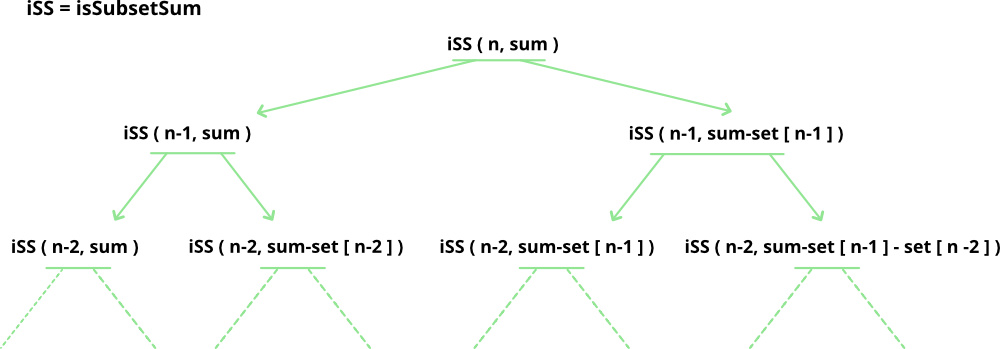
Image Source

One efficient solution is to sort the list, then use two pointers, one starting from the beginning (lowest number), and the other from the end (highest number). If the sum of both elements is greater than zero, we move the end pointer one step back, if it’s less, we move the start pointer one step forward. This way, we avoid checking all subsets and make our code significantly faster.

#8: The N-Queens Problem

A classic puzzle that often crops up in interviews is the N-Queens Problem. Place N queens on an N×N chessboard so that no two queens threaten each other. It sounds simple, but solving it can be quite tricky.
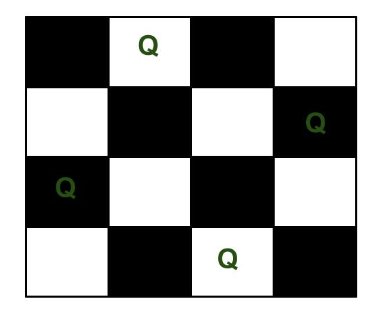
Image Source

Using a naive approach and trying to place queens on the board one row at a time can lead to a huge number of possibilities to explore. Instead, use a backtracking algorithm, where you incrementally place queens and backtrack whenever you find a position where no queen can be placed.

Through these examples, we see that having a correct solution is just the first step. The true challenge lies in optimizing your code for performance, which is an art in and of itself.

The Coder's Endgame: Debugging and Beyond

#9: Debugging Infinite Loops

Welcome to the endgame, where we look at challenges not tied to a specific problem but to coding as a whole.

Let’s start with the bane of every programmer’s existence: debugging, specifically, the dreaded infinite loops.
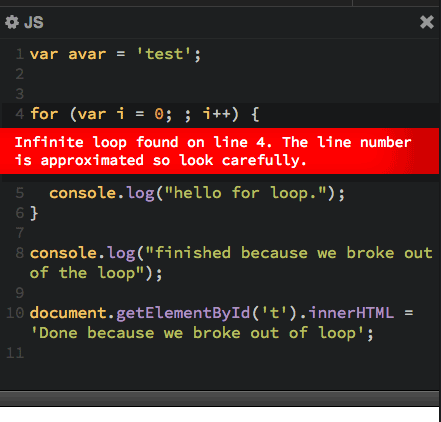
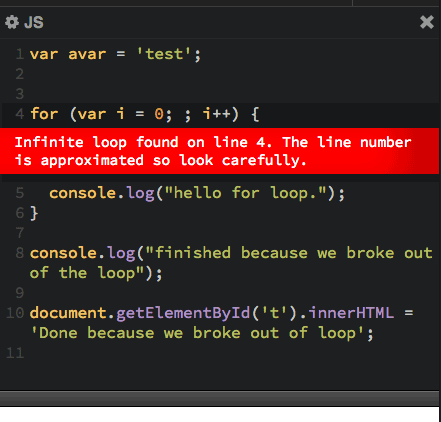
Image Source

Infinite loops occur when the loop condition never becomes false. A seemingly innocuous while loop can bring your program (and your sanity) to its knees.

The remedy?

Good old-fashioned code review and liberal use of print statements. By checking your loop conditions and inserting print statements, you can usually catch where the loop is going haywire.

#10: Deciphering Cryptic Error Messages

Error messages: a cryptic collection of words and numbers that are supposed to tell us what’s wrong with our code but often leave us more confused.
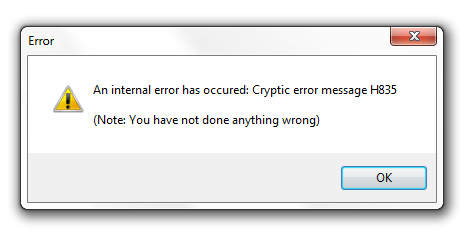
Image Source

To solve this puzzle, divide and conquer. Break down the error message, identify the line number, the type of error, and then use that information to isolate the problematic piece of code.

In many cases, Google (or Stack Overflow) is your best friend. There’s a good chance someone else has faced the same problem and found a solution.

Wrapping Up — Dealing with Impostor Syndrome

We’ll end with the most elusive and persistent coding challenge: dealing with impostor syndrome. It’s that nagging feeling that you’re not good enough, that everyone else knows more than you, and that one day you’ll be exposed as a fraud.

This isn’t a problem you solve with a fancy algorithm or a clever hack…

You tackle it with patience, perseverance, and a healthy dose of self-belief. Always remember, even the best coders were once beginners. With every problem you crack, with every bug you squash, you grow as a coder and inch away from that impostor feeling.

With that, we conclude our whirlwind tour of ten headache-inducing coding challenges and how to solve them. Whether you’re a code newbie or a grizzled veteran, we hope you’ve found something in these challenges to tickle your curiosity and stretch your skills.

That’s it…Thanks.

I hope you like it!

Top 10
Coding Challenge
Programmer
Tower Of Hanoi
Programming
Recommended from ReadMedium