

10 Eye-Opening Facts About Dogs You’ve Wondered
Peek into the canine mind: understanding dog behavior like never before
After our first enlightening journey into canine behavior, your questions have led Yulia Ivashchenko and me to explore even deeper.
This time, we’re tackling misconceptions about dog intelligence, uncovering what happiness means to them, and much more.
Whether you’re a dog owner or simply a dog lover, this article promises insights that will change how you see these loyal companions. Dive in with us.
1. Are There Smart and Dumb Dog Breeds?
No, there aren’t. Some breeds are considered smarter — often various types of shepherd dogs. However, the reason is that they were bred over many centuries to work closely with humans, making them better at learning commands. In reality, a dog’s obedience doesn’t necessarily equate to intelligence, and vice versa.
One should always consider the purpose for which a breed was developed. For instance, beagles were bred to follow a scent trail independently, ignoring other signals, dogs, and distractions. Therefore, it might seem that when a beagle catches a scent, it becomes deaf and oblivious, which could mistakenly be interpreted as stupidity. This is not the case; it’s simply a breed characteristic.
There’s a term in cynology called “stickiness” — this refers to a dog’s ability to fixate on a target, becoming virtually impossible to distract. For example, a beagle’s goal is to find and flush out a game based on scent. Conversely, bulldogs are known for their tenacity. Their breeding goal is to latch onto a wild animal and hang on undistracted until it expires.
For humans, a dog’s poor shift in focus is often seen as a drawback because it can be inconvenient. It may seem that such dogs are stubborn, but they were specifically bred for this; they’re not dumb.
A dog’s intellectual abilities depend not on its breed but on how it was raised.
If an animal is always chained or caged, with its only entertainment being fed according to a schedule, it lacks opportunities to develop and becomes dull. A stray dog, always in search of food and shelter, who walks and explores a lot, often turns out to be smarter.
2. Is Training Dogs Commands Necessary?
There’s a misconception that commands are strictly “sit,” “lie down,” “stand,” “come here,” and so forth. But you can teach a dog by saying, “Come here, I’ll give you a treat,” and it will come to you — that’s a recall trained. Or, “Stop, we need to wash your paws,” and eventually, it learns that it can’t enter rooms without cleaning its paws after a walk. Training commands is just like teaching anything else, such as not rushing at the food bowl until it’s filled.
If you have a well-behaved dog and you’re comfortable together, there’s no need to see a professional trainer for special commands. It’s not always necessary for a pet to act like a soldier. If your dog responds to “Come here, please” instead of a strict “Come,” that’s perfectly fine and sufficient for a comfortable life with your pet. Especially if the dog is not for competition but simply for you to love and befriend.
3. How to Tell If Your Dog Is Happy?

Five freedoms should be provided to any animal under human care:
- Freedom from hunger and thirst.
- Freedom from discomfort.
- Freedom from pain, injury, and disease.
- Freedom to express normal behavior.
- Freedom from fear and distress.
These are the basics.
A dog’s unhappiness is reflected in its behavior. For example, it may howl if it can’t stay home alone, indicating stress. Or it might fear going on walks. In such cases, it’s advisable to work with a professional to correct the behavior.
Dogs can’t verbally express their happiness, but it’s usually apparent to the naked eye when a pet is doing well: it’s healthy, its basic freedoms are not restricted, it eats well, and living with it is comfortable.
4. Can Dogs Feel Love? And How Can I Tell If My Pet Loves Me?
Love is a somewhat abstract concept. In the context of dogs, it’s more accurate to talk about attachment, which is a physiological process. Being close to a loved one or pet makes us feel calmer and more comfortable because it triggers the release of oxytocin, a hormone. Dogs also produce oxytocin, especially in the presence of their owners, making them feel more at ease.
Attachment in dogs can form not just towards people but also towards other animals. Sometimes, when an owner or another pet disappears, a dog can become sad and may even display signs of apathy.
Attachment can be healthy or unhealthy.
For example, a dog might be attached to all family members but may also be slightly afraid of the father if he tends to scold. This could result in an anxious attachment. A dog might show more emotion simply because the father praises or pets it less often.
If a dog is constantly dominated and punished, it can develop an unhealthy attachment, becoming fearful of being alone, for instance. This condition can be improved with the help of a specialist, though not always completely. Some traumas may be too challenging to fully overcome.
5. Are Some Dog Breeds Naturally Aggressive?
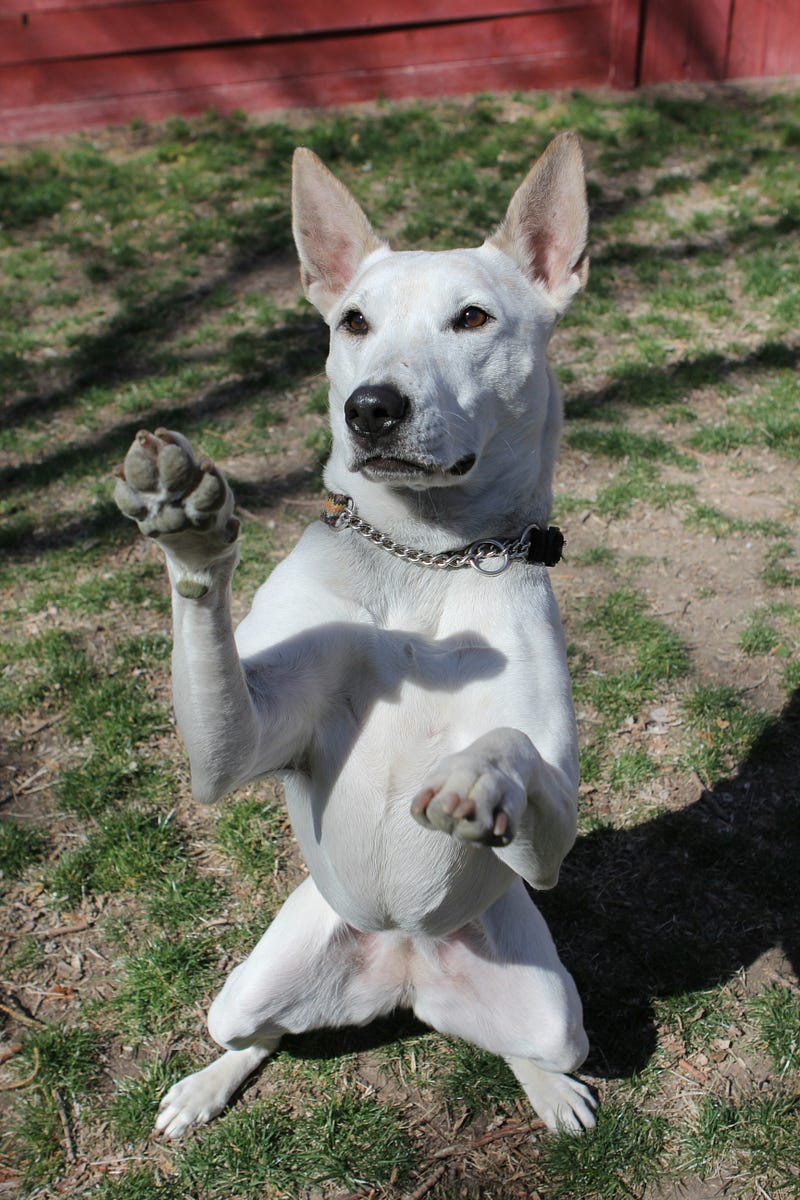
Aggression, rather than being an inherently “evil” trait, is an abstract human concept. In dogs, we talk about aggression, which is a form of defense: of their territory, food, owner, or, in a word, resources.
Aggression can manifest in different ways: some may bite, while others may simply push away. For instance, a dog might not want its owner to approach where it has hidden a bone. A more aggressive animal might bite and growl, while others may choose to push the owner away or lie on their stash to prevent access.
Aggression can be ingrained in the genotype, meaning some breeds are more prone to it than others. For example, golden retrievers are loved for their lack of aggression towards humans and other animals. They were originally bred to retrieve the game: the owner shoots a duck, and they bring it back. Beagles, expected to live in large packs, were bred to be non-aggressive to prevent fighting.
Conversely, Dobermans were bred for protection, to guard their and their owner’s territory. However, individuals within all breeds can vary.
6. Is Dog Saliva Sterile? And Is Their Fur Medicinal?
Of course, saliva is not sterile. If analyzed, you’ll find lysozyme, a natural antibiotic, but also a lot of bacteria. Dogs have very rough tongues. When they lick a wound, they’re essentially cleaning it mechanically, and lysozyme can help heal the damage somewhat. However, saliva contains more infectious agents than beneficial substances.
If a dog licks a wound and it heals, it’s more likely due to its strong immune system, not because its saliva is medicinal.
Regarding fur, dogs have various fur types, but overall, it’s just regular fur, similar to other animals, without any medicinal properties. Of course, if you’re cold and wrap something warm around you, it’ll feel better, but it doesn’t matter whose fur it is.
7. Should You Travel with Your Dog, or Does It Not Matter Where They Walk?

Dogs crave new information, and going outside is one way they gather it. Walking in the same park every day offers less new information than exploring new places. Therefore, traveling can be enriching for your pet as it seeks out new information.
However, all dogs are different: some enjoy traveling, while for others, it’s a source of stress. Frequent flying, especially in the cargo hold, is hardly enjoyable. Yet, traveling by car, for instance, can offer a slice of home on the road. There, a pet can relax more — if it doesn’t get car sick.
The same goes for new environments. Some dogs can relax in a new place if they see their owner’s belongings, their crate, or a familiar blanket — it becomes their little home. Others may become very anxious.
For anxious dogs, there are two approaches: behavioral and medicinal.
Behavioral training involves teaching the dog to relax in the car on a specific mat or in their crate, reinforcing the idea that with this item present, they’re safe and can sleep. They’re rewarded for lying on it, helping them understand that this item signifies relaxation.
Medicinal involves specific drugs prescribed by a vet to help the dog adapt more quickly to new environments.
8. Why Do Dogs Eat Poop?
The short answer is that they find it tasty.
Dogs evolved as scavengers around human settlements, eating leftovers, bones, food waste, garbage, and excrement. For example, the feces of horses or cats are tasty to dogs, making feces consumption physiologically normal for them. While it could indicate nutritional deficiencies, for some dogs, it’s merely entertainment.
It’s necessary to deter this behavior, just as it’s important to prevent them from picking up anything off the ground, which could be dangerous or toxic.
Correcting this behavior depends on the individual dog. It’s crucial to understand why it’s happening: whether the pet lacks something in its diet or if it’s merely a habit.
9. Why Do Even Sterilized Dogs Attempt to Mate with Toys or Their Owner’s Legs?
This behavior is a normal stress response unrelated to sexual activity. It’s often a sign of nervous system overstimulation, which can have various causes: the dog may be overexcited from play and hasn’t calmed down yet, or it may be afraid of being scolded. Dogs also engage in masturbation.
Sometimes, they discover this source of pleasure and use it as a means to calm down.
Some animals chew their tails, others lick their paws, and some relieve stress this way. It’s important to identify the source of stress and try to eliminate it.
10. How Many Words Can Dogs Remember? How Much Do They Understand What We Say?
Dogs are capable of remembering many different cues: the sound of the refrigerator opening, a whistle, the click of a toaster, the word “treat,” and so on.
However, it’s not accurate to say they understand speech: only humans can fully grasp and use language. Therefore, what dogs understand and remember are signals.
Pets learn that certain signals precede specific situations that directly affect them, either positively or negatively.
We can’t explain the concept of a bus schedule to a dog — those numbers have no relevance to them. They remember things that directly relate to them: “walk,” “ball,” “trim nails,” “eat,” “grandma,” and so forth.
This article, a collaborative effort between myself and my esteemed friend Yulia Ivashchenko, a renowned canine behaviorist and psychologist, was crafted with the intent to deepen your understanding of our four-legged friends.
I am Serhii Mikulenko, an environmental engineer with a background as a former athlete, marathon runner, and ex-military from Ukraine. If this piece has piqued your interest, I encourage you to dive into my playlist, where
I share a wealth of knowledge and experiences ranging from health and sports to life’s many adventures.