
10 Eye-Opening Books Recommended by Tim Ferris — Prepare to Be Blown Away (Like I Was)
Spirituality, travel, and discipline
.jpg)
No one has all the knowledge in the world.
Whether it is travel, business, or mastering a new skill, we all need guidance.
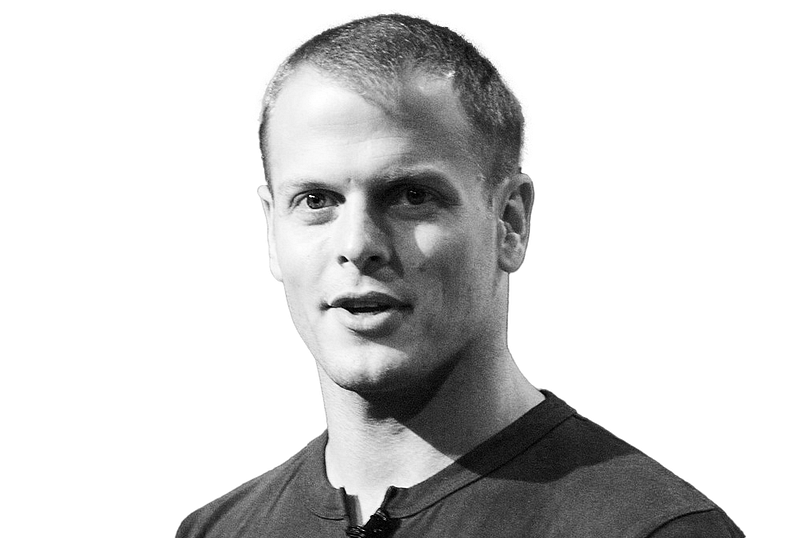
Tim Ferris is an investor and an entrepreneur. As an author himself, he knows all about books that aim to help.
His recommendations focus on the same. Each of the following books will teach you something new.
Don’t miss them!
1. The Obstacle Is the Way: The Timeless Art of Turning Trials into Triumph by Ryan Holiday
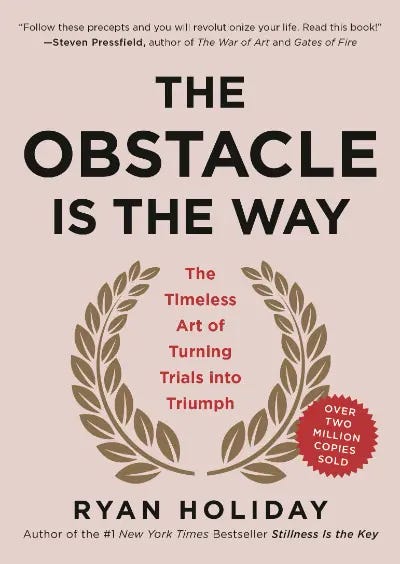
There is more to obstacles than what meets the eye.
Problems are a part of life.
There is no one on this earth who doesn’t have problems. It can be work stress, relationship breakdown, financial hardships, or anything else.
If we are bound to face difficulties, then what should we do?
“Wherever we are, whatever we’re doing and wherever we are going, we owe it to ourselves, to our art, to the world to do it well.”
We need to change our mindset. Instead of treating obstacles as the end of the world, we can take them as stepping stones towards our goal.
When that happens… The obstacle becomes the way.
Holiday tells us that our negative feelings of fear and powerlessness are the result of our perceptions.
“Doing new things invariably means obstacles.”
Just like an untrodden path has debris and other stuff, we should be ready for difficulties if we decide to do new things.
This book will help you ease up, even in the face of hardships.
2. The Art of Learning: An Inner Journey to Optimal Performance by Josh Waitzkin
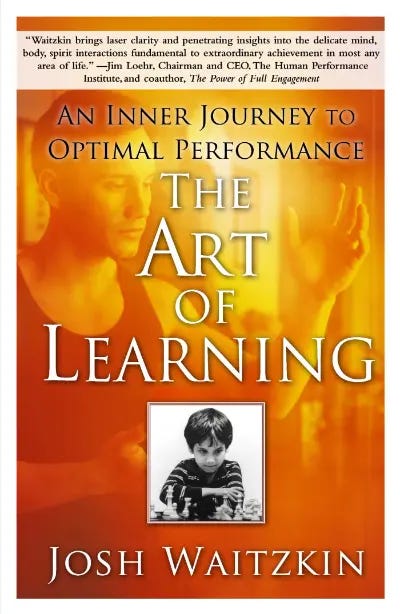
Secrets of learning from a master learner!
Josh Waitzkin was a child prodigy in chess. He became an International Master at age 16.
He also went on to master Tai Chi.
This book details his journey while acquainting the reader with the art of learning. Waitzkin shares what he has learned through his years of mastery and experience.
“A heartfelt, empathetically present, incrementally inspiring mom or dad or coach can liberate an ambitious child to take the world by the horns.”
He impresses on the importance of ‘presence’. Presence is the calm with which one faces the unpredictabilities of life. The author tells us that a calm and focused mind is necessary for mastering any skill.
He tells us to be present. Present in practice, present in the contest, present in life.
One of the other important lessons is about trial and error. You’ll make mistakes but you have to try again.
As Waizkin puts it:
“Great ones are willing to get burned time and again as they sharpen their swords in the fire.”
This book is an important guide for becoming a master of any craft.
3. The Magic of Thinking Big by David Joseph Schwartz
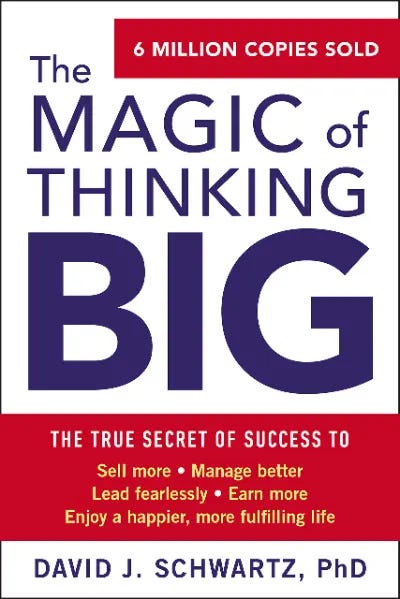
Discover the magic of your mind!
A person is what his thoughts are…
“The mind is what the mind is fed.”
In this book from 1959, the author wants us to reach for the stars. The only thing standing in our way is the loop of our negative thoughts. Schwartz teaches us how to overcome them.
The author tells us to believe that we will be successful. This mindset is necessary. If we are negative from the get-go, the chances of our success drop.
Even when it comes to collaborating and benefiting from others, the writer wants us to think right towards others. Once you do, the people will like you and support you.
“Success depends on the support of other people. The only hurdle between you and what you want to be is the support of others.”
The author gives 3 diseases of failure. They are:
- Excuse-itis
- Detail-itis
- Procrastination.
This book will help you transform your mindset for the better.
4. The E-Myth Revisited: Why Most Small Businesses Don’t Work and What to Do About It by Michael E. Gerber
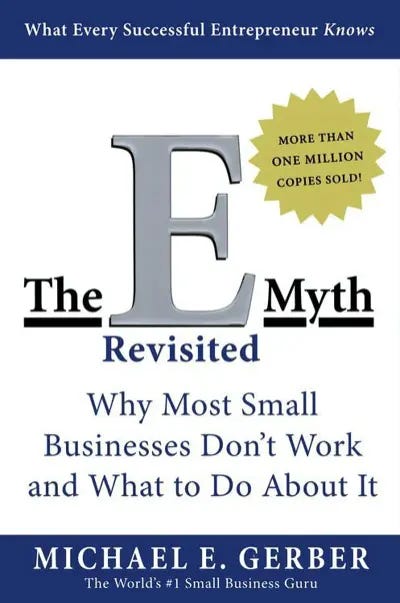
Here is what you are missing.
This book explores the reasons that startups fail.
As a serial failure in the entrepreneurial realm, I am sure this book is for people like me. My last business lasted less than a year.
The author talks about the different phases of a business (Infancy, Adolescence, Maturity) and what they need from an entrepreneur. The failure to provide the right kind of skill results in failure.
“Creativity thinks up new things. Innovation does new things.”
The author tells us about the three personalities inside the one who is starting a business:
- Entrepreneur
- Manager
- Technician
The entrepreneur is the visionary. The manager is concerned with organization and order. The technician lives in the present and gets stuff done.
“The difference between a warrior and an ordinary man is that a warrior sees everything as a challenge, while an ordinary man sees everything as either a blessing or a curse.”
The author invites entrepreneurs to look at business as something that can be replicated. He gives the examples of franchises.
Once you start looking at business in that way, it will help you create ‘mature’ and long-lasting businesses.
5. Vagabonding: An Uncommon Guide to the Art of Long-Term World Travel by Rolf Potts
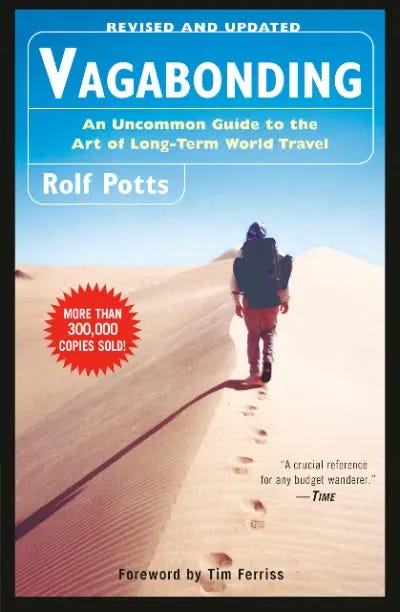
A new philosophy of travel.
Travel is not about the number of stamps on your passport.
It is about having meaningful and deep experiences. And this book teaches us how.
“Wanting to travel reflects a positive attitude. You want to see, to grow in experience, and presumably to become more whole as a human being.”
Instead of quickly traveling to multiple countries in a touch-and-go way, the author invites us to find adventure in normal life and normal life in adventure.
He compares being new to a place to being a 5-year-old again. You can’t read. Everything is new. You have to take guesses to get stuff right.
The author motivates us to travel for the long term and to seek personal improvement through that. He wants the travelers to immerse themselves in local culture and acquaint themselves with people from diverse backgrounds.
He also challenges the understanding that long-term travel is expensive. And to prove it, he gives us practical advice.
“What I find is that you can do almost anything or go almost anywhere, if you’re not in a hurry.”
I have yet to realize all my travel dreams, and I am glad I came across the book before that.
6. “Surely You’re Joking, Mr. Feynman!”: Adventures of a Curious Character by Richard P. Feynman
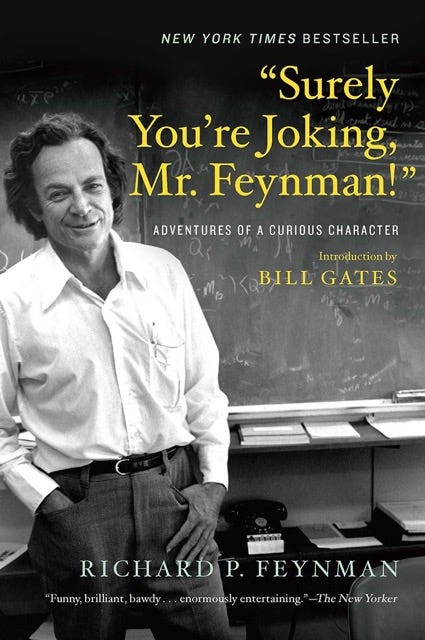
Sleep over the Nobel Prize!
Richard Feynman was a theoretical physicist. He is known for his contributions to the field.
If you think scientists are dry, think again. Because in this book you are in for many laughs.
“You have no responsibility to live up to what other people think you ought to accomplish. I have no responsibility to be like they expect me to be. It’s their mistake, not my failing.”
This book is an autobiographical account that was originally recorded on tapes.
We learn of his childhood, his career, and his role in the atomic bomb. Along with that, we get to know the light-hearted parts of his personality and his misadventures.
Perhaps the funniest bit is about the Nobel Prize call he got. I would’ve jumped out of bed if I was him. But Feynman, not so much.
“Professor Feynman?” “Hey! Why are you bothering me at this time in the morning?” “I thought you’d like to know that you’ve won the Nobel Prize.” “Yeah, but I’m sleeping! It would have been better if you had called me in the morning.” — and I hung up. My wife said, “Who was that?” “They told me I won the Nobel Prize.”
There are personal reflections in the book too that are bound us to ponder more.
7. Stranger in a Strange Land by Robert A. Heinlein
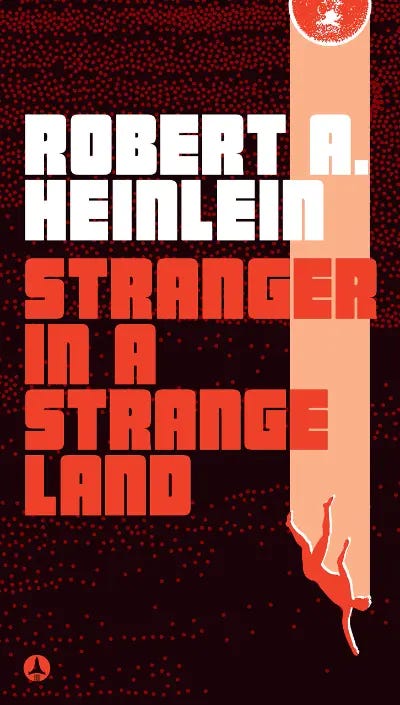
Humans, an outside perspective.
This is a science fiction novel that explores themes of spirituality and religion.
Spoiler alert!
We learn of a mission sent to Mars from Earth. The mission is never heard from again.
However, many years later on another mission, a child of the members of the first mission is discovered. He was raised by Martians.
Things on Mars were way different from how things happen on Earth.
“I do know that the slickest way to lie is to tell the right amount of truth — then shut up.”
Well, the man returns. He is thought to have a legal claim to Mars giving rise to political games and turmoil.
“Secrecy begets tyranny.”
Meanwhile the ‘Man from Mars’ is on his own journey of understanding the ways of the Earth. He reads and observes and is fascinated by the concept of religion.
“Abstract design is all right — for wallpaper or linoleum. But art is the process of evoking pity or terror, which is not abstract at all but very human.”
He ends up launching a Church of his own.
What happens next? You’ll have to read the novel to find out.
8. Awareness: Conversations with the Masters by Anthony de Mello

Lessons from a guru.
Anthony de Mello is known because of his work in spirituality. He was a Jesuit (Society of Jesus) priest.
The author also organized and led various spiritual retreats.
“Let me tell you something: If you ever let yourself feel good when people tell you that you’re O.K., you are preparing yourself to feel bad when they tell you you’re not good.”
The book draws on Buddhism, Hinduism, and other ideologies for spiritual lessons.
The author motivates us to control ourselves when people praise or condemn us. If we let our feelings guide us, we will be slaves to what the people are saying.
Mello also tells us about the limitations of labels, the importance of starting change with oneself, and the power of perception.
“We see people and things not as they are, but as we are. That is why when two people look at something or someone, you get two different reactions. We see things and people not as they are, but as we are.”
This book is an important addition to the bookshelf of a spiritual wanderer.
9. Discipline Equals Freedom: Field Manual by Jocko Willink
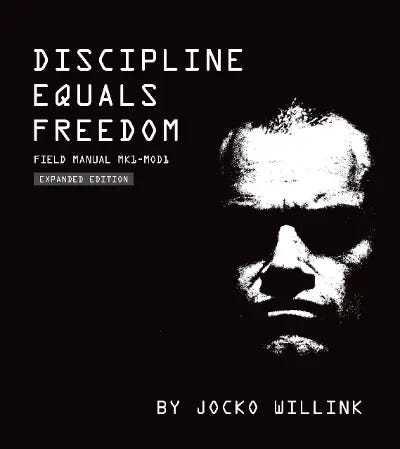
A deeper understanding of freedom.
Freedom is not about doing whatever you want, whenever you want. In fact, doing that is being a slave to your emotions.
This book is written by a former Navy SEAL. He makes us see the power that lies in discipline.
“Fight weak emotions with the power of logic; fight the weakness of logic with the power of emotion.”
Willink guides us on how to overcome fear, procrastination, and other mental blocks.
He also provides information on becoming fitter and stronger through diet and exercise. Obviously, sticking to a regiment or a routine requires… You guessed it… Discipline!
He makes us reflect on how people are different from what one imagines them to be. That is why we shouldn’t put them on a pedestal.
“Kill your idols.”
We should learn from their strengths and weaknesses instead of venerating them to a higher status.
10. Letters from a Stoic: Seneca’s Moral Letters to Lucilius by Lucius Annaeus Seneca
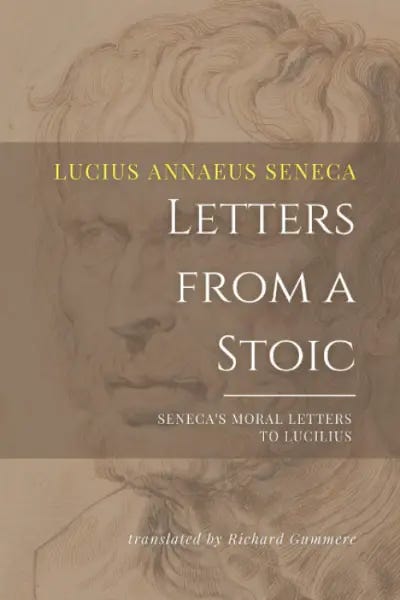
Stoic insight…
These letters date back to 65 AD. I find that fascinating.
Seneca was a Roman Stoic philosopher. His writing embodies the Stoic virtues of self-control, self-reflection, constant improvement, and more.
“If you live in harmony with nature you will never be poor; if you live according to what others think, you will never be rich.”
Seneca motivates us to cultivate inner calm and to stay resilient in the face of outside turmoil. He also focuses on self-reflection and improvement even in times of hardship.
Another important part of Seneca’s thoughts is to align our thoughts and actions with nature.
“What difference does it make, after all, what your position in life is if you dislike it yourself?”
Among many other things, he talks about the importance of friendship and that of cherishing old age.
If you admire Stoic philosophy, don’t miss this book.
I hope you have found this article useful. If you did, it would be awesome if you gave me a clap or left a response!
If you enjoyed this article and want to support Novel Nest, click this link to get notified whenever I publish something new.
If you enjoyed these book recommendations, check out the rest of my book lists on my blog- https://www.thenovelnest.com/blog
Affiliate Disclaimer: This post features Amazon affiliate links, which means I may earn a small commission if you make a purchase through these links.