
10 DevOps Practices for Success
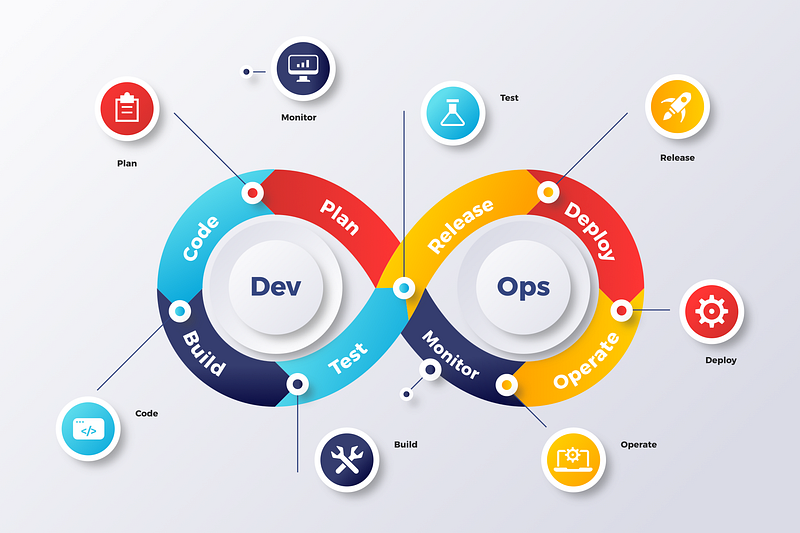
DevOps is like a bridge connecting software development and IT operations in the world of technology. It’s all about making things faster, better, and smoother. It's like a football team where everyone plays together to win the game. Here are 10 simple strategies to help your team win in DevOps.
10. Incident Command System
In simple words The Incident Command System (ICS) means to have a plan when technology problems occur. You must assign specific roles and responsibilities to team members during an emergency to ensure that everyone knows what to do and who is in charge to have a quicker and more organized way of problem-solving.
ICS isn’t just about having a plan; it’s about having a dynamic, flexible playbook where every team member knows their part so well that they can adjust in real-time, turning potential chaos into a coordinated effort to address the issue. It’s so-called teamwork at its best, ensuring that when problems occur, the solution is already in motion.
9. Developers on Call
Having developers means precisely what it says — you need to have skilled team members ready to address any issues as soon as they arise, even outside regular working hours. It minimizes downtime and keeps services running smoothly for users.
8. Public Status Pages
How can you know what is happening without a clear status message? The same relates to users. Public status pages are online dashboards that display the current status of a service or application, including any ongoing issues. Sharing a health report with users helps promote transparency and trust.
It also reduces user’s anxiety because when you are informed about service disruptions, you are more understanding and patient while resolving issues.
7. Blameless Postmortems
What’s the next logical step after a failure? The answer is Blameless postmortem! Blameless postmortems are meetings held after an incident to analyze what went wrong without pointing fingers at individuals. Instead of blaming, you focus on learning from mistakes and improving systems. It encourages open communication and continuous improvement, fostering a positive and constructive team culture.
6. Embedded Teams
Embedded teams? What? Imagine for a second that you’re putting together a dream team for a big school project, mixing friends from different classes — someone who’s terrific at research, another who’s a magician with graphics, and someone else who loves presenting. By bringing together these different talents, your group works better because everyone understands a bit of what the others do, making the project smoother and more fun.
In a more official definition, embedded teams integrate specialists from different disciplines, such as development, operations, and quality assurance, into a cohesive unit. This setup enhances collaboration and understanding across various areas of expertise.
5. The Cloud
The cloud refers to using internet-based services to store data, run applications, and manage resources. It allows teams to access and share information quickly from anywhere, facilitating collaboration and flexibility. Think of the cloud as an extensive, virtual storage room to which everyone on the team has a key, enabling seamless access to tools and data.
4. Inventories: Andon Cords
Andon Cord allows any team member to signal a problem in the production process (borrowed from manufacturing).
In DevOps, maintaining inventories of resources and having a system to identify and address issues quickly is similar to using an Andon Cord. It ensures that minor problems can be caught and fixed early, preventing them from escalating into more significant issues.
3. Dependency Injection
Dependency Injection is a design pattern in decoupling its components that allows a piece of software to be more flexible and easier to maintain. This makes it simpler to update or replace parts of the software without affecting the whole system. Imagine a puzzle where you can change pieces without reconstructing the entire puzzle; that’s the essence of dependency injection.
2. Blue/Green Deployment
Blue/Green Deployment is a strategy for updating applications with minimal downtime. At the start, you have two identical environments: one (blue) hosts the current version of the application (production), while the other (green) prepares the new version (staging). Once the new version is ready, traffic switches from blue to green. If any issues arise, switching back is easy, ensuring a smooth transition for users.
1. The Chaos Monkey
The Chaos Monkey tool (created in Netflix) intentionally introduces failures into a system to test its resilience.
In 2010 Netflix announced the existence and success of their custom resiliency tool called Chaos Monkey.
By simulating disruptions, teams can identify weaknesses and improve the system’s robustness. It’s like conducting fire drills; teams are better prepared for real-life scenarios by practicing dealing with emergencies in a controlled setting.
Last Words
These 10 practices can significantly enhance a team’s DevOps capabilities, leading to more efficient and reliable software delivery. Teams can confidently navigate modern software development's complexities by cultivating a culture of collaboration, continuous improvement, and resilience. Can you add more to this list? Share your thoughts in the comments section.
You can find me on social media: LinkedIn | Twitter And buy me a cup of black☕️