
10 Curious Facts About Animals
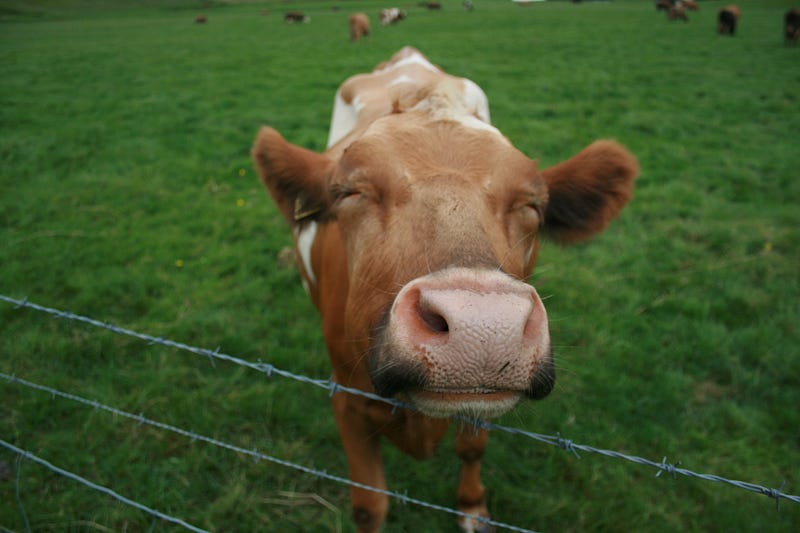
From elephants to polar bears, cats to Koalas, dogs to dolphins, and why cows always seem happy.
We all love animals, either at home, on a farm, or in the wild, and no matter how much you know about them, there is something new to learn each day, for example:
Do you know what koalas and humans have in common?
What was the first documented breed of domesticated dogs, or how long have we lived with cats in our homes?
Also, why do penguins wear a tuxedo, and why do cows seem to be happy all the time?
Here is the answer to some of your questions, and maybe a little more information you can learn from our traveling mates on this vessel called Earth.
1. Koala fingerprints are similar to humans.
Both fingerprints are so indistinguishable that they could confuse at a crime scene. These cute little creatures may be sweet, but not when mating since male koalas have forked penises, female koalas have three vaginas, and males try to get into business frequently during the mating season. Perhaps that is why Koalas sleep up to 22 hours a day.
2. Elephants are the only animal that can't jump.
According to Wesley Snipes, white men can't jump. Wesley might be wrong, but what is a fact is that contrary to other animals, elephants are unable to jump because of their weight and bone construction. Also, like humans, their babies(elephants calves) will comfort themselves by sucking their trunks, the same reason a human baby sucks its thumb, and they have a specific alarm call that means "human."
3. Rhinos' horns are made of hair.
Rhino horns are made of calcium covered by keratin, the same material as hair or nails. A group of rhinos is called a crash; males bulls, and females are called cows. The Javan Rhino is the most endangered type of rhinoceros. While the white is the most abundant rhino subspecies and is bigger than the Black Rhino, but they are both gray, and all rhinos have a different kind of skin.
4. A sloth takes two weeks to digest its food.
Sloths are slow when they move and digest their food; it can take from eleven to thirty days to pass all their digestive system, but when they finish, they poop almost one-third of their body weight. They are three times stronger than humans and can fall 100 feet without injury. Recent studies indicate they could help to cure some types of cancer.
5. The black and white fur on a penguin is camouflage.
Their tuxedo works as camouflage, the black on their backs helps blend with the dark ocean from above, and the white belly looks like the bright surface viewed from below. A group of penguins in the water is called a raft, but they're called a waddle on land. They are excellent walkers, and many can walk up to 60 km and waddle and toboggan upwards of 100 km to reach their destination. The now extinct colossal penguin stood 2.03 meters. The male Adelie penguins give a pebble to females to "propose."
6. Polar bears have black skin under their white fur.
To survive in the Arctic, bears had to adapt and camouflage to hunt, their skin is black under the hollow white hair. The Andean bear is the only one found in the Southern Hemisphere, all the rest live North. Due to climate change, bear migration brought Polar bears into Grizzly territory, resulting in a hybrid bear called "grolar" or "pizzly" bears. Did you know that grizzly bears can crush a bowling ball with their bite?
7. The world's oldest breed of domesticated dog dates to 329 BC.
Saluki dogs were revered in Ancient Egypt, kept as pets, and mummified after death. Dogs have fewer taste buds than humans, but their sense of smell is forty times better, and some can sniff out medical problems. If you pet a dog, your blood pressure goes down as well as the dogs. Also, did you know they can be left or right-pawed?
8. The oldest evidence of domesticated cats dates 9,500 years ago.
In Shillourokambos, a neolithic village in Cyprus, archaeologists in 2004 found cat bones buried near human bones dated 9,500 years old. Cats don't meow at each other, just at humans, and their genome is 95.6 percent tiger. They walk as camels and giraffes, moving their right feet first, then the left feet. They are so smart that they can recognize their name but choose not to respond, as any cat owner knows.
9. Dolphins have names for one another.
After analyzing the whistles from bottlenose dolphins, scientists discovered they're able to name each other by squeaking, trilling, or clicking. They found out that Bottlenose dolphins are even more right-handed than humans, share echolocation with bats, have a mouth full of teeth, but never chew their food, and also they like to "get high" with pufferfish.
10. Cows can poop up to 15 times a day
Cows poo a lot, about 15 times daily, which means as much as 115 pounds of BS each day, or 21 tons per year, and though they can sleep standing up, they only dream while lying down. These animals can eat about 40 pounds of food and drink between 30 and 50 gallons of water on a single day. Furthermore, they have best friends and produce more milk when listening to slow music, perhaps that is why they look so peaceful and happy.
Conclusion
There is a lot of information we may learn from the animals on Earth. Sometimes they amaze us, intrigue us, or fill our lives with their cuteness and love.
No matter if you are a dog or a cat person, if you live in a city or the country, or if you are an animal lover, or you say you hate them. The truth is that, literally, we can't live without them.
I hope you liked the information and learned something new, or maybe it made you click on the links searching for more knowledge. Whatever the case, remember what Mahatma Gandi said:
“The greatness of a nation and its moral progress can be judged by the way its animals are treated.”
― Mahatma Gandhi


