
10 Books That Taught Me More Than My University Degree
True learning happens outside the walls of a classroom.

I resent my university.
There is so much I could have learned. But thanks to a failing Quality Assurance department, I learned the bare minimum.
I almost feel bad for saying this as I met many amazing teachers during my university life.
Maybe the university was never meant to teach me everything. Maybe the only purpose of the university was to show me the path. And I had to self-learn skills… which I kind of did.
Today’s books are jam-packed with knowledge. If you read and apply them all, their benefit to your life will surpass that of a formal degree.
1. Thinking, Fast and Slow by Daniel Kahneman
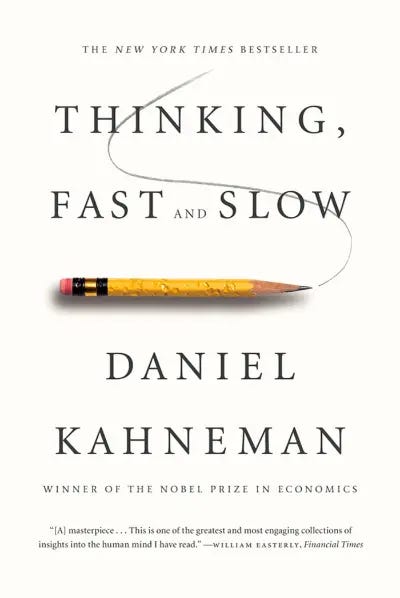
Why do we become hangry?
Kahneman tells us about the two systems that exist in our brains. These are not two physical systems but instead a metaphor for how our brain functions.
- System one is impulsive and it helps us in making snap decisions.
- System two requires deep cognitive thinking and analysis.
The combination of both systems helps us make decisions in our daily lives.
“People who are cognitively busy are also more likely to make selfish choices, use sexist language, and make superficial judgments in social situations.”
Since system 2 requires effort, it can be distracted. For example, due to hunger, tiredness, alcohol consumption, or math calculations.
Multiple studies prove that people will make bad choices when system 2 is preoccupied in any of the mentioned ways.
The author also tells us about multiple biases that exist in our brains.
“My intuitive thinking is just as prone to [heuristics and biases] as it was before I made a study of these issues. I have improved only in my ability to recognize situations in which errors are likely.”
Even after studying these processes for decades, the writer admits that he is prone to these biases just like any other person. However, knowing about them allows him to understand different situations better.
2. Sapiens: A Brief History of Humankind by Yuval Noah Harari

How did humans reach the top of the food chain?
Starting from the Big Bang, the author takes us through the early evolution and emergence of humans. He tells us about the multiple species of humans that used to live on the earth.
There or two theories as to how Homo Sapiens came to dominate the earth.
One is that different species of humans interbred and Homo Sapiens were formed. The second theory is that different species fought for dominance and Homo Sapiens won.
The author believes that a combination of both led to Homo Sapiens taking over.
“The most important military invention in the history of China was gunpowder.”
With that, Harari tells us about the various revolutions that took place in history. He mentions the following:
- Cognitive revolution
- Agricultural revolution
- Scientific revolution
The author examines how humans progressed through them.
“One of history’s few iron laws is that luxuries tend to become necessities and…spawn new obligations.”
In the end, Harari predicts the end of Homo Sapiens. He does that based on biotechnological and Artificial Intelligence advancements. The future human will be a combination of technology and flesh, he says.
This book is filled with fascinating reflections and knowledge that you will enjoy.
3. The Personal MBA: Master the Art of Business by Josh Kaufman
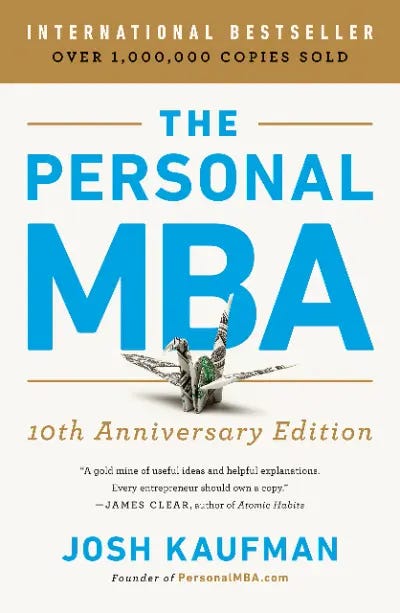
This book will teach you business like no other.
The author gives us the ins and outs of business and the business processes. He tells us that creating a business is all about fulfilling a need.
“The quickest and easiest way to screw up your life is to take on too much debt.”
The author teaches us how to analyze the market and offer valuable products to customers.
An interesting thing that he explains is as follows. As a business, our job is to take the hassle away from the customer. The more hassle we take away, the more we can charge for it.
“A good salesman, as the old (and politically incorrect) saying goes, can sell a refrigerator to an Eskimo.”
This book covers all the major aspects of business like marketing, sales, and finance.
It also tells us about the workings of the human mind. Along with this, the author motivates us to pursue our goals and teaches us how to work with ourselves and others.
This book is a valuable addition to the library of any future entrepreneur or businessman.
4. The Psychology of Money: Timeless lessons on wealth, greed, and happiness by Morgan Housel
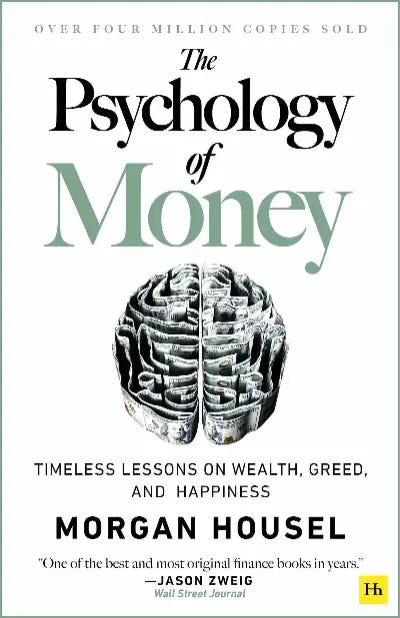
Old lessons, new outlook.
Money.
We all want it. How do we get it? And is there a limit to wanting money?
What fascinated me most about this book is that it doesn’t only talk about financial success but it also talks about being content with what we have.
“Comfortably living below what you can afford, without much desire for more, removes a tremendous amount of social pressure that many people in the modern first world subject themselves to.”
This world doesn’t work in an effort-equals-outcome way. There is a significant role of luck and risk. This is what Housel talks about. He uses real-life examples to elaborate on it.
And honestly, reading it makes you feel a little better about yourself.
“Luck and risk are both the reality that every outcome in life is guided by forces other than individual effort.”
This book is filled with important insights into human behavior when it comes to money. It will help you make better financial choices.
5. Atomic Habits: An Easy & Proven Way to Build Good Habits & Break Bad Ones by James Clear
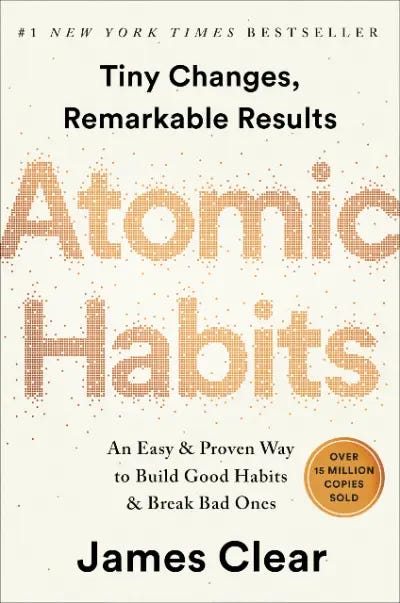
It might not matter now but it will soon enough.
Change is hard for everyone.
But what if we have to make a little change only?
Clear suggests improving ourselves by one percent every day. If you improve by 1% every day for a year, you will end up 37 times better than where you were at the start of the year.
“Building habits in the present allows you to do more of what you want in the future.”
Clear teaches us how to adopt good habits and weed out the bad ones.
The author gives practical steps that we can take in order to lessen the load on our willpower. With his 4 laws, he tells us to make good choices obvious and easier for ourselves.
“Good habits make time your ally, bad habits make time your enemy.”
The thing with habits is that their effect does not appear in one or two days. In fact, it might even take many years. Whether good or bad, all habits leave their mark.
“It is only when looking back 2, 5, or 10 years later that the value of good habits and the cost of bad ones become strikingly apparent.”
This book will convince you to start improving right away.
6. Influence: The Psychology of Persuasion by Robert B. Cialdini

Understand the game of influence going on around you.
The author shows us that every day our choices are affected in a myriad of ways. By knowing how influence works, we can save ourselves from undue influences.
There are 6 different principles of influence which the book explains in detail.
- Reciprocity
- Commitment and consistency
- Social proof
- Sympathy
- Authority
- Scarcity
“Apparently we have such an automatically positive reaction to compliments that we can fall victim to someone who uses them in an obvious attempt to win our favor.”
The author uses relatable examples to explain each of these principles.
For example, members of Krishna society raised charity by passing out flowers. This is an example of reciprocity. By getting a flower, the passerby felt as if he owed something and hence donated.
Similarly, sales with claims such as ‘Limited Stock’ use the principle of scarcity.
“When our freedom to have something is limited, the item becomes less available, and we experience an increased desire for it.”
Needless to say, in this capitalistic and consumption-oriented world, this book will help you save money.
7. The Art and Business of Online Writing: How to Beat the Game of Capturing and Keeping Attention by Nicolas Cole

Cheat code to becoming a top-notch online writer.
Online writing is a competitive market.
In order to win, you have to learn from the best. What better person to teach you all about it than one of the top writers on the internet?
Using his years-long experience, the author brings us all the tricks of the trade.
“Before you begin writing anything, you need to decide who you are writing for. And that decision needs to be clearly reflected in both the headline and the content of your piece.”
His advice includes the following:
- Know your audience
- Write in a simple way
- Make sure that you grab attention
- Write a lot (‘volume wins’)
“As a rule of thumb: readers on the internet don’t like complicated.”
This book also touches on the nitty-gritty of writing such as organizing the paragraphs and headlines.
If you are an aspiring writer and hope to make bucks by writing on the internet, you should get this book ASAP.
8. Exactly What To Say: The Magic Words For Influence And Impact By Phil M. Jones
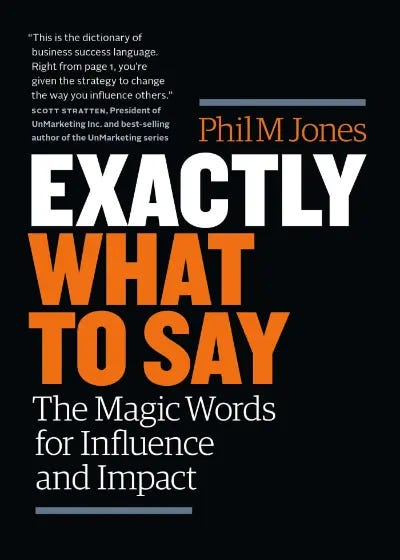
You can change people’s minds IF you know what to say.
Jones tells us about a ‘powerful tool’ in our decision-making. What is it?
The subconscious brain.
Our subconscious brain is preprogrammed. It makes decisions without overanalyzing them.
“Magic Words are sets of words that talk straight to the subconscious brain.”
In order to convince someone, you have to appeal to their subconscious. But how? This is exactly what the book teaches us.
The author not only tells us about the right time and the right way to speak, but he also gives us exact words that will influence our audience.
For example: using the word ‘open-minded’.
Everyone wants to be open-minded. If you ask people to be open-minded before you present your case, they will be more willing to give it a thought.
“People make decisions based on what feels right first.”
This book is packed with practical guidelines that will help you win clients and deals.
9. Freakonomics: A Rogue Economist Explores the Hidden Side of Everything by Steven D. Levitt and Stephen J. Dubner
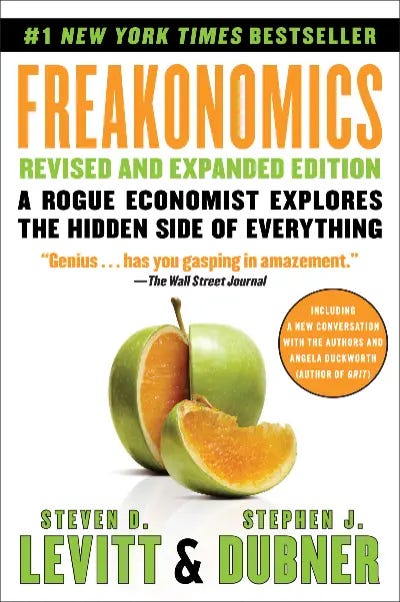
Insights about life through the eyes of economic theory.
We miss many things in our daily observations.
As the title of the book says, there is a ‘hidden side’ to everything.
The authors tell us about the types of incentives:
- Moral
- Social
- Economic
“The stipend turned a noble act of charity into a painful way to make a few dollars, and it wasn’t worth it.”
These incentives drive our behavior.
The book mentions an interesting study. When researchers offered people money for donating blood, the donations dropped. The money took away from the noble act of donating for moral purposes.
Here is a fascinating statistic mentioned in the book that blew my mind.
I have always thought that air travel is much safer than road travel. Because the number of deaths in car accidents is way higher than the deaths in plane crashes.
The authors agree that there are more deaths in road accidents than in plane crashes.
But…
They go on to discuss the per-hour death rate of driving vs flying. That is almost equal.
“…most people spend a lot more time in cars than on planes…The per-hour death rate of driving vs. flying, however, is about equal.”
The book explores many other correlations like the effect of watching TV on a child’s academic success. In many of these, the commonly held perception is mistaken.
I’d say this book is a real eye-opener.
10. The Almanack Of Naval Ravikant: A Guide to Wealth and Happiness by Eric Jorgenson
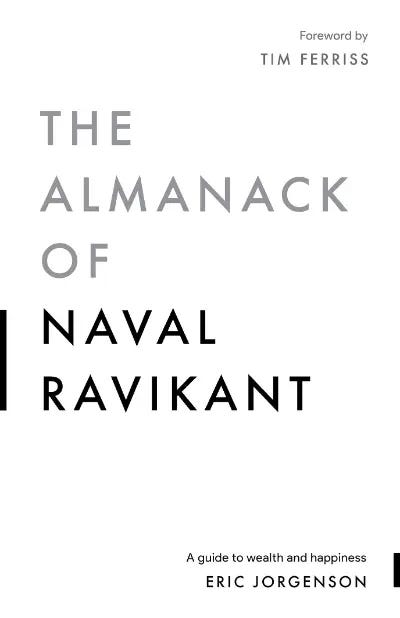
Life advice from a successful man.
Stop taking life advice from internet bros.
I mean any Tom, Dick, or Harry can get a microphone, launch a podcast and pretend to be a sophisticated intellectual.
There are people out there who did the work. They are where they are because of their hard work and dedication. Those are the ones you should be taking advice from.
“The best jobs are neither decreed nor degreed. They are creative expressions of continuous learners in free markets.”
One of them is Naval Ravikant. He is a seasoned investor and entrepreneur.
Not only that, he has a pretty solid life philosophy.
“Escape competition through authenticity.”
This book compiles many of Ravikant sayings and ideas.
Let me share one of them. Ravikant says that three important things in life are wealth, health, and happiness. We chase them in this order, whereas their importance is reversed.
“Spend more time making the big decisions. There are basically three really big decisions you make in your early life: where you live, who you’re with, and what you do.”
Reading this book is like sitting in Ravikant’s company and soaking up all his wisdom.
I hope you have found this article useful. If you did, it would be awesome if you gave me a clap or left a response!
If you enjoyed this article and want to support Novel Nest, click this link to get notified whenever I publish something new.
If you enjoyed these book recommendations, check out the rest of my book lists on my blog- https://www.thenovelnest.com/blog
Affiliate Disclaimer: This post features Amazon affiliate links, which means I may earn a small commission if you make a purchase through these links.


