
10 Books That Are Pleasant to Read and Can Teach You Something
Two birds with one stone

I have a strong urge to create my life efficiently. I don’t like to waste time or spend it on things that I neither like nor bring me any value.
Let’s face it: Time and attention are our most precious resources.
To me, it is a bit the same in reading: If I go for a book, I want to be sure I will get at least something out of it.
Imagine you pick one that is nice to read and will teach you tons.
Here is a list of books that can do that.
Maktub by Paolo Coelho
- Category: Fiction, Short Stories
- Time Commitment: Low
- What you can learn: Reflection on life, personal relationships, and the traveling of your soul
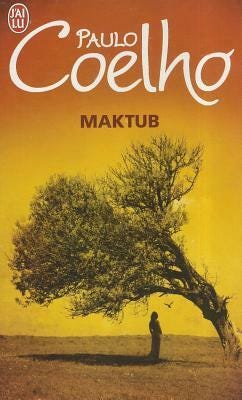
Not one of Coelho’s most famous books — yet, but one of my favorite ones. There is something special about short stories and if they are well written, they make you think and reflect hard.
Maktub is a collection Coelho once published in the Brazilian newspaper Folha de São Paulo and talks about the journey of one’s self. About believe, relationships, and daily inspirational encounters.
You will love this book if you are into Coelho’s typical melancholic and rosy (some call it snobby) style and love to get lost in a well depicted scenario and deep dialogues.
The Cold Start Problem by Andrew Chen
- Category: Nonfiction, Business
- Time Commitment: Low-Medium
- What you can learn: Business models in the modern world
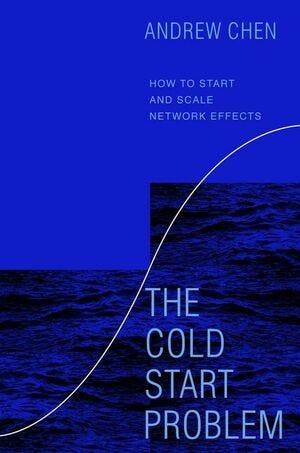
This is one of my favorite business books and had been recommended to me once quite a while ago (and by the way, it is open-source. Something I also love).
Chen talks about one of the biggest problems (tech) companies are facing and determines their whole success story: network effects. Think about Tinder, Uber, and the like —companies are increasingly becoming platforms.
And these platforms only work if people use them. And why should someone start using it if there is nobody on it?
See the dilemma? This is what the book talks about. And underlines it with some great examples of how some of the big names solved this issue.
Prisoners of Geography: Ten Maps That Tell You Everything You Need to Know About Global Politics by Tim Marshall
- Category: Nonfiction, Geopolitics
- Time Commitment: Low-Medium
- What you can learn: Dynamics of global politics, conflicts, and history
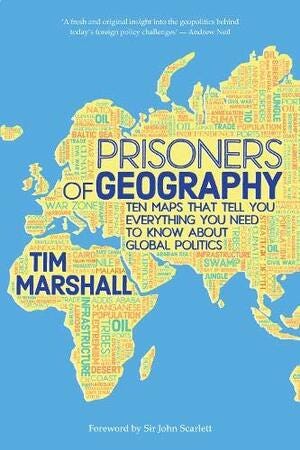
This book is simply a masterpiece (and I usually don’t like to admit that if it appears on almost every bestseller and “books you should read” list).
You will be able to draw so many conclusions and connections between ongoing conflicts, and country history, and detangle certain arguments.
Interestingly, the book was written quite a while ago (2015) and yet, you almost feel like this guy could predict half of what’s going on today by his knowledge on geopolitics.
Simply fascinating.
Why We Remember by Charan Ranganath
- Category: Nonfiction, Scientific
- Time Commitment: Medium
- What you can learn: How our brain and memory works
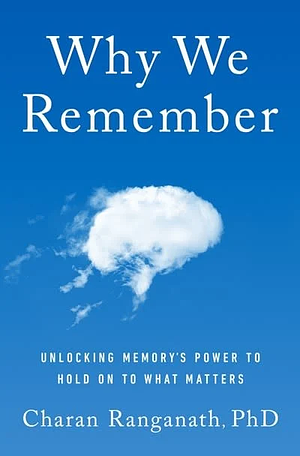
I have always been fascinated by how our brain works. And memory is one major part of that.
We tend to be certain of how certain events happen. Sometimes, we are even so sure as to relive every single detail — until we find out that we were completely wrong (a phenomenon of our brain is also to fill in certain gaps).
Why We Remember provides new scientific evidence on how our memory works — how we remember everyday evidence and use it to understand the future. Ranganath not only presents facts, he also intertwines it with his experience as a father, which gives it a nice personal touch.
Confessions of an Economic Hitman by John Perkins
- Category: Nonfiction, Politics
- Time Commitment: Medium
- What you can learn: How things work behind the scenes
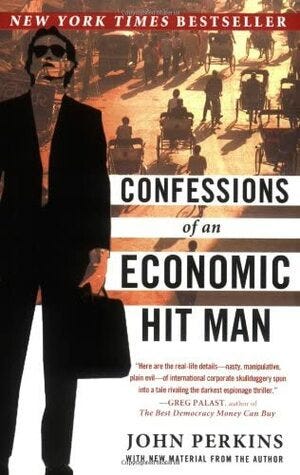
I read this one a long time ago and it is and will remain one of the most shocking books I have ever read in my life. To this day, I cannot comprehend how the world is continuing the way it does by people knowing about this.
The book is written by and tells the story of John Perkins, who somehow slipped into becoming what he calls an economic hit man. Basically, his position was to convince governments from developing countries to take on huge US debt (i.e., loans), for certain projects, hiring US companies (such as big consultancies) to complete the projects, making huge profits. Afterward, since the countries can almost never pay back their debt, they can be forced into selling of their resources (such as oil or other commodities).
This story is truly eye-opening, a bit depressing and gives you a knowledge (probably only on the surface) of what is really going on.
The Mamba Mentality: How I play by Koby Briant
- Category: Nonfiction, Sports
- Time Commitment: Medium
- What you can learn: How to play the game — and make it your own
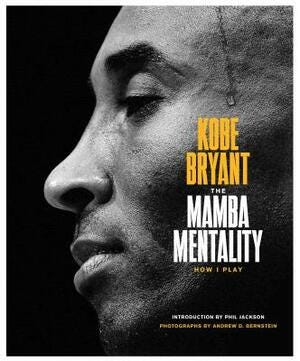
We can learn a lot from successful athletes. Their mindsets are probably one of the strongest and entail valuable lessons for any part of life, be it business, relationships, health…
Bryant gives us an insight into his mind, approach to the game and life and how he mentally and physically prepared for his games.
He introduces us to the Mamba Mentality — very simplified, the everyday journey of trying to get better every day. To compete aginst yourself and becoming the best version of yourself.
The Four by Scott Galloway
- Category: Nonfiction, Business
- Time Commitment: Medium
- What you can learn: Why certain models win
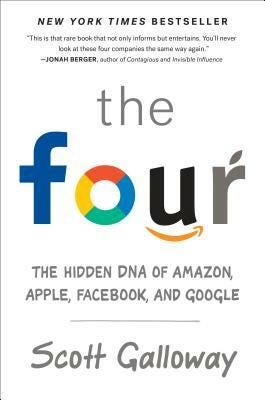
The fact that this book already is quite dated says a lot about the pace at which Facebook, Google, Amazon, and Apple are evolving.
I still consider this read a very informative and astonishing one. Galloway takes us on a deep dive into the business models and techniques of some of the biggest and fastest-growing companies in the world. He provides fascinating statistics (for example, did you know that in 2016, Apple had only 14.5% market share but made 79% of the profits?
The book talks about each of the four companies in a dedicated chapter. and the subsequent chapters explore further of what makes these tech giants unique and what the future could look like.
If you are reading many texts in that space, this book is probably way too basic for you — but if you are looking for a first insight, this might still be interesting.
The Method by Juli Zeh
- Category: Fiction, Science-Fiction
- Time Commitment: Medium
- What you can learn: The role of the government and health
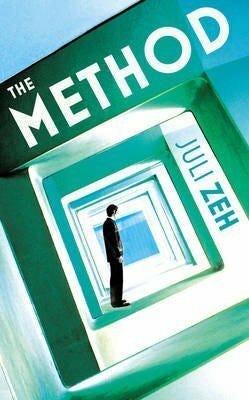
This one is only for those who like dystopian novels (like me).
It is critical and will make you think a lot, especially post-covid. This book was written before that, yet it lets you conclude now that is pretty scary.
The book talks about the case of Mia Holl who is a critical scientist in a strict system centered around health control. She tries to defend her brother, who has been wrongfully convicted of a crime.
The methods let you pose questions about individual rights vs. security and control and
Living in Two Worlds by Ian McCallum and Ian Michler
- Category: Nonfiction, Nature
- Time Commitment: Medium-High
- What you can learn: Reflections on the biggest challenges of human history
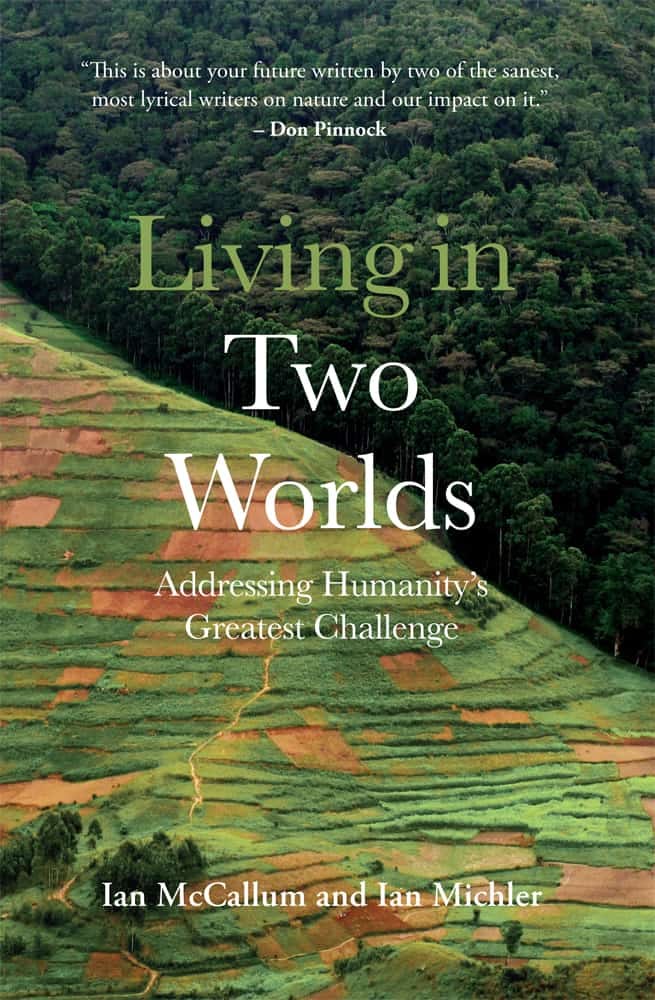
This one is a pretty newly published book. The book came out of a 5000km travel by kayak, walking, and cycling, and asks and explores questions about the biggest ecological challenges of our time.
What I like about it is that it is not a dry “save the planet” read — you will be taken on a journey through six countries across Southern Africa — and get to explore these questions with them as they are exploring.
The Magic Mountain by Thomas Mann
- Category: Fiction, Life
- Time Commitment: (very) High
- What you can learn: Everything and nothing
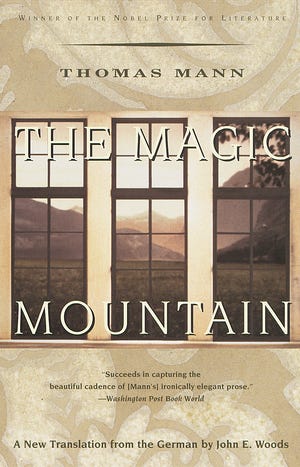
You probably can’t believe this book made it into this list. And I kid you not, everyone who asks me about this book (because obviously, while I was reading it, I had to let everyone know what kind of a pain it was) asked me:
“But WHAT IS IT ABOUT THEN?”
Well, I will (try to) tell you: It is about a man. He goes to a famous village in Switzerland: Davos to visit a friend at a sanatorium. He stays there for a while.
This is the plot.
You might have guessed it: While the story can be summarized in two sentences, this book is about a lot more. It is one of the most influential books in German literature. It talks about life, time, friendship, sex (some will debate me on that), illness, and death —
And if you want to learn something, you will have to dig into a bit of history.
I can tell you that: If you put in the time commitment and even if you just read 5 pages a day. Sometimes (not all the time), you will close the book and think about these few words for a week.
If you want to read just one chapter of the book, I recommend you read “Perception of Time”.
Here it is — a magic list of books from various categories for you to dive in. I actually believe that you can probably learn something from reading any book (except) Ulysses.
I still find the books in this list have added great value to me.
What is your favorite “learning book”? Let me know!