
10 Books Everyone Starts but That No One Finishes
Which one have you read to the end?

In 2014, a mathematician named Jordan Ellenberg calculated which books were the most “unfinished of all time” using Amazon Kindle data.
He named his index the Hawking Index in honor of Stephen Hawking whose book A Brief History of Time was one the most unfinished books ever written.
Here are 10 other books no one ever finishes.
1. Thinking Fast and Slow, by Daniel Kahneman
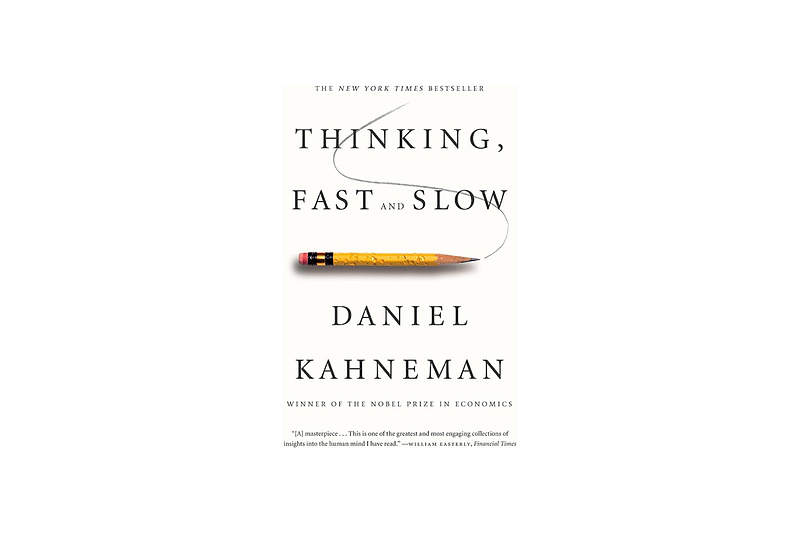
Daniel Kahneman’s masterpiece is a popular scientific account of his (and his friend Amos Tversky)’s discovery of more than a hundred psychological biases.
Ever heard of loss aversion? This bias describes the phenomenon of experiencing more pain when we lose something than experiencing pleasure when we gain the same thing.
It was discovered by Kahneman.
Anchoring (relying on the first piece of information we get), the endowment effect (people value things more when they own them), the framing effect (people make a decision based on issue framing), or the hindsight bias are all heuristics tested and found by Kahneman.
But voila. The book takes a massive 13 hours to read, and it’s fairly slow.
Kahneman could have written something 10 times shorter and still as interesting.
Of all of the people who began the book, only 7% finished it.
2. Atlas Shrugged, by Ayn Rand
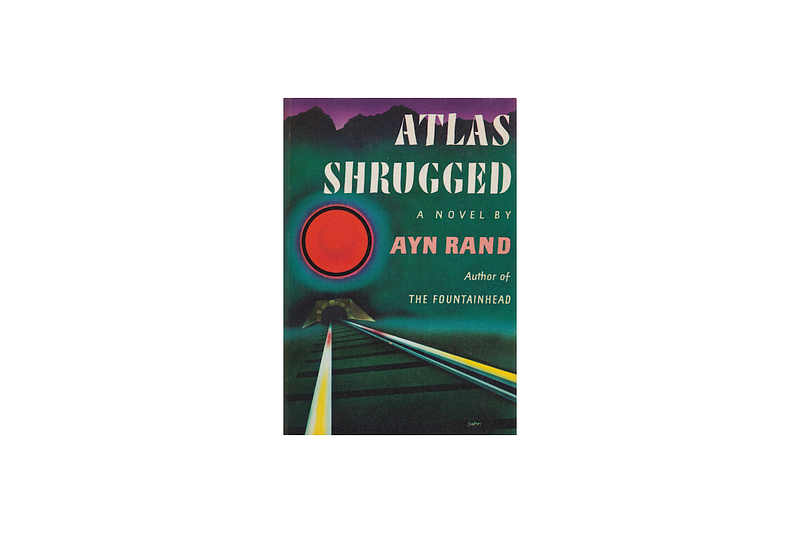
I read Atlas Shrugged during the summer of 2021.
It was a big book (561,996 words) but by no means was it unfinishable. In fact, I wouldn’t have minded another one or two hours of reading.
Obviously, it’s not the difficulty of the story that compels people not to finish the book, it’s its size.
Atlas Shrugged is one of the longest novels ever written. At an average reading speed of 225 words/minute, you’d need 41 hours to finish it.
Sounds like a lot, but it’s only 4 hours of reading per day for 10 days.
Read it! It’s a good book.
3. Capital in the 21st Century, by Thomas Piketty
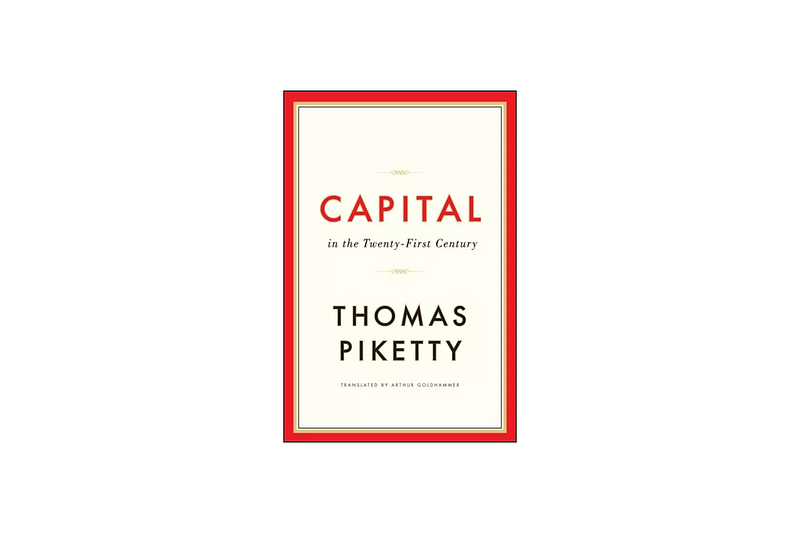
Piketty made a big splash in the early 2010s when he published his Marxist economic book called Capital.
The book is an abominable 239 365-word manuscript explaining that when the rate of return in an economy is higher than the rate of economic growth, social-economic inequalities increase (which doesn’t make sense since workers don’t benefit from 100% of the economic growth they fuel, but I digress).
The book was quickly debunked by Nassim Taleb who outlined that economic inequalities are dynamic and not fixed because people’s salary and net worth vary across time.
Unsurprisingly 2.4% of the 1.5 million people who bought the book finished it.
We can reasonably conclude that the 97.6% who bought it, bought it for the status that came with it.
4. Ulysses, by James Joyce
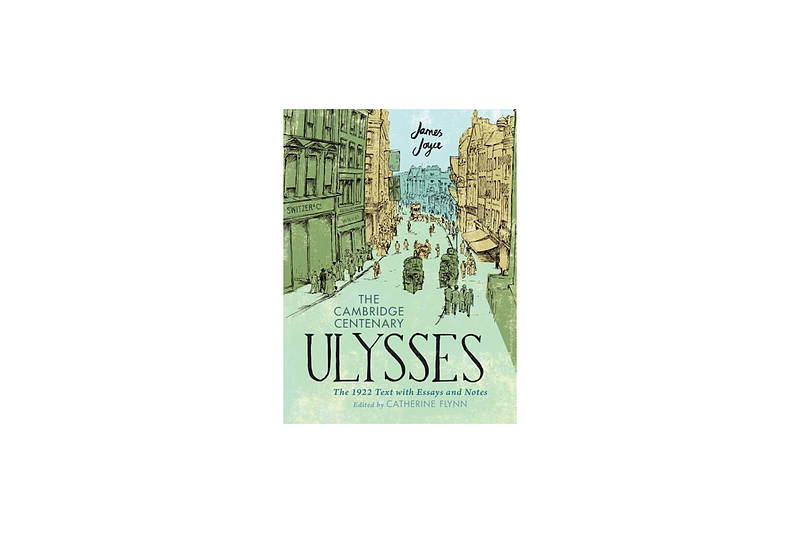
Ulysses is a defining novel of the 20th century and one of the hardest books to read due to its style and vocabulary.
In fact, Joyce invented a few words in the book and used 30 000 distinct words to write it.
The book is loosely based on Odysseus’s journey, a hero of the Trojan War who took 10 years to come back to Greece, as told in Homer’s Iliad.
The majority of the people who began Ulysses didn’t finish it because it’s too long (clocking at 18 hours of reading) and too complicated.
Virginia Woolf herself noted her hatred for the book in her autobiography:
The book is diffuse. It is brackish. It is pretentious. It is underbred, not only in the obvious sense, but in the literary sense. Virginia Woolf
Ouch.
5. Hard Choices, by Hillary Clinton
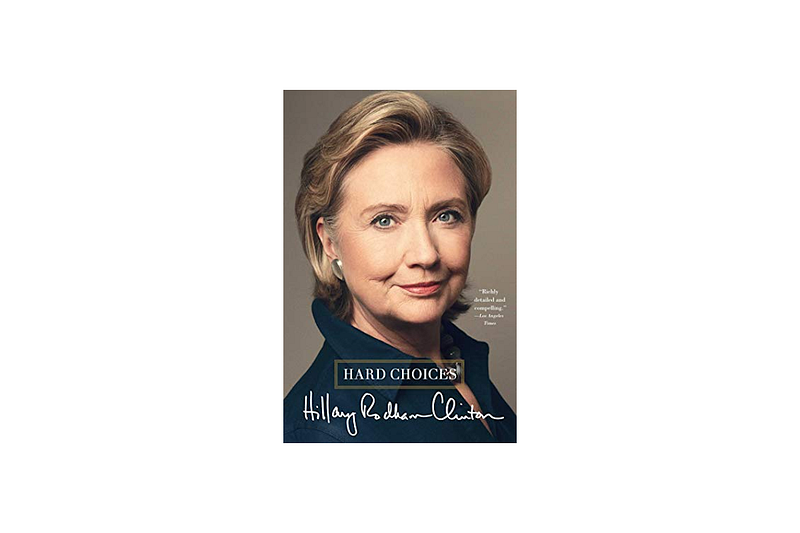
Authors tend to measure their success by the number of books they sell, but this measurement is obviously flawed.
A book can be successful only if people read it.
The NYT best-seller should be replaced by an NYT best-reader.
In this perspective, Hard Choices by Hillary Clinton is probably one of the least successful books on the planet.
While it sold 340 000 copies, it was only finished by…1.9% of people who bought it.
6. War and Peace, by Leo Tolstoy
War and Peace is a fictional account of the life of 5 aristocratic Russian families during the Napoleonic Wars.
It’s one of the best works of literary fiction… but it’s long, culminating in 40 hours of reading.
It’s also a complex story with more than 500 different characters. Tolstoy did extensive research to make sure that the book would follow historical events too, so many fiction aficionados have been bored by the depiction of the historical events.
War and Peace highlights how so many of the best-considered novels ever written are also the ones people shun away from the most. Literature, at the end of the day, is mostly an elitist hobby.
7. The Phenomenology of Spirit, by Georg Hegel
Hegel was a German philosopher partisan of idealism, a philosophical movement that developed in opposition to British empiricism.
One of Hegel’s biggest contributions to philosophy was the dialectic method, a concept explaining that ideas evolved as a result of contradiction and resolution.
One of his most famous works is the Phenomenology of Spirit, a 600-page book detailing Hegel’s conceptualization of the evolution of consciousness and the mind.
It’s not a book that’s often read, but it’s nonetheless one that is often abandoned.
The book is dense, complicated, and long.
It’s rumored that it takes roughly one hour to read one page, even for people who are familiar with Hegel’s work.
At 600 pages, the book is far from compelling.
8. The Bible
The Bible has roughly 783 137 words and is the biggest, oldest, and most known book in this list.
But few people have read it.
The primary reason is that it’s long.
The second reason is the topic. Christianity is on the decline worldwide, along with Church attendance.
But calling the Bible a book is unfair because it is not a book — it’s a collection of books.
The Bible is made of the Old Testament, which more or less corresponds to the Tanakh, the Hebrew Bible. The Tanakh contains the Torah (five books) and other documents.
And then it’s made of the New Testament, which contains the Gospels, the Acts of the Apostles, the Epistles, and other documents.
So, why don’t people finish it?
It’s long and it’s random.
People would enjoy it more if it had some sort of continuity, such as narrating the history of the people of Israel from Abraham to Christ, followed by the life of Christ.
But it’s not how it’s been assembled.
The moral of the stories is also profound and complex, so complex in fact that we never really got to the bottom of it.
9. Don Quixote by Miguel de Cervantes
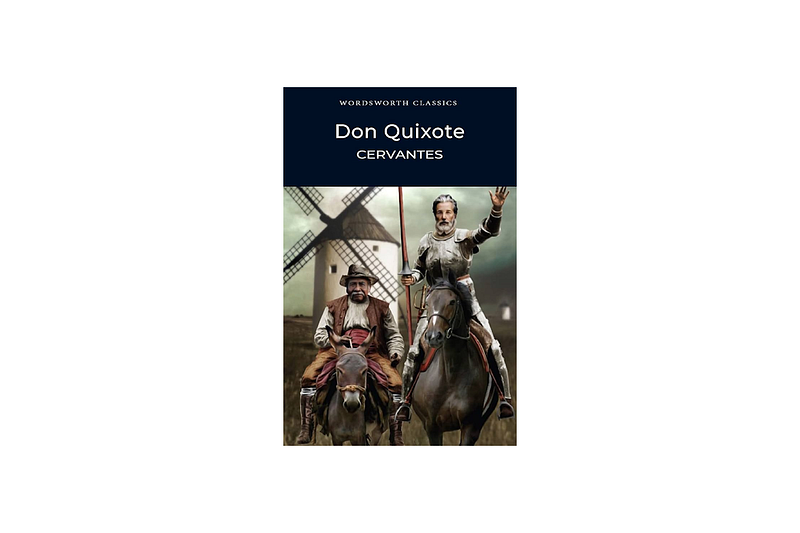
Don Quixote is the story of a man who reads a few books about chivalry and, disappointed in its absence in his 16th-century society, decides to build himself a persona (Don Quixote) to serve his country.
It’s considered the very first modern work of fiction because Cervantes used literary structures unknown in his time.
Don Quixote is no exception to the rule: it’s long, clocking at 28 hours of reading time. In fact, Cervantes published the book in two volumes.
The nature of the story and its theme (the interpretation of reality) makes it a difficult book to read, with stories inside stories and a blurring between Don Quixote’s delusion and actual reality.
The story is also full of references relevant for people at the time but that will leave the contemporary readers perplexed.
10. The Selfish Gene by Richard Dawkins
I began to read the Selfish Gene at 19 and never went past the third chapter.
It was long, complicated, and I didn’t see the point of the book because despite what it is said, the Selfish Gene isn’t for Mr. and Mrs. Random, but for people who know a minimum of biology.
So, why was the book so successful?
Because it introduced the idea that natural selection(the survival of the fittest) is not carried by the individuals, but by genes.
It also introduced the concept of…memes.
The book isn’t that long (11 hours) but it’s complicated and frankly, not very interesting when you know its main thesis.
Conclusion
Notice how most of these books, except for Piketty and Clinton, are considered worldwide classics.
This led me to wonder if they weren’t finished because:
- They’re genuinely difficult.
- They’re known, so more people try to read them, so more people quit them.
- Worldwide recognition necessarily means it’s not accessible to everyone.
Can widely known books also be read and finished?
Yes, but these are the exceptions of the exceptions.
The book market is highly asymmetric — the top 5 or so authors sell something like 90% of all books (not sure about these statistics, but the principle definitely applies).
A popular and widely read book will de facto not be the norm.
In fact, I’ve only seen one example of such.
It wasn’t Twilight, the Da Vinci Code, or 50 Shades of Grey.
It was Harry Potter.
Few books (or series) are universally read *and* loved by anyone who puts their hands on them.
For those who are thinking about Tolkien, his books aren’t nearly as popular as the movies.
In fact, Tolkien is often described as the author of contemporary nerds, which highlights how his books are more of a niche phenomenon than a societal one.
Few people would know about the Lord of the Rings had Peter Jackson not made movies about it.
Moral of the story: read Harry Potter.
You won’t be disappointed.
For more articles, head to auresnotes.com.


