10 Bible Facts That Are Really, Really Weird
Christianity doesn’t like it, but “God” is a trip
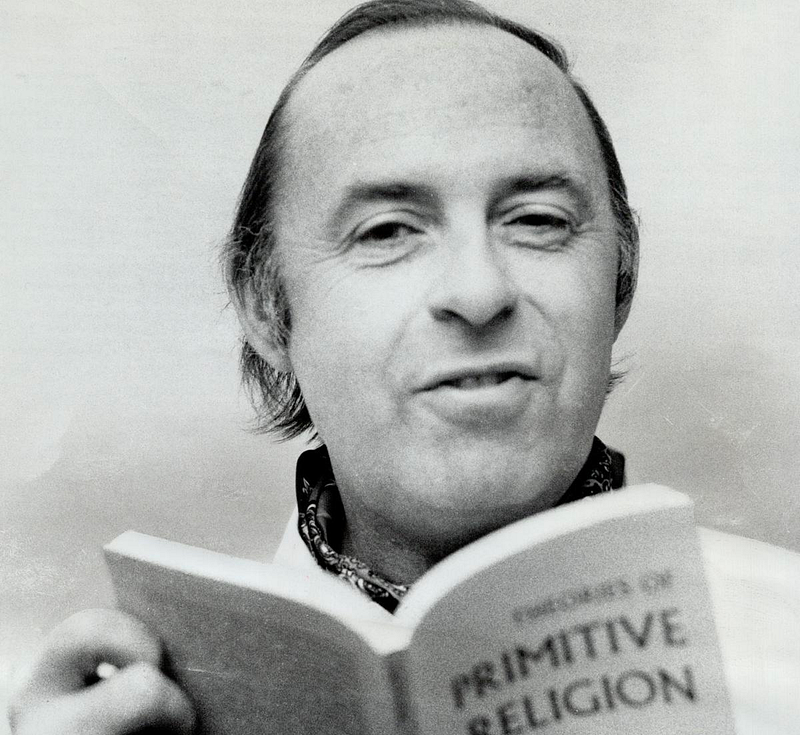
Back in 1970, a famous Bible scholar named John M. Allegro announced that the Bible was a fantasy written by people on hallucinogenic mushrooms.
Allegro’s infamous book, The Sacred Mushroom and the Cross, horrified his profession and the Christian public. It was career-ending. I often think of him when reading Bible scholarship. It turns out there are tons of trippy details—that the religion was concealing.
1. The Bible is full of strange monsters
If thinking on the very first scenes in the Bible, a Christian reader might imagine God calmly announcing the stages of Creation in Genesis 1. But actually, there’s flashbacks to prior episodes in the void of ‘pre-Creation’.
Prophets recall violent battles between God and monsters of the deep.
“You divided the sea by your might; you broke the heads of the dragons in the waters.” (Psalm 74:13, NRSV; cf. Job 38–41; Isa 51:9, etc.)
A Christian might have little ability to visualize this monster movie in which the deity is wrestling dragons.
There’s many biblical monsters—like Jonah’s fish. Fun fact: it changes gender twice—male in 2:1, female in 2:2, then back to male (2:11). All concealed in translation.
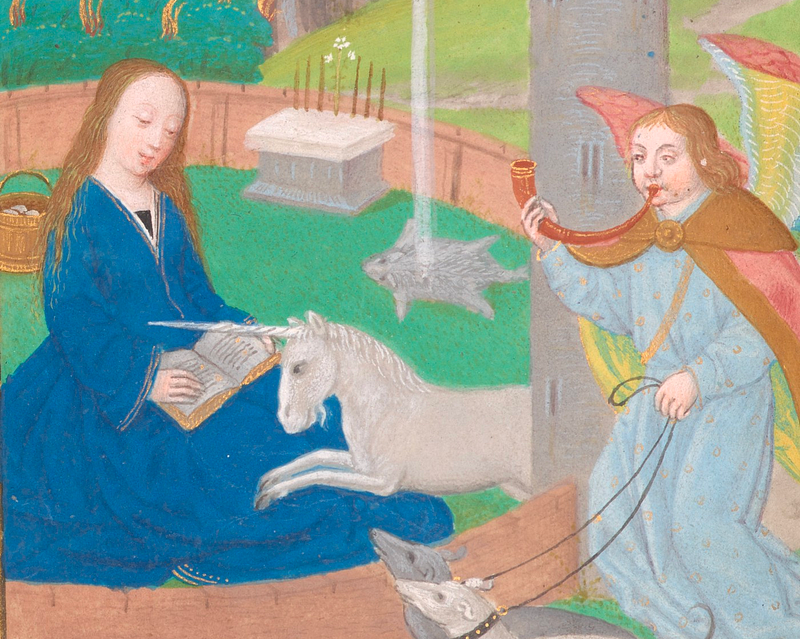
A mystery animal, re’em, meaning ‘one-horned’, is mentioned a few times. The old KJV translation had startling mentions of ‘unicorns’, though more recent translations tone it down to ‘wild ox’.
Unicorns were long a theme in Christian art. The Virgin Mary apparently liked to cuddle with hers.
2. God has a body…and He’s blue?
Christians like to say that God is everywhere, like the air. It can be awkward reading verses like Genesis 3:8, where the deity is “walking in the garden in the cool of the day…”
Or try Exodus 24:10: “And they saw the God of Israel…” Like Zeus or Isis, the Bible’s deity, Yahweh, a.k.a. ‘God’ or ‘the Lord’, is an embodied presence. There are many scholarly studies of this subject (as here and here).
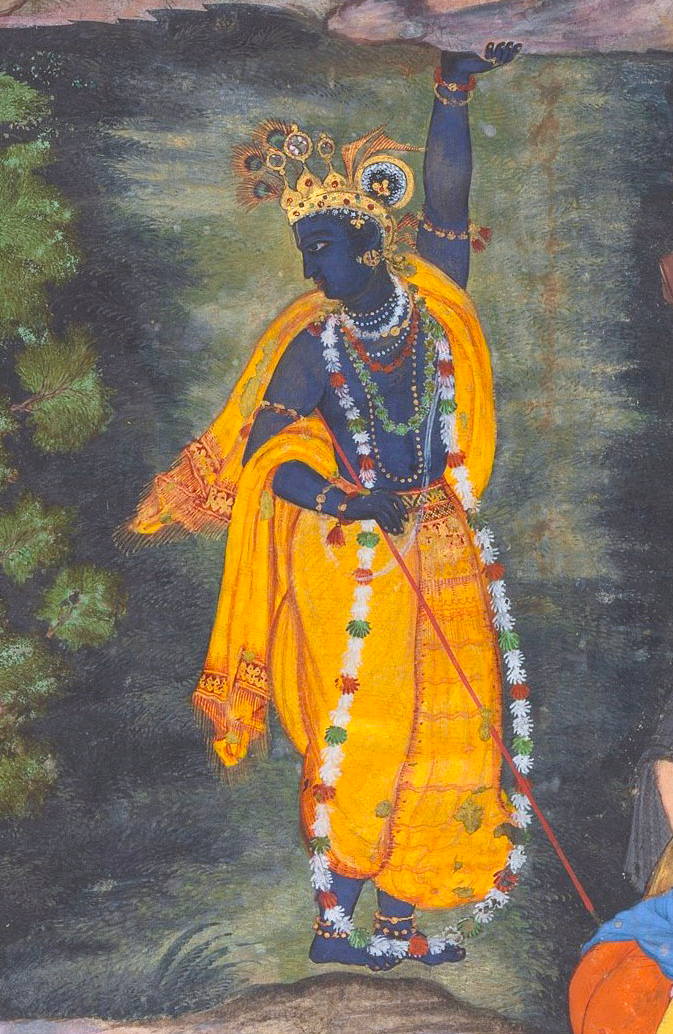
The one that really got my attention was a recent paper by Wesley Mohammed that suggests God’s body is…blue? In Numbers 15:39, the Israelites are told to make prayer shawls with blue tassels “so you will remember all the commands of the Lord…”
Or that’s the Christian mistranslation. As Jewish rabbis have said for years, the blue tassels are said to be valuable so that “you may look upon him.”
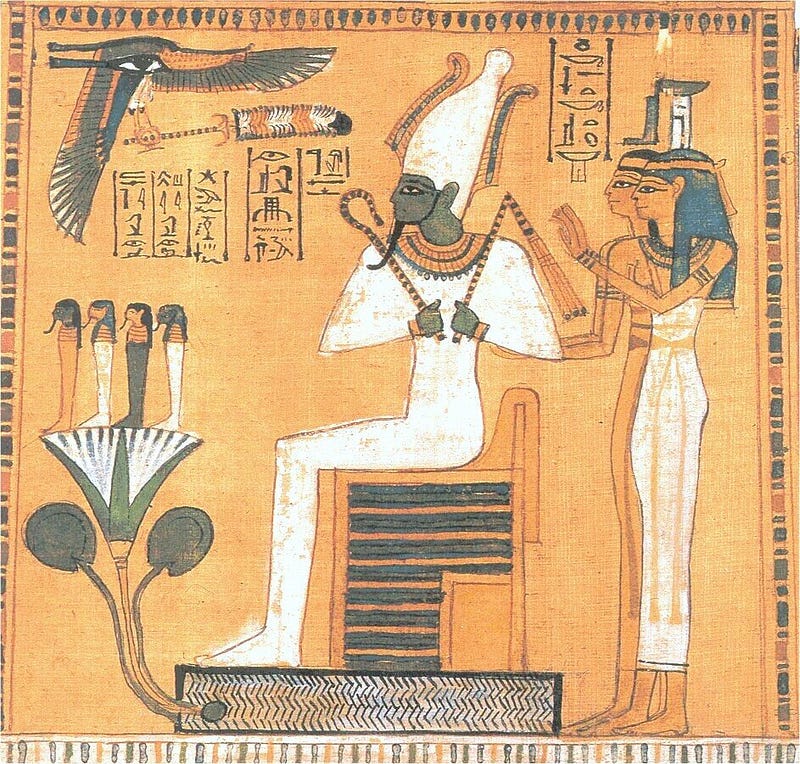
God is associated with the sky and water, and seems really…blue. The robes of the High Priest were blue (Exo 28:31–32). The Ark of the Covenant had a blue cover (Num 4:6).
In the Song of Songs, the divine lover is like sapphire (5:14). He’s linked with a flower that’s translated ‘lily’ (5:13). It’s actually the blue lotus.
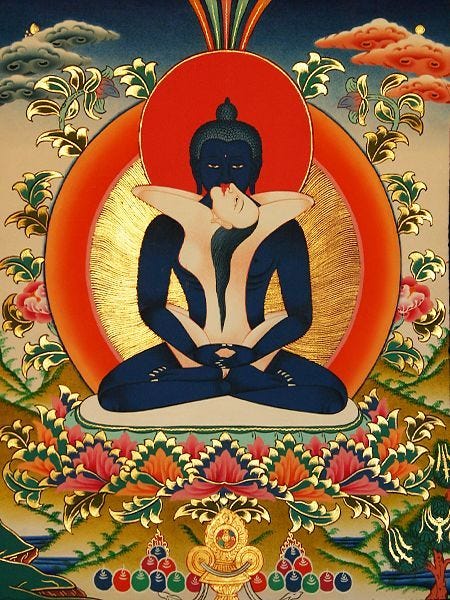
Blue deities, of course, were common in the ancient world.

3. Humanity began in the Garden of Orgasm
The Bible talks about a place called ‘Eden’. Christians can acknowledge this Hebrew word means ‘pleasure’, but won’t say more. As Dan Ben-Amos notes, it seems to be “the Hebrew Biblical term for orgasm.”
When we read the Eden story, we’re thinking about sex. It’s a lush world of naked bodies and sensual fun—a teenage dream that leads up to a cosmic sex scene. That’s the story about the fruit, as it turns out.
I learned from Ronald A. Veenker’s 1999 paper, “Forbidden Fruit: Ancient Near Eastern Sexual Metaphors,” that to ‘eat fruit’ is a biblical idiom for sex (cf. Song 4:16b; Prov 30:20, etc.). There’s no goofy Christian story of “original sin.” Adam and Eve had sex.
That means childhood is over. As God explains in Genesis 3:14, the woman will have pain in childbirth, and the man goes to work. Bummer!
They’re ejected from the Garden, and so humanity is born.
4. Sex with angels is very, very bad!
In Christian history, a strange scene at Genesis 6:1–4 was little discussed. It’s a weird one. Angels took human wives?
The very idea, as Brian R. Doak notes, gave the religion “interpretive anxiety,” and it was treated with “sheer dismissal…”
Then the Dead Sea Scrolls brought Genesis 6 back into view, as the scrolls discussed this scene as the heart of the whole Bible. The angels were the villains of the whole story. They were bad, ‘wicked’, evil—in torrents of language by prophets that Christianity thought referred to humans.
Lately, even Christian scholars try to remind the religion of the angels who’d been ignored for millennia—like Michael Heiser, whose book The Unseen Realm is eye-opening. Does the religion listen? Not really.
5. And then there’s the giants
The angels having sex in Genesis 6 were not infertile. The women had children, and as the KJV translation put it: “There were giants in the earth…”
Giants are often seen in the Bible—like when the Israelites try to get into the ‘promised land’ of Palestine. The spies come back and report:
“All the people we saw there are of great size… We seemed like grasshoppers in our own eyes, and we looked the same to them.” (Num. 13:31–33)
There’s many sightings of violent giants, including in 1 Samuel 17, when Goliath faces the young human hero David. But did many Bible narratives concern them? It was never clear why God flooded the earth. Was the Flood an effort by God to wipe out an illicit race?
The religion struggles with fantastic storylines it’d tried to suppress. Even Christianity Today has to ask: what to do with the giants in the Bible?
6. Many Bible heroes are half-angel
Major characters in the Bible often have unusual births. It starts with odd language around Cain, the son of Adam and Eve. She has other children in the normal way, but with Cain, something is different. Eve says in Genesis 4:1: “I have procreated a man with Yahweh.”
As David Bokovoy notes in a 2013 study of this verse, Yahweh seems to be a “direct participant” in this impregnation.
But the unusual birth narratives of Isaac, Noah, and Samson also suggest divine conception. Bible ‘heroes’ do tend to be sort of superhuman. Samson has super strength, and when he’s tied up, ropes burn off him “like charred flax” (Judges 15:14; cf. 16:9).
We might start to wonder about Moses, who is said to be different or special since he was a baby. Later, his face glows.
7. Is Jesus another angel-human hybrid?
The talk of angelic paternity around the Genesis 6 scene gets uncomfortably close to Luke 1, when the virgin Mary stops being a virgin. Her pregnancy isn’t discussed as a miracle. As the scholar Mike Pope notes, we seem to be told about “the natural means of insemination…”
Strangely, I’ve seen no Christian paintings of that Bible story.
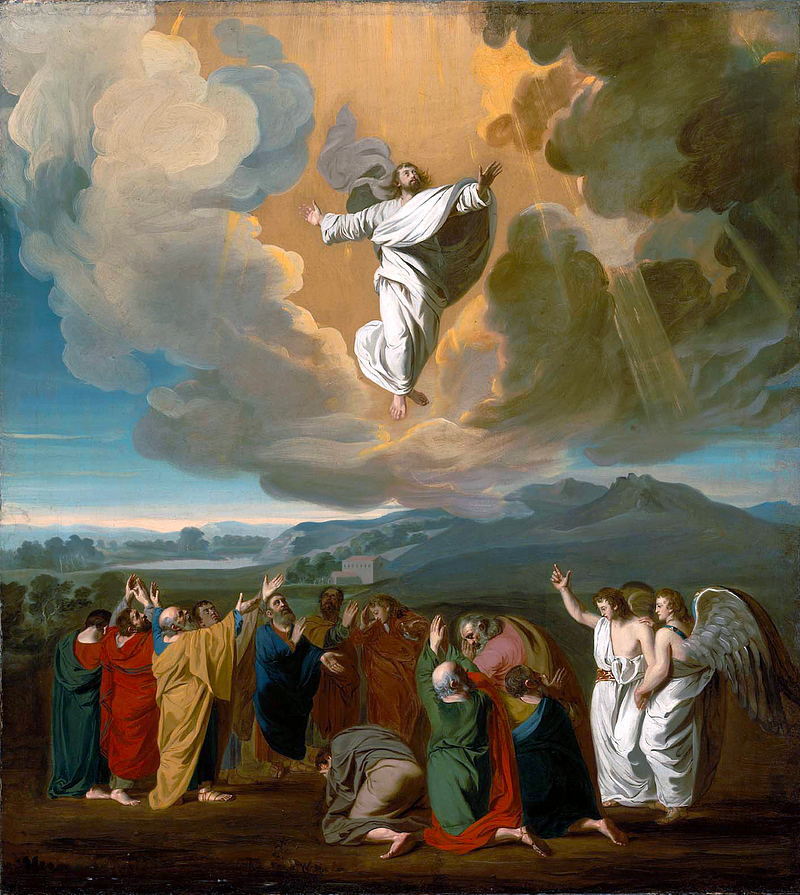
Mary’s son is no ordinary human. Jesus is able to disappear quickly, and change his appearance. He is often not recognized by people who know him. (Scholars call it his ‘polymorphy’.)
His face is given to shining. And can Jesus fly?
8. Demons are the souls of dead giants
Throughout the gospels, Jesus and the gang face dark spirits intent on possession of humans.
A Christian reader might be mystified why these ‘demons’ pop up in biblical narrative. But the religion has been concealing parts of the storyline. In the Enoch literature, the giants die, as a dark spirit is said to “come forth from their bodies” (1 Enoch 15:9, 11–12; 16:1).
Many early Christian writers refer to demons as the souls or spirits of dead giants. As Tertullian notes, the giants were a “demon-brood” who inflict “diseases and other grievous calamities” on humans.
The demons are the giants in a new chapter of the story. As spirits longing for re-embodiment, they afflict humanity once again.
9. Sex with “bad angels” is still a big problem
Christians might like to think the weird angel sex stopped in the Old Testament, but that’s not at all clear. Notice 1 Corinthians 11:10, when Paul says women have to have watch out, “because of the angels.”
The religion had no idea what that meant. Michael Heiser suggests that Paul is “concerned that what happened in Genesis 6 might happen again.”
The Bible seems to view angels as human-like, and often walking among us. As per Hebrews 13:2, any stranger could be an angel! And a Christian having sex with a bad angel could be very, very bad.
Indeed, a 2018 paper, “Pre-canonical Paul. His Views Towards Sexual Immorality” by Janelle Priya Mathur and Markus Vinzent, makes a very startling case.
Paul’s many warnings against “immoral” sex, they suggest, referred to sex with bad angels. This word for bad sex, porniea, was very hazily defined. Christianity just announced it was all about marriage, with ‘immoral’ referring to whether you’re married or not.
Maybe the religion just never knew much about the Bible.
10. The Bible was claimed by—Christians?
That’s the weirdest thing. Why did Christians like the Bible? The scholar Carolyn J. Sharp refers to “the wildness and untamability of Scripture.”
And yet its most public readers were obsessed with rules, rules, rules. Christians brought to the text an intense need for systems of control. It was just their own thoughts—inflicted on a book they never knew.
I love readers who broach the bizarre, who think outside the box. A big salute to you, John M. Allegro! They did you wrong. 🔶