avatarBhavnaa Narula

Free AI web copilot to create summaries, insights and extended knowledge, download it at here

5674

Abstract

their relationship with the party host.</b></p><p id="7fa0">The guests who weren't the A-listers sat farthest away from the host, while the opulent ones sat close to the hosts on either couches or beds arranged around the dinner tables.</p><blockquote id="f606"><p>The idea of building strong connections with the powerful and wealthy people was the ‘Modern day networking’ as we may call it.</p></blockquote><p id="23b7">Therefore, the host would pay extra-special attention to the seating arrangements. It should not happen that any of the guests felt humiliated because they were not given a seating that matched their prowess.</p><h1 id="6376">Elite Roman Parties Included Poetry and Gladiators</h1><figure id="4c00"><img src="https://cdn-images-1.readmedium.com/v2/resize:fit:800/0*qoSChQKclpibG9ck"><figcaption>An emperor in his balcony and lost in his thoughts. (Photo: Herbert Schmalz / <a href="https://commons.wikimedia.org/wiki/File:Herbert_Schmalz-Zenobia.jpg">Public Domain</a>)</figcaption></figure><p id="ca2c">Food was not the only factor that would be the highlight of the party. Live entertainment for the guests was equally important.</p><p id="e2c2">It was a good practice to engage guests in deep and meaningful conversations. Live entertainment in the form of music, poetry, acrobatics, musical plays, etc. stood out.</p><p id="546b"><b>However, it was the Gladiator fight that created the best impression amongst the guests.</b></p><p id="5c59">Sometimes these fights featured ‘discreet conversations’ with the ahem ‘Scarlet women’ specially called in for such parties.</p><p id="f45b">Thanks to Russel Crow’s portrayal of General Maximus in the movie ‘Gladiator’, we know they were slaves made to fight in the colosseum to entertain people.</p><p id="88e5">In this case, it would mean to entertain the aristocrats in particular.</p><h1 id="d187">Dinner Parties Were a Means of Status Display</h1><figure id="9ec0"><img src="https://cdn-images-1.readmedium.com/v2/resize:fit:800/0*0bVdu8YhELfq0Scm"><figcaption>Men conversating after a fancy dinner. (Photo: Eugène Delacroix / <a href="https://commons.wikimedia.org/wiki/File:Delacroix-Marc_Aur%C3%A8le-MBA-Lyon.jpg">Public Domain</a>)</figcaption></figure><p id="080b">Having a fancy menu was not enough, the way they were displayed made all the difference. The hosts had to play their best cards while planning the menu for the evening.</p><p id="d422">The unsaid rule was, the more expensive and rare the food was, the better was the impression made. Even the vessels and utensils were designed in a way that upgraded both — <i>Their looks and functionality.</i></p><p id="5c7b">The vessels were made of costly materials like gold, silver, and semi-precious stones. As a fact, even a middle-class family could afford silverware in their house. <b>You can only imagine the extent to which the emperors would go to keep their status intact.</b></p><p id="2b6a">Of course, the hosts did it with political purposes in mind. Someday they could ask for some favors in return if needed. Smart move, isn't it?</p><p id="c647">To show the guests how rich and fancy the hosts were, they would display a range of platters. They had a large spread of cuisines to choose from.</p><p id="3f7a"><i>Below is the list of creatures that were a common appearance on the Roman party platter —</i></p><ul><li>Veal,</li><li>Pigs,</li><li>Boars,</li><li>Wild goats,</li><li>Venison (From the deer family),</li><li>Hares,</li><li>Breams (A fresh-water fish),</li><li>Oysters,</li><li>Duck,</li><li>Goose,</li><li>Turtles,</li><li>Doves,</li><li>Cranes,</li><li>Flamingo,</li><li>Ostrich, etc.</li></ul><p id="0342">Unbelievable, isn't it?</p><p id="060b">Even after such a long list, I had to put etcetera. Because the real list was too lengthy to be a part of this story. You have to agree that some of the animals and birds really were a luxurious indulgence.</p><h1 id="5fb7">Dinner Parties Weren’t Always Private</h1><figure id="2f01"><img src="https://cdn-images-1.readmedium.com/v2/resize:fit:800/0*S4antBgNjQHGoxY5"><figcaption>A man having his meal alone on a street. (Photo: Jean-Léon Gérôme / <a href="https://commons.wikimedia.org/wiki/File:G%C3%A9r%C3%B4me_-_Cave_Canem.jpg">Public Domain</a>)</figcaption></figure><p id="2b1a">Apart from the private parties that typically focused on the upper sections of the society. There was another category of parties called <b><i>Epulums.</i></b></p><p id="951e">These were public parties driven by religion and not status. As we have known, Romans worshipped various Gods, one of them being the Jupiter.</p><p id="96c1">The Epulum Jovis (Also, Jupiter) was held once a year to honor Jupiter and also memorialize the Capitoline temple in Rome. These kinds of parties were also marked by a variety of feasts.</p><p id="f09c"><b>The interesting feature was the Romans sending a formal invitation to the Gods to attend such parties.</b></p><p id="aef7">Of course, Gods didn't turn up but their absence was fulfilled by their beautiful statues.</p><p id="6ee0">There were other kinds of parties too that started publicly but ended up being a private one. The public could access the free food but there were other guests who could sit separately and eat and drink together.</p><p id="4575">Gregory S. Aldrete in his book <i>‘Daily life in the Roman city’</i> described a Roman party scene during a Roman holiday in Saturnalia. That week was marked by non-stop parties and feasts.</p><p id="033f">Various shops, schools, and even the courts were closed. The normal restraining moral values were given a break and people were expected to engage in lots of fun.</p><p id="5

Options

dba">This was also the only time when Gambling was allowed to be an open public activity. <b>Large groups of party-goers could be seen drinking and shouting across the streets, basically a Friday in Las Vegas.</b></p><h1 id="c0f4">Bacchanalia Festival Had to be Restrained By Law</h1><figure id="447d"><img src="https://cdn-images-1.readmedium.com/v2/resize:fit:800/0*dUvOabXi3mgBhmYx.jpg"><figcaption>Men and women getting cozy at a dinner party. (Source- Facts and details website)</figcaption></figure><p id="7a01">The Bacchanalia festival was dedicated to <b><i>‘Bacchanalia — The God of Wine.’</i></b> It was the only festival in Rome that had to be intervened by the government.</p><p id="98f9">This special festival boasted of heavy drinking, feasts, and entertaining performances for all the guests. The festival’s popularity reached such great heights that it had to be banned by the Roman government.</p><p id="d950">Due to its racy nature, the government had to introduce some legislation for such festivals. <b>These were necessary to wade off some of the pleasure-seeking games played at the party.</b></p><p id="f9db">Bacchanalia was originally a religious festival that was celebrated usually at nights. The main features of such parties were ‘obscenity’ and it typically evolved around the same theme.</p><h1 id="4775">Caligula — Rome’s Horny Little Embarrassment</h1><figure id="71ad"><img src="https://cdn-images-1.readmedium.com/v2/resize:fit:800/0*O_RgZ7gmJTVkxiOj"><figcaption>Some Roman women interacting with each other in front of a statue. (Photo: Amos Cassioli / <a href="https://commons.wikimedia.org/wiki/File:Amos_Cassioli_Das_Venusopfer.jpg">Public Domain</a>)</figcaption></figure><p id="c14b">Caligula or ‘Gaius’ was the third Roman emperor from AD 37–41. He made his mark in Roman history for being the cruelest emperor. He caused rampages throughout Rome due to his history of murders, adultery, and acts of debauchery.</p><p id="2a35"><b>It was only obvious his name to come up especially when lavish Roman parties are discussed. </b>So here’s how he threw his parties.</p><p id="4617">Caligula was nothing but a Roman creep. Before he was brutally assassinated, the Roman people had to endure his cruelty.</p><p id="3c01">When he decided to throw a party, he would decorate his white marble mansion like a bride. He would then invite hundreds of strangers from all sections of society and treat them with unlimited food and wine.</p><p id="93bb">Special musicians were hired to create a saucy mood amongst the sex workers trying to mingle with each other at the party. This was still tolerable.</p><p id="728f">But when it came to dinner parties with married couples, he really crossed all lines. Caligula would force married couples to attend his lavish parties. <b>He would then steal their wives and take them to his secret room.</b></p><p id="8b0c">He would then sexually assault them while the party was still on. It didn't matter if the wife was into it or not, he would have his way anyway.</p><p id="4e48"><b>The shameful part doesn't end here.</b></p><p id="157a">He would return to the party and share all details of the intercourse in front of his guests.</p><p id="7d98">It wasn't that such scenarios were a norm during those times, but with Caligula’s party, they kept happening regularly.</p><h1 id="d226">Naughty Emperors Had Inappropriate Parties</h1><figure id="cad9"><img src="https://cdn-images-1.readmedium.com/v2/resize:fit:800/0*KY8PhVUAxzsDXy4y"><figcaption>A guest relaxing on a couch during the Roman parties. (Photo: Metaweb / <a href="https://creativecommons.org/share-your-work/licensing-types-examples/#by">CC-BY</a>)</figcaption></figure><p id="4c67">You must have guessed by now that Caligula was indeed the king of Debauchery in Rome. But there were other emperors too who got their way with exceptional powers.</p><p id="f0a2"><b>Tiberius</b>, a Roman emperor, when retired from his position built a separate house called <i>‘De Villa Jovi’s’</i> on the island of Capri for unlimited fun and indulgence in sex, alcohol, and drugs.</p><p id="f528">Tiberius was also famous for his comprehensive library that had books that contained detailed illustrations on various sex positions. Those books could guide any of his sex nymphs to understand what was exactly required.</p><p id="ea02">Another such ruler was <b>Nero,</b> who also loved having a good time with the ladies. He had a palace called the ‘Domus Aurea’ especially for hosting sexual activities.</p><p id="de4f">The features of that place were beautiful bathhouses, rare and exotic roaming animals, a rotating dining room, and a 120-feet bronze statue for himself.</p><h1 id="c11a">Intimate Gatherings Weren’t the Same as Regular Evenings</h1><figure id="4bd4"><img src="https://cdn-images-1.readmedium.com/v2/resize:fit:800/0*9RUmbYCpag5PDX8m"><figcaption>A chaotic scene in the markets. (Photo: Thomas Cole / <a href="https://commons.wikimedia.org/wiki/File:Cole_Thomas_The_Course_of_Empire_Destruction_1836.jpg">Public Domain</a>)</figcaption></figure><p id="76fc">Despite Rome having a high reputation for debauchery, most of these acts happened behind closed doors. There were however times when the people had the freedom to bring such racy acts open on the street.</p><p id="fe55">Even the noble Roman emperors managed to get their names immortalized in the history textbooks for their raunchy acts.</p><p id="e163">However, if someone was caught crossing the line while overtly engaging in sexual activities, their social status stood significantly damaged thereafter.</p><p id="bc53">Thank you for your precious time.</p></article></body>

10 Amazing Facts About the Ancient Roman Dinner Parties

These raunchy parties could have easily given our modern-day party planners a serious run for their money
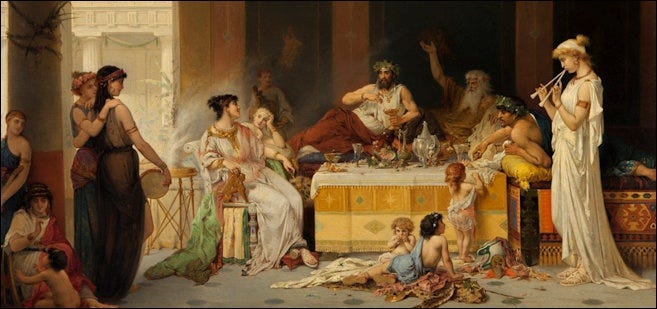
Men and women interacting with each other at a social gathering. (Photo-Facts and details website)

Introduction

Ancient Rome was about Roman civilization in the 8th century. It marked the collapse of the Western Roman Empire and the founding of the Italian city Rome.

The civilization that flourished during these times was ruled by the ethnic group of people, called the Romans. The Roman Empire grew to be the most powerful empires in the ancient world, comprising 20% of the world’s population during that era.

Now if you are wondering how Roman parties used to be then think about the parties in the modern-day Vegas. The same extravagance, fun, food, and drinks in every party, but with different social rules and activities.

Just as they say, ‘’What happens in Vegas, stays in Vegas.’’ The same phrase can be applied to the Roman parties as well.

The splendor, the open-mindedness, the braggarts, the lifestyle, and the social norms were quite amusing. These facts have the power to take you through a myriad of emotions. Make sure you’re ready.

So Ladies and Gentlemen, you all are invited to have lots of fun at this Ancient Roman Dinner party.

The Wine Was the King

A young mother playing with her two children. (Photo: Amos Cassioli / Public Domain)

Wine even in those times was a big deal at the parties. Especially when the parties were thrown by top-quality people. The wine was a symbol of status for such people. Beer was also available but it was against their status quo and therefore avoided at such luxury parties.

The wine was so important that it came in various forms for the party guests. They got to choose their drink as per their preferences.

There were two particular forms of wine that the elite Romans absolutely adored — Calda and Mulsum.

Calda was a drink one would prefer on a chilly winter night. It was served warm as it had flavors induced by different spices. Mulsum on the other hand was a sweet honey-infused wine and very popular across the Roman culture.

It was interesting to note that despite wine being of supreme importance, it’s treatment wasn’t at par with its status.

There was a tradition to mix the wines with hot water before the parties began. This was done because serving pure wine was considered as uncivilized in their culture.

Dinner Parties Were ‘’The’’ Thing For the Romans
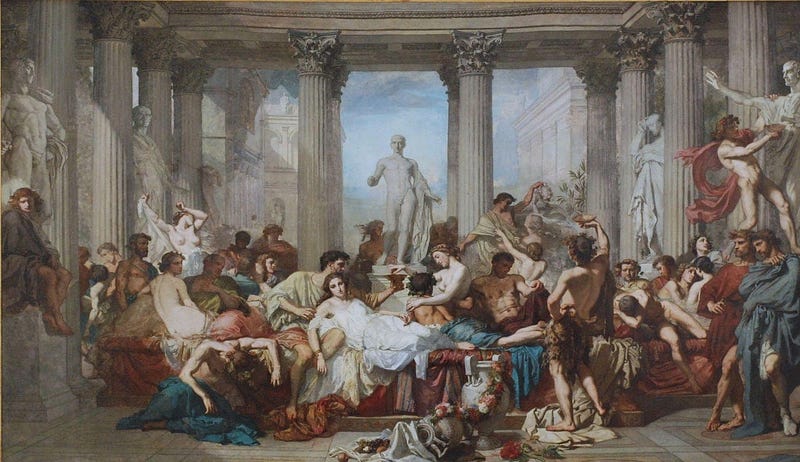
Roman people having fun at a dinner party. (Photo: Thomas Couture / Public Domain)

Whenever the word party comes to our minds, we think of food and guests first and the rest later. Roman dinner parties weren't any different. The formula for a successful dinner party was to be huge in two areas — The food and the guest's list.

The food was no doubt of very high quality, but in the end, its only purpose was a social gathering. A gathering that could assemble all elite class friends and acquaintances in one place.

Another term used for the Roman dinner parties was ‘Convivium’.

These parties were not only restricted to the upper-class people but it was a regular thing with the commoners as well.

However, the ancient records studied by historians only illustrated the dinner parties of the privileged. As per the book ‘Daily Life of the Ancient Romans’ by David Matz, Emperor Augustus kept throwing such parties constantly.

Augustus’ parties were more formal in nature. He gave a great deal of importance to the social strata and personalities of his would-be guests. His parties were famous for a three-course or even six-course meal in their most lavish forms.

The main idea was to maintain a good fellowship with top-ranked individuals.

Seating Charts Were Equally Important
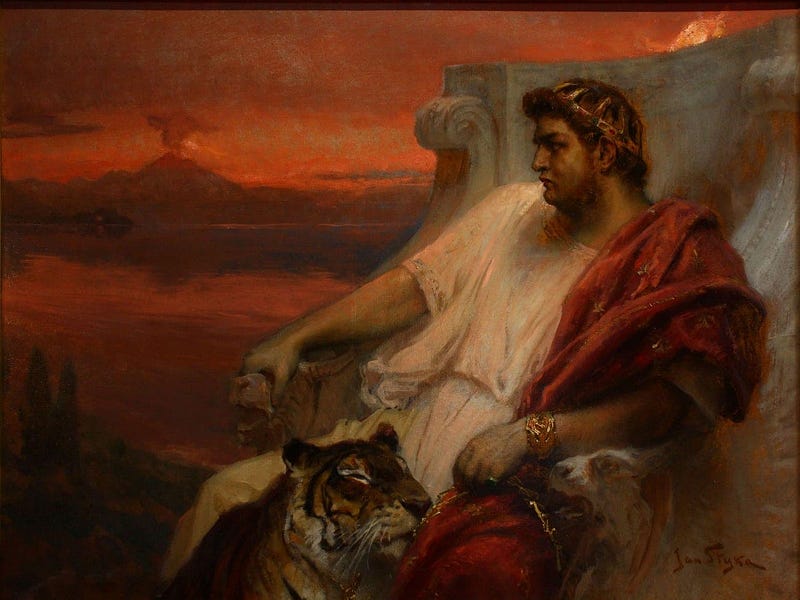
A man comfortably seated with an adult tiger by his side. (Photo: Jan Styka / Public Domain)

Thankfully, in modern times the seating arrangements matter only during weddings or huge cultural or public events. When it comes to private parties, there’s no seating arrangement in place. The guests can sit wherever they like on a first-cum-first-serve basis.

However, Roman parties had a completely different take on the seating arrangements. Where a particular guest sat spoke a lot about their status and also their relationship with the party host.

The guests who weren't the A-listers sat farthest away from the host, while the opulent ones sat close to the hosts on either couches or beds arranged around the dinner tables.

The idea of building strong connections with the powerful and wealthy people was the ‘Modern day networking’ as we may call it.

Therefore, the host would pay extra-special attention to the seating arrangements. It should not happen that any of the guests felt humiliated because they were not given a seating that matched their prowess.

Elite Roman Parties Included Poetry and Gladiators

An emperor in his balcony and lost in his thoughts. (Photo: Herbert Schmalz / Public Domain)

Food was not the only factor that would be the highlight of the party. Live entertainment for the guests was equally important.

It was a good practice to engage guests in deep and meaningful conversations. Live entertainment in the form of music, poetry, acrobatics, musical plays, etc. stood out.

However, it was the Gladiator fight that created the best impression amongst the guests.

Sometimes these fights featured ‘discreet conversations’ with the ahem ‘Scarlet women’ specially called in for such parties.

Thanks to Russel Crow’s portrayal of General Maximus in the movie ‘Gladiator’, we know they were slaves made to fight in the colosseum to entertain people.

In this case, it would mean to entertain the aristocrats in particular.

Dinner Parties Were a Means of Status Display
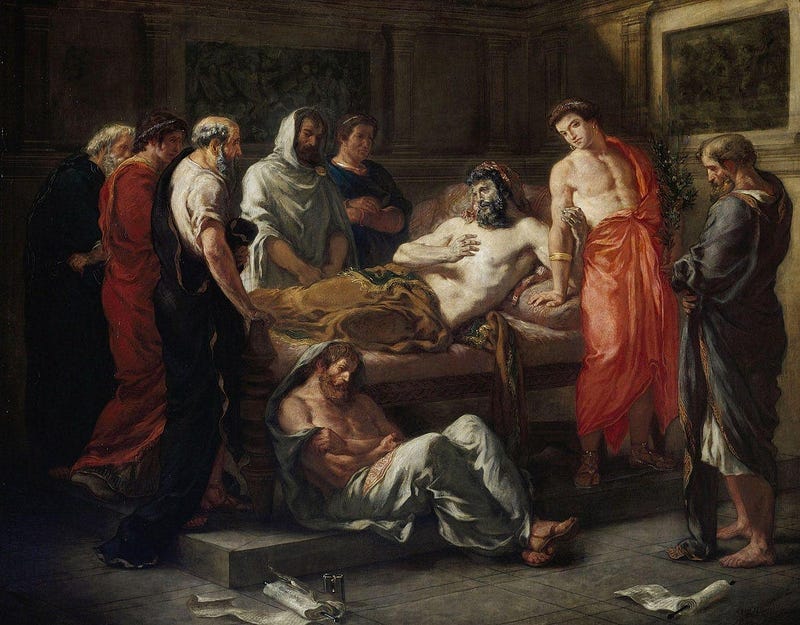
Men conversating after a fancy dinner. (Photo: Eugène Delacroix / Public Domain)

Having a fancy menu was not enough, the way they were displayed made all the difference. The hosts had to play their best cards while planning the menu for the evening.

The unsaid rule was, the more expensive and rare the food was, the better was the impression made. Even the vessels and utensils were designed in a way that upgraded both — Their looks and functionality.

The vessels were made of costly materials like gold, silver, and semi-precious stones. As a fact, even a middle-class family could afford silverware in their house. You can only imagine the extent to which the emperors would go to keep their status intact.

Of course, the hosts did it with political purposes in mind. Someday they could ask for some favors in return if needed. Smart move, isn't it?

To show the guests how rich and fancy the hosts were, they would display a range of platters. They had a large spread of cuisines to choose from.

Below is the list of creatures that were a common appearance on the Roman party platter —

  • Veal,
  • Pigs,
  • Boars,
  • Wild goats,
  • Venison (From the deer family),
  • Hares,
  • Breams (A fresh-water fish),
  • Oysters,
  • Duck,
  • Goose,
  • Turtles,
  • Doves,
  • Cranes,
  • Flamingo,
  • Ostrich, etc.

Unbelievable, isn't it?

Even after such a long list, I had to put etcetera. Because the real list was too lengthy to be a part of this story. You have to agree that some of the animals and birds really were a luxurious indulgence.

Dinner Parties Weren’t Always Private
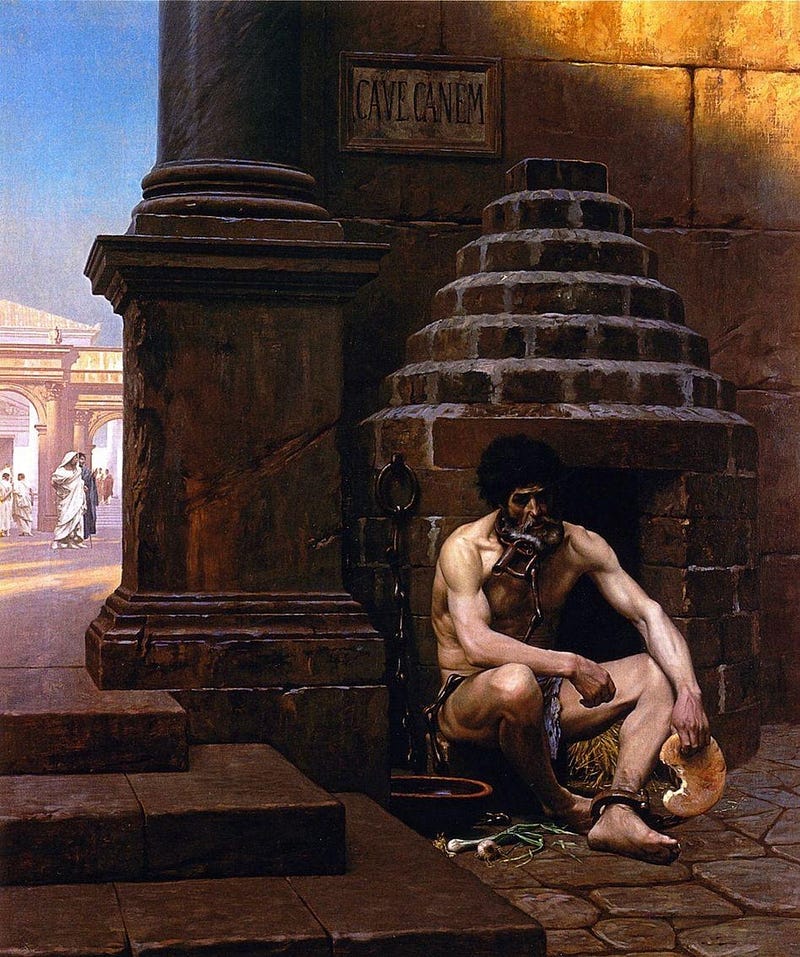
A man having his meal alone on a street. (Photo: Jean-Léon Gérôme / Public Domain)

Apart from the private parties that typically focused on the upper sections of the society. There was another category of parties called Epulums.

These were public parties driven by religion and not status. As we have known, Romans worshipped various Gods, one of them being the Jupiter.

The Epulum Jovis (Also, Jupiter) was held once a year to honor Jupiter and also memorialize the Capitoline temple in Rome. These kinds of parties were also marked by a variety of feasts.

The interesting feature was the Romans sending a formal invitation to the Gods to attend such parties.

Of course, Gods didn't turn up but their absence was fulfilled by their beautiful statues.

There were other kinds of parties too that started publicly but ended up being a private one. The public could access the free food but there were other guests who could sit separately and eat and drink together.

Gregory S. Aldrete in his book ‘Daily life in the Roman city’ described a Roman party scene during a Roman holiday in Saturnalia. That week was marked by non-stop parties and feasts.

Various shops, schools, and even the courts were closed. The normal restraining moral values were given a break and people were expected to engage in lots of fun.

This was also the only time when Gambling was allowed to be an open public activity. Large groups of party-goers could be seen drinking and shouting across the streets, basically a Friday in Las Vegas.

Bacchanalia Festival Had to be Restrained By Law

Men and women getting cozy at a dinner party. (Source- Facts and details website)

The Bacchanalia festival was dedicated to ‘Bacchanalia — The God of Wine.’ It was the only festival in Rome that had to be intervened by the government.

This special festival boasted of heavy drinking, feasts, and entertaining performances for all the guests. The festival’s popularity reached such great heights that it had to be banned by the Roman government.

Due to its racy nature, the government had to introduce some legislation for such festivals. These were necessary to wade off some of the pleasure-seeking games played at the party.

Bacchanalia was originally a religious festival that was celebrated usually at nights. The main features of such parties were ‘obscenity’ and it typically evolved around the same theme.

Caligula — Rome’s Horny Little Embarrassment

Some Roman women interacting with each other in front of a statue. (Photo: Amos Cassioli / Public Domain)

Caligula or ‘Gaius’ was the third Roman emperor from AD 37–41. He made his mark in Roman history for being the cruelest emperor. He caused rampages throughout Rome due to his history of murders, adultery, and acts of debauchery.

It was only obvious his name to come up especially when lavish Roman parties are discussed. So here’s how he threw his parties.

Caligula was nothing but a Roman creep. Before he was brutally assassinated, the Roman people had to endure his cruelty.

When he decided to throw a party, he would decorate his white marble mansion like a bride. He would then invite hundreds of strangers from all sections of society and treat them with unlimited food and wine.

Special musicians were hired to create a saucy mood amongst the sex workers trying to mingle with each other at the party. This was still tolerable.

But when it came to dinner parties with married couples, he really crossed all lines. Caligula would force married couples to attend his lavish parties. He would then steal their wives and take them to his secret room.

He would then sexually assault them while the party was still on. It didn't matter if the wife was into it or not, he would have his way anyway.

The shameful part doesn't end here.

He would return to the party and share all details of the intercourse in front of his guests.

It wasn't that such scenarios were a norm during those times, but with Caligula’s party, they kept happening regularly.

Naughty Emperors Had Inappropriate Parties
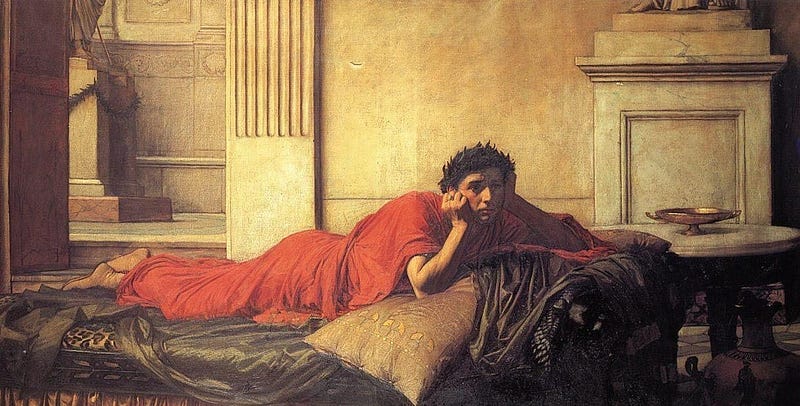
A guest relaxing on a couch during the Roman parties. (Photo: Metaweb / CC-BY)

You must have guessed by now that Caligula was indeed the king of Debauchery in Rome. But there were other emperors too who got their way with exceptional powers.

Tiberius, a Roman emperor, when retired from his position built a separate house called ‘De Villa Jovi’s’ on the island of Capri for unlimited fun and indulgence in sex, alcohol, and drugs.

Tiberius was also famous for his comprehensive library that had books that contained detailed illustrations on various sex positions. Those books could guide any of his sex nymphs to understand what was exactly required.

Another such ruler was Nero, who also loved having a good time with the ladies. He had a palace called the ‘Domus Aurea’ especially for hosting sexual activities.

The features of that place were beautiful bathhouses, rare and exotic roaming animals, a rotating dining room, and a 120-feet bronze statue for himself.

Intimate Gatherings Weren’t the Same as Regular Evenings
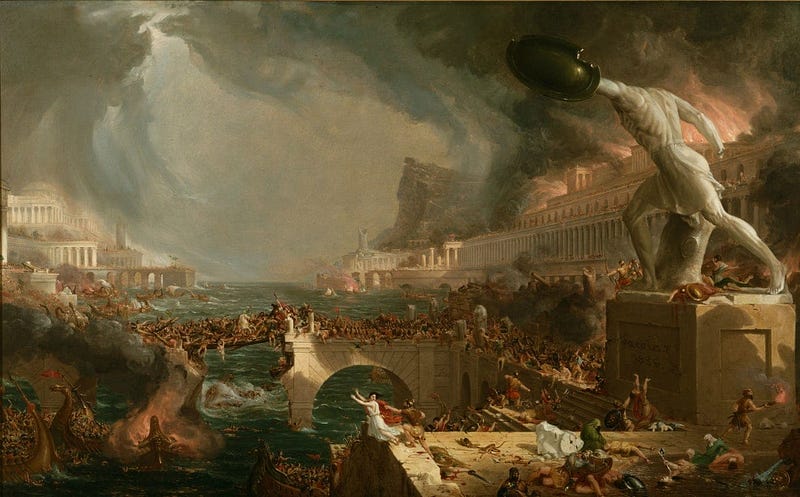
A chaotic scene in the markets. (Photo: Thomas Cole / Public Domain)

Despite Rome having a high reputation for debauchery, most of these acts happened behind closed doors. There were however times when the people had the freedom to bring such racy acts open on the street.

Even the noble Roman emperors managed to get their names immortalized in the history textbooks for their raunchy acts.

However, if someone was caught crossing the line while overtly engaging in sexual activities, their social status stood significantly damaged thereafter.

Thank you for your precious time.

History
Roman
Party
Culture
Ancient History
Recommended from ReadMedium