
10 Amazing Facts About Planet Earth
How well do you know the place where we live?
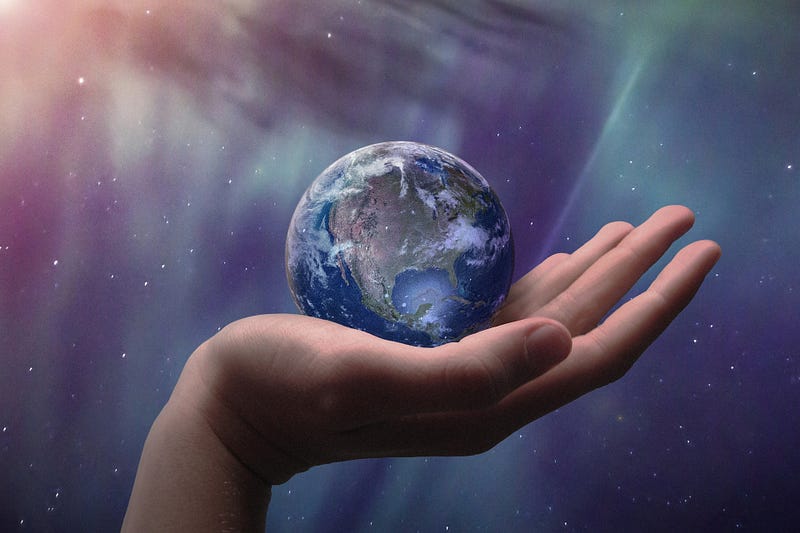
Our planet seems to amaze us every day, from gorgeous sunrises to mesmerizing sunsets. Other days, it scares the bejesus out of us with its powerful tornados and wildfires. We live together here, and we should know a little more every day.
From the extreme weather spots to its gold resources and where some extraordinary cities are located. Here are ten curious facts about our home.
There are parts of Africa in all four hemispheres.
In school, we learned that four hemispheres and seven continents divide our world. But did you know that Africa spans all four hemispheres, and two continents share some cities?
These are the Russian cities of Orenburg and Magnitogorsk, and Atyrau, a city in western Kazakhstan, are half-European and half-Asian. Suez and El Qantara's Egyptian cities belong to Africa and Asia. The city of Colon in Panama is in the North and South American Continents, but the largest and most famous is Istanbul, which lies in Europe and Asia.
There's enough gold inside the Earth's core to cover the planet.
According to the World Gold Council, about 201,300 tones have been mined worldwide. If you put all the above-ground gold together, it will form a 22x22x22 meters cube, with 46% in jewelry, 22% in private investments, 17% in official holdings, and 15% in other uses. There are still fifty-three thousand tones of underground gold reserves.
Bernard Wood of Macquarie University in Australia assures that more than 99 percent of Earth's gold is missing, embedded in the center of the planet billions of years ago. In fact, he says there's enough gold in Earth's core to coat its surface in 1.5 feet of gold.
Human beings can use only a tiny fraction of Earth's water
71% of our beautiful blue planet is covered with water. Yes, almost three-quarters of our world is water, but this is mostly saltwater. Only 2.5% is freshwater, contained in glaciers and snowfields, which means humans can only use 0.007 percent of that water in rivers, lakes, and damps. Did you know water makes different pouring sounds depending on its temperature?
Temperature changes the thickness, or viscosity, of the water, by making molecules of the water move at different speeds, fast for hot and slow for cold. Hence, cold water is thicker, therefore, has a slightly higher-pitched sound.
Do you know what the hottest and coldest spots on the planet are?
The highest temperature ever recorded was in El Azizia, Libya, on September 13, 1922, where the thermometer rose to a temperature of 136 °F (57.78 °C). However, the World Meteorological Organization found evidence it was an invalid reading and declared the official highest recorded temperature of 134ºF (56.7 °C), measured at Greenland Ranch, Death Valley, California, on July 10, 1913.
As for the coldest place on Earth right now is in Oymyakon, located in the Arctic Circle's Northern Pole of Cold, wherein 1933 recorded the lowest temperature, -89.86 °F (-67.7 °C).
Would you prefer to live in the richest or the happiest country?
Since 1971 the country of Bhutan decided it was better to measure their citizen's level of content, including the spiritual, physical, social, and environmental health of its citizens and natural environment, and labeled it as Gross National Happiness (GNH). Instead of the Gross Domestic Product (GDP), which represents the value of all goods and services produced, as other countries do.
By the way, the country with the highest Gross Domestic Product in the United States with a $19.485 trillion GDP vs. Bhutan's $2.53 billion.
Maybe you prefer to live in the healthiest place in the world?
According to the World Population Review, the title of the healthiest country is Japan, with a life expectancy of 85.03 years old (88.09 for females and 81.91 for males). Perhaps due to the low intake of red meat, saturated fatty acids, high intakes of fish, vegetables, and soybeans, resulting in low obesity and mortality rates from ischemic heart disease and cancer.
In the same chart, we find Hong Kong as the healthiest country, but since it is part of China, we can say it is the world's healthiest city. The average life expectancy is 85.15 years old (87.8 for females and 82 for males.
Humans are just one among the estimated 8.7 million species on Earth.
Humans may think they dominate the planet with their technology, but they're merely one species among around 8.7 million living beings on planet Earth. There is an estimate of 7.8 million animals, 600,000 different mushrooms, 300,000 species of plants, 37,000 species of protozoa, and 27,500 species of algae, without even counting an indeterminate number of bacteria.
Tornadoes can cause "fish rain."
Imagine yourself driving on a remote highway when suddenly fish or frogs start falling from the air. This phenomenon may happen when a tornado, or waterspout, passes over a lake. Its strong winds will pick the whatever is swimming and carry it miles away. Though it is possible, since they can pick animals like cows and horses, a "sharknado" is technically feasible but never documented. However, in 1877 there was a report of small alligators falling onto a South Carolina farm, creating what we can call a "gatornado."
Did you know that trees weren't always biodegradable?
According to National Geographic, hundreds of millions of years ago, trees would fall to the ground, creating enormous piles of dry wood. And since eating wood bacteria had not evolved, forest fires would consume vast portions of the forest, producing most of the coal on Earth. It took millions of years for bacteria and fungi to appear and eat away the fallen trees.
Earth won't always have the same North Star.
Every sailor, or camper, knows how to use The North Star as a navigating point since it seems a fixed marker in the sky. However, millions of years ago, according to NASA, Polaris, the bright point we now recognize as the North Star, wasn't in that spot. By the year 13,000 A.D., Vega will take its place, until 26,000 A.D. when Polaris will be right back where it was and return to its status as the North Star.
Speaking about space, did you know that according to some astronauts, a distinct odor hangs around when they return to their ship after a spacewalk. They have described it as "hot metal" or "searing steak."
Conclusion
At this moment, we only have one place in the universe to live, and the option of moving to another exoplanet is exceptionally remote, so we should try to understand Earth a little more.
After you read this article, I hope you learned some interesting information or found the source of the information you've already known.
“Far out in the uncharted backwaters of the unfashionable end of the western spiral arm of the Galaxy lies a small unregarded yellow sun. Orbiting this at a distance of roughly ninety-two million miles is an utterly insignificant little blue green planet whose ape-descended life forms are so amazingly primitive that they still think digital watches are a pretty neat idea.” ― Douglas Adams, The Hitchhiker’s Guide to the Galaxy


