
留白, An Art Concept for Better Living
Less is more beyond traditional Chinese aesthetics
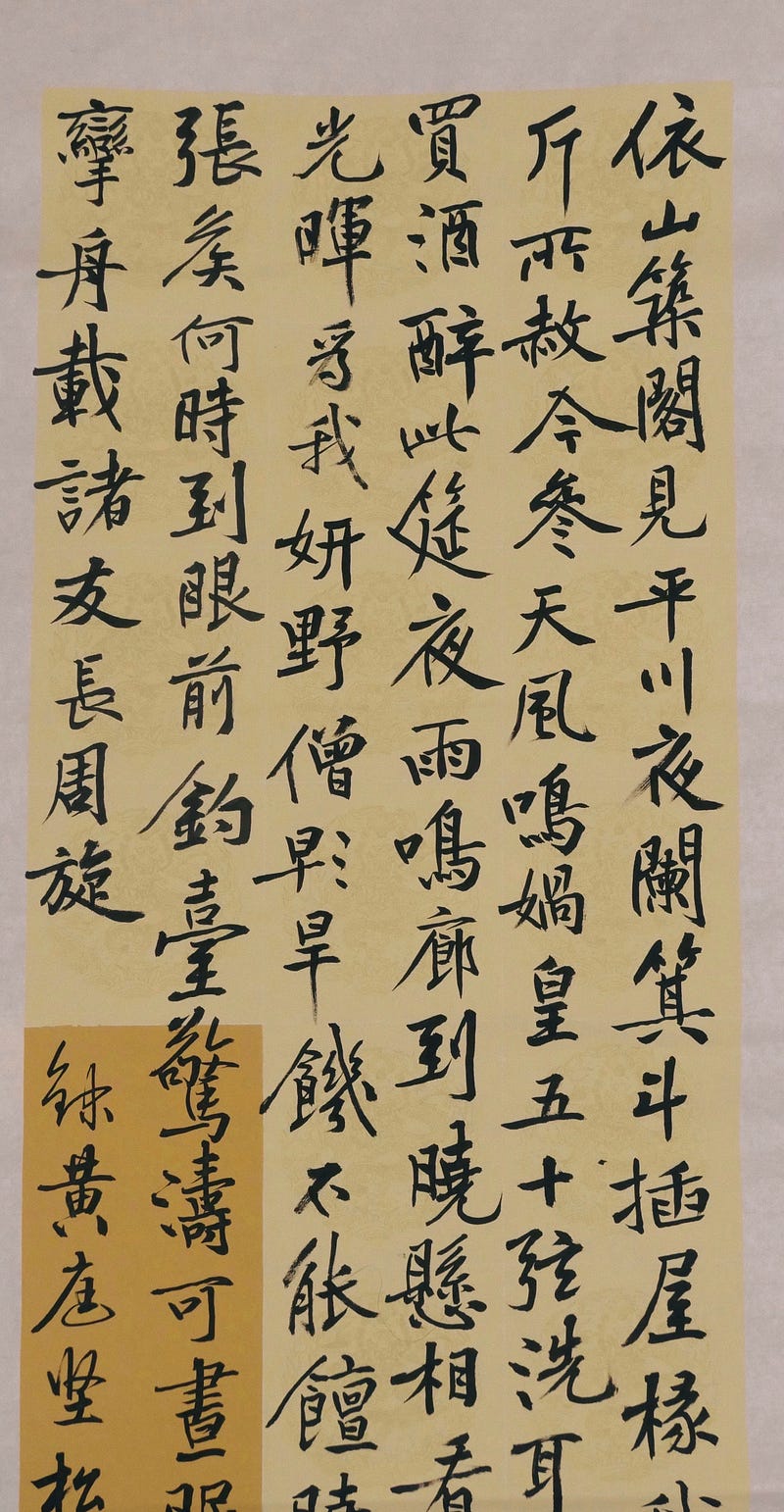
留白 ( liú bái) can be translated as leaving blank. It’s a critical concept in traditional Chinese aesthetics, particularly in painting and calligraphy.
The practice of preserving unpainted space is strikingly manifested in landscape artwork, notably during the Song Dynasty. Artists of this era embraced the inherent beauty of nature, skillfully blending their creations with the vastness of the universe. The intended empty areas in contrast with painted elements convey profound philosophical and cultural ideals related to the Yin-Yang dynamics.
留白 is also one critical characteristic of Chinese calligraphy, a paramount art form in Chinese culture. The open space within the characters and the surrounding emptiness are deliberately varied in size and density, creating an artistic rhythm. The interplay of blank space and dark line strokes brings forth a sense of equilibrium and natural flow, enhancing the overall structural composition and expression.
The intentional use of blank or unpainted space is an Eastern artistic expression, highlighting the significance of absent elements. It creates interesting layers of presence and absence, the contrast of Yin-Yang, cultivating a sense of simplicity, balance, and depth while allowing imagination to fill the blank and explore the unknown.
The artistic approach of 留白 is deeply rooted in Taoism and Eastern philosophy, a wisdom beautifully illustrated by the phrase 水满则溢,月盈则亏 — water overflows when filled, and the moon wanes when full.
In the hustle of our modern lives, we often find ourselves overwhelmed with expanding to-do lists, constantly moving from one task to another. 留白 serves as a gentle reminder to carve out space for ourselves, to slow down and breathe amid the chaos of contemporary living.
Whether it’s indulging in a hobby, gazing at the stars, watching raindrops, or simply daydreaming, they offer opportunities to appreciate the small wonders of nature and the beauty of the natural world. It echoes the sentiment that “The time you enjoy wasting is not wasted time.” The experience itself becomes the meaning of living.
“The time you enjoy wasting is not wasted time” -Bertrand Russell
In a world characterized by information overload 24/7 and relentless productivity chasing, it’s easy to lose focus during the constant hustle and busyness. Busyness is interestingly revealed in its Chinese character 忙. When breaking down its components, the left part implies mind/heart, while 亡 often means deceased, death, or coming to an end. The combined character is frequently used in phrases such as 忙乱, 忙碌, 手忙脚乱, all of which describe a state of disorder and chaos during a busy period.
Busyness can hold us back.
It’s Okay to sidestep once in a while and allow ourselves some blank time.
It can even enhance productivity and creativity.
There are numerous cases where creative works and groundbreaking discoveries emerged during breaks or moments of relaxation. Legend has it that Archimedes discovered the principle of buoyant force while taking a bath. Sir Isaac Newton conceived the idea of gravity when he saw an apple falling from a tree while taking a break in his family’s garden. And J.K. Rowling conceived the entire story of Harry Potter during a train journey while taking her break from work.
Moments of blank time and mental stillness allow the brain to rest and recharge. Taking an unstructured break from routine can offer a fresh perspective, allowing the mind to wander and connect dots unexpectedly, therefore fostering out-of-the-box thinking and innovative solutions.
Additionally, it plays a crucial role in preventing burnout and reducing stress, contributing to our overall well-being.
That’s likely why many workplaces and academic settings incorporate designated breaks or tea time. These intervals provide individuals with the opportunity to step away from immediate tasks and engage in conversations within a more relaxed atmosphere, fostering creativity. These informal interactions often lead to the exchange of ideas, inspiring new ones, and the formation of new connections.
Moreover, a wealth of research suggests that microbreaks are not only beneficial but also essential. They contribute to stress reduction, help maintain engagement, and enhance overall work enjoyment.
Embracing 留白 aligns with a composed attitude and desired lifestyle in the fast-paced modern era. The intentional pause not only benefits our well-being but also serves as the spark for brilliant ideas and insights.
Let’s 留白 unapologetically.
Thank you for reading. I write about culture, work-life learning, and the ancient wisdom of Traditional Chinese Medicine for better living. Click here if you would like to be notified when I publish.