
What is System on a Chip | 什麼是 System on a Chip (系統晶片、SoC)?
4 major points to help the public understand SoC and the role Taiwan plays in it | 4 大點幫助大眾了解 SoC,以及台灣在其中扮演的角色
5:42 pm Taichung, Taiwan, October 6, 2021 (in quarantine)
Motivation
When you enter “System on a Chip introduction” on Youtube, you will find that the most viewed chip introduction is “Teacher Li Yongle’s” in mandarin communities, with more than 3 million views. Most of the introductions are made by Chinese people. There are very few Taiwanese so-called “amateur” introductions.
For example, if you enter machine learning, you can find teacher Li Hongyi. For chips industry, we can at most see an introduction from Zhiqi77 (a Taiwan Youtuber), but it is just an introduction to semiconductors, and he can only be regarded as a “journalist”. My original intention was to make a Youtube, but to be honest, making videos is quite difficult and I couldn’t get started, so I decided to make it simpler with articles (but there are actually some articles by others around the same topic already).
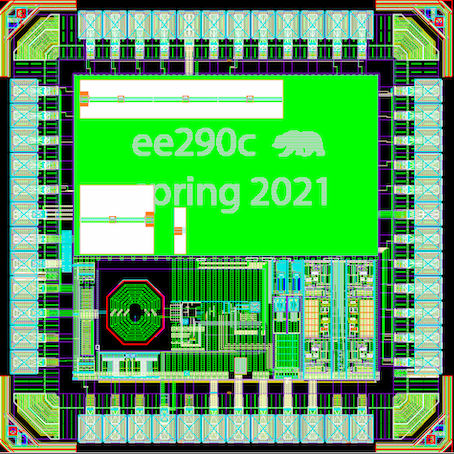
Taiwan has such a huge influence on the chip industry, and things like SoC are so successful because they take advantage of advances in semiconductors. I hope that more people can discuss such issues and educate the Taiwanese people on how Taiwan seizes this industrial chain in addition to semiconductor manufacturing processes (you will be shocked that Taiwan actually encompasses everything).
In fact, some of the articles I wrote previously mentioned the related concepts of SoC. If you are interested, you can take a look.
- Briefly mention the advantages and disadvantages of SoC
- Introducing the RISC-V architecture, which is not directly linked to the SoC, but is a very important instruction set architecture for designing SoC, which will be mentioned later in the article.
Perhaps in the future, the whole world will not be able to produce chips at all, and only the small island of Taiwan can output wafers one by one (from silicon intellectual property, chip design to manufacturing processes), which is a bit like an arsenal.
# What is SoC?
The abbreviation of SoC comes from System on a Chip, which means:
“Integrate” an entire system on one chip.
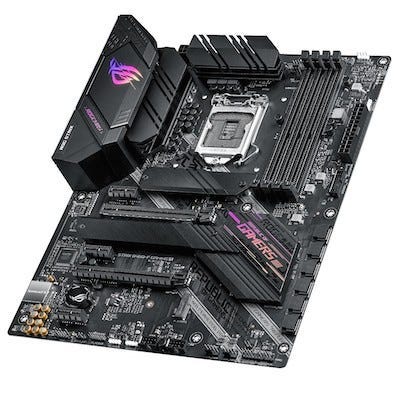
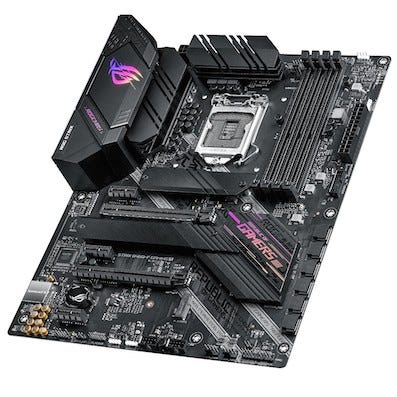
The system here includes CPU, GPU, Memory and other chips that accelerate chip performance (eg DSP, ISP, Neural Engine). In the past, these things were discretely distributed on the motherboard. For example, the motherboard had a GPU slot, a DDR Memory slot, and the most important CPU slot. These different components communicate through PCIe, the circuit bus on the motherboard.
SoC integrates everything on one chip. The picture below shows the chip of Apple M1. It is the perfect representation of SoC. You can find that it puts CPU, GPU, DRAM, and Neural Engine (which handles some artificial intelligence applications) Together, we use Fabric, which is the different Metal layers of the semiconductor manufacturing process, to connect various chips together. Such a computer does not require a bulky motherboard, but can all be connected and communicated with each other through semiconductor technology, achieving performance that traditional computers cannot achieve.
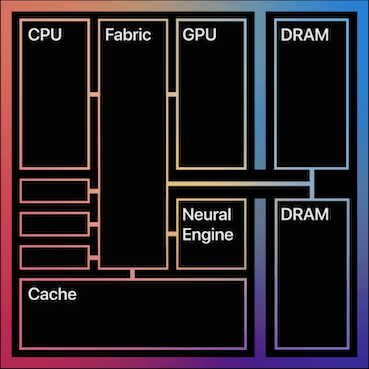
SoC integrates chips for various applications on a single chip
However, what advantages and disadvantages this can bring?
#What benefits does SoC bring?
First of all, let me establish the concept of chips for you, so that we can more carefully understand the advantages and challenges brought by SoC. I will try to use the following three points to describe it concisely and understandably.
- Problems faced by CPU
- Cause of the problem
- Solutions provided by SoC
Problems faced by processors
People often talk about the end of Moore’s Law, but in fact another more important issue is the end of Dennard’s Scaling.
That is to say, “CPU’s power consumption” is reaching its limit.
We will simply analyze the formula for the power consumption of this chip: Power (power consumption) = constant * CFV². As for how it comes from, it is a simple physical principle and will not be discussed here. The only coefficients that need to be discussed are C, F, and V:
C represents capacitance, V represents operating voltage, and F represents clock. To put it simply, when the transistor becomes smaller and smaller, the capacitance and voltage will become smaller (you can think of the capacitance as the battery capacity. If something is small, the capacity will naturally be low), so we can continue to increase the clock speed, improve performance, and maintain stable function. Consumption.
Cause of the problem
The reasons are:
Side effects of transistors getting smaller and smaller
Side effects such as: Leakage Current becomes larger, Threshold Voltage becomes smaller, resulting in additional power consumption. Therefore, power consumption is no longer calculated according to the above equation, forming a Power Wall. Please see the figure below:
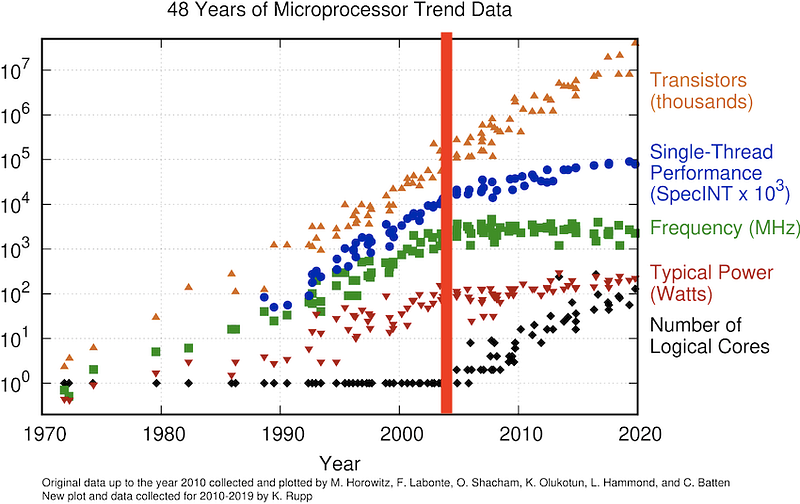
The thick red line is the so-called Power Wall. In order to prevent the red dot (Power) from continuing to rise exponentially, we cannot increase the processor clock frequency (Frequency, the green dot part). This result will cause the processor’s performance to stagnate. It is also the most important consequence of Dennard Scaling failure.
The previous story was:
After increasing the clock (Frequency), the logic of the circuit will become more complex, and a more powerful processor will be designed to run more complex software. The more transistors brought by the shrinkage of transistors can help us design more complex circuits, so processor performance can continue to improve.
But now the story is:
As transistors become smaller and smaller, the processor faces a Power Wall and cannot continue to increase the clock frequency (Max Freq. is 4GHz) to improve performance.
Solutions provided by SoC
So why can SoC allow Dennard’s Scaling to continue? That is to say, we have a way to improve performance in addition to increasing the clock speed, while maintaining power consumption limits.
How to prevent from the end of Dennard’s Scaling?
- Hardware — Hetergeneous Computing
In the past, performance growth was judged by measuring Single-thread Performance (single thread performance), that is, using a CPU to run scores. Therefore, in the past, the focus was on making a Generalized CPU, that is, in any task The performance can be the best.
But today’s applications have too many requirements, such as being able to surf the Internet, play music and videos, perform artificial intelligence calculations, etc. Each application requires a different architecture, and there is no way to make a Generalized CPU. To handle them, the concept of Hetergeneous Computing is to connect Custom Accelerators (eg, Neural Egnine, GPU, CPU, DSP, ISP, Modem) using a Shared Memory Space. In this way, DSP can be used for audio decoding, GPU/ISP can help with audio and video drawing…etc., each performing its own duties.
The best way to present this concept is to design a new Microarchitecture (microarchitecture) on an SoC to find a way to make a heterogeneous processor that is efficient and has correct execution results. This is also the power of SoC, avoiding the need to increase time. Mailai Maximize Single Core Performance.
- Software aspect — Programming Model (System Programming Model)
With more functional hardware, the Programming Model also needs to be revised, because what is written now no longer only requires the Program CPU as before, but also other accelerators and chips exist at the same time. We can write more sophisticated and complex software to achieve better performance, so more diverse Programming Languages such as CUDA, GO, RUST, Python… are intertwined to give programmers more variety and choices.
In addition, Compilers (compilers) are also becoming more and more complex to compile different languages to different hardware to solve more problems, such as the development of MLIR (Multi-levels Intermediate Representation) . Its goal is to create a unified compiler to compile various programs onto different Hardware to avoid fragmentation.
Challenge
And making an SoC is not a simple matter. There are two main points:
- Wafer verification
It can be easily understood that today, in addition to the number of transistors (billions and more), there are also more chips with different functions on a chip. Therefore, whether it is computer simulation or circuit layout verification required during chip design, , or functional testing and hardware bring up after the chip is produced, all require more funds and manpower.
But because the market has demand, resources naturally come into play. In addition, related development software (EDA tools) are also advancing very quickly, allowing this challenge to be gradually solved.
- Microarchitectural design
The heterogeneous computing architecture mentioned above is also a big topic in the academic community. How to allow different chips to perform parallel computing at the same time so that they can access each other’s computing results. This involves how to solve the problem of memory sharing. , Data Allocation, Dataflow, etc., require architects to come up with new Protocols to ensure safe and correct access methods without any errors.
SoC is the ability to integrate chips with different functions to achieve multi-tasking effects, so it can improve performance without increasing power consumption.
But it also requires a more breakthrough microarchitecture and a more complex chip verification process.
# Why you need SoC
As mentioned earlier, the so-called market demand drives money and talents into the field of SoC. What kind of market demand is that?
Smartphone
The most important thing is the development of smart phones, whose demands are nothing more than high performance, low power consumption, and small size. From the above analysis, these are the advantages of SoC.
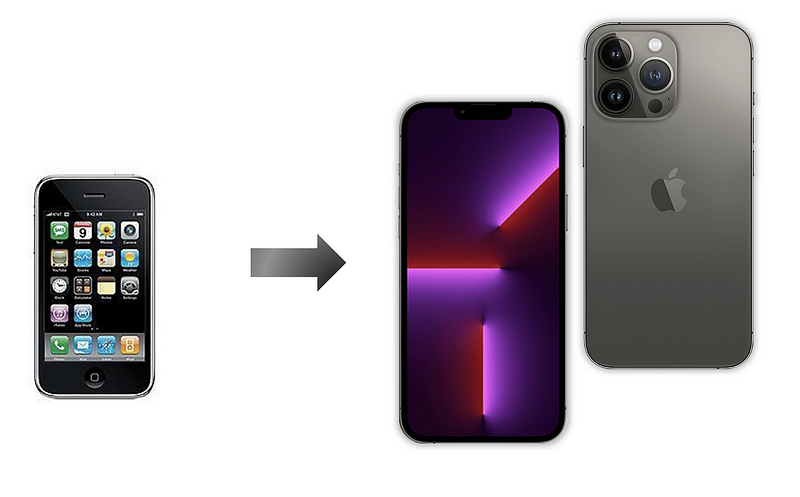
Since Apple released the iPhone 3G in 2007, Apple began to design its own A-series chips. From the A4 chip in 2010 to the current A15 Bionic in 2021, the performance has increased explosively while maintaining power saving in the same area. There are more and more high-power transistors. Of course, it cannot be ignored that this is also the result of researchers who have invested a lot of money, but it can prove that the advantages brought by SoC are not trivial.
Internet of things (IoT)
Apple is really the most representative trend in mobile trends. Their unique ecosystem perfectly combines many devices (of course Android also has corresponding products, but I mainly use Apple, so there are more Apple examples).
The Internet of Things is also one of the thrusts of SoC. Airpod has Bluetooth and music playback functions, and Apple Watch has Wifi, display and sound functions. It’s difficult for you to use the same CPU to complete these two completely different applications, right?

What we want is make experts do what they are good at
Therefore, facing the diverse application requirements of the Internet of Things, SoC is just a great solution. By integrating different chips, we can design SoC chips for different applications, and then let architects design suitable microarchitectures for optimization and testing to solve the needs of IoT applications, such as: longer use time with better Sound quality, or better sensing technology with wireless functions, etc.
Artificial intelligence development
The concept of neural network was actually proposed very early. The reason why it has developed rapidly in the past ten years is because of the explosive growth of GPU computing power. Models that previously took several weeks to train can be completed in a few days or even hours. This has also led the world into the era of big data — an era that pays attention to analyzing data.
This development more or less proves that in addition to the CPU, we need another processor, whether it is a GPU or even a TPU (Google’s machine learning hardware) or Neural Engine in the system, which also promotes the development of SoC in this area.
Market demand, application-level expansion, and additional data processing chips have increased the demand for SoCs
# The role played by Taiwan
At a time when chips are becoming increasingly important, Taiwan is playing a very important role
Taiwan is “driving, innovating , and making breakthroughs” in the entire chip industry
Why do you say that?
- TSMC (2330) — Undoubtedly one of the most important companies in Taiwan at present, it continues to push the limits of semiconductors and is a leader in advanced manufacturing processes.
- MediaTek MTK (2454) — Taiwan’s leading fabless chip design company.
- Andes Technology (6533) — This company is very interesting. It is the leader in RISC-V silicon intellectual property in Asia. There is a SiFive company in the United States and an Andes company in Taiwan.
These three companies are the reason why I think Taiwan can control the future chip industry. They cover everything from computer architecture (Andes), chip design (MTK) to semiconductor manufacturing (TSMC). In addition to TSMC, there are many other companies in Taiwan that focus on mature processes (eg 10/28/65 nm processes), such as Power Semiconductor (6770) and United Microelectronics (2303). And I firmly believe that the future application of the Internet of Things (even though it has been called it for many years) is closely related to Taiwan for the following reasons:
- TSMC FirstThe advanced manufacturing process can provide more power-saving and smarter semiconductors.
- MTK can provide a better chip design blueprint, especially for 5G Wireless, providing the chips required for the Internet of Things.
- Andes can provide an instruction set architecture based on open source RISC-V, which is in line with future (Maybe) trends. The result is to make chips cheaper and more diverse. (If you are interested, you can read this Introduction to RISC-V )
However, Andes is still a growing company. Whether it can become Asia’s Arm (Arm is current world №1 Silicon Intellectual Property Company) is still unknown, but it is a company worth observing.
We can see the importance of Taiwan from the automotive chip industry . The future application of the Internet of Vehicles will of course rely on automotive chips, which is also an application of the Internet of Things. If Taiwan can solve supply chain problems from the manufacturing side and then gradually improve it at the upper levels, Taiwan has a good chance of becoming an important member of the manufacturing and design of automotive chips.
Conclusion
In the past, SoC was considered a low-end device and was only used for some relatively simple tasks. It was a single chip such as the control chip on electrical products, Arduino, etc. After all, there was not the hardware strength, tools and money to integrate complex architectures. onto a wafer.
But facing the current power consumption challenge, as analyzed above, SoC may be a solution, but the bigger point is that we cannot rely on the previous Generalized CPU to solve the problem, but the so-called Domain Specific IC, designing a dedicated chip to effectively of solving problems.
The above may have omitted some unmentioned parts, such as packaging bottlenecks, manufacturing bottlenecks, and a more detailed look at the software side, but I still hope to give readers some deeper insights into SoC. Currently, I am doing SoC software development at Tesla. I have been exposed to 4 SoCs with different functions in the car, and then I am doing design optimization respectively. Therefore, I can feel the importance of SoC to the future, and I am also very much looking forward to making more improvements on the software side. Learn about SoCs.
Everyone is welcome to leave a message and discuss it together. If you think the writing is good, you can give me claps and share it.
5:42 pm Taichung, October 6, 2021 (隔離中)
動機
當你在 Youtube 輸入 “System on a Chip 介紹” 時,你會發現出來最多觀看次數的是「李永樂老師」的晶片介紹,有 300 多萬點閱,再來多半都比較都是中國人在介紹,很少有台灣人所謂「素人」介紹。
舉例來說,你輸入機器學習,你可以找到李宏毅老師。我們頂多能看到志祺77的介紹,但只是介紹半導體而已,而且他也只能算是「記者」而已 。初衷是想要做 Youtube,但老實說做影片蠻難的,一直下不了手,因此還是決定用文章簡單些 (但其實已經有一些文章了哈)。
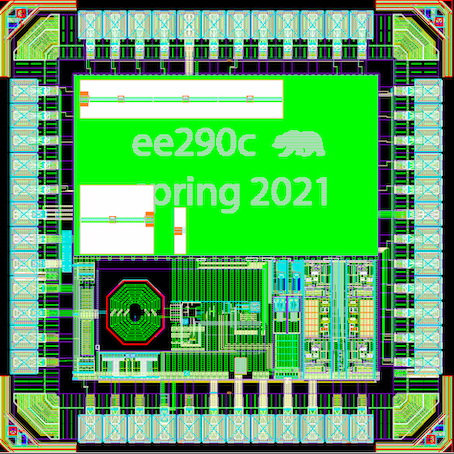
台灣在晶片產業影響那麼大,SoC 這些東西就是利用半導體的進步而之所以能那麼成功。希望可以有更多的素人來討論這類的議題,教育台灣的民眾除了半導體製程之外,台灣又是怎麼抓住這個產業鍊的 (你會嚇到台灣其實囊括了所有東西)。
其實先前我寫的一些文章都有提及 SoC 的相關概念,有興趣也可以去看看。
- 稍微提及 SoC 的優缺點
- 介紹 RISC-V 架構,裡頭沒有直接連結到 SoC,但是是設計 SoC 蠻重要的指令集架構,文章後面會提到。
或許以後全世界完全都沒辦法做晶片,只剩台灣這個小島嶼可以輸出一片一片的 Wafer (從矽智財、晶片設計到製程),有點像軍火庫。
# 什麼是 SoC?
SoC 的縮寫是從 System on a Chip 來的,意思就是說:
把一整個系統「整合」在一片晶片上。
這邊的系統包含 CPU、GPU、Memory 以及其他加速晶片效能 (e.g. DSP、ISP、Neural Engine) 的晶片。以前這些東西都是離散分佈在主機板,譬如主機板有 GPU 插槽、DDR Memory 插槽,以及最重要的 CPU 插槽。這些不同的元件透過主機板上的電路匯流排 PCIe 來進行溝通。
而 SoC 就是把全部的東西整合在一塊晶片上面,如下圖為蘋果 M1 的晶片,他就是 SoC 完美的展現,你可以發現它將 CPU、GPU、DRAM、Neural Engine (處理一些人工智慧的應用) 放在一起,再利用 Fabric,也就是半導體製程的不同 Metal layers 接各式晶片在一起。如此一台電腦不需要笨重的主機板,而全部可以透過半導體技術來互相連結溝通,達到傳統電腦達不到的表現。
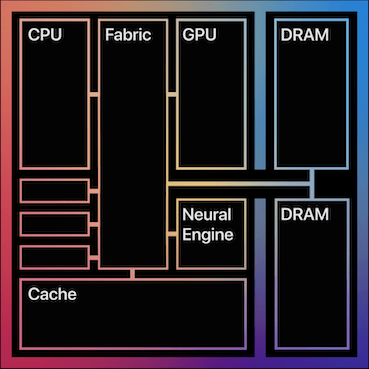
SoC 將各種不同應用的晶片整合在單一片晶片上面
至於這樣做能帶來什麼樣的優點及缺點呢?
# SoC 帶來什麼效益?
首先先給各位建立晶片方面的概念,我們就能更仔細的認識 SoC 帶來的優點以及挑戰。我會盡量用以下三點描述的簡潔易懂。
- 處理器面臨的問題
- 問題產生原因
- SoC 提供的解決辦法
處理器面臨的問題
大家常常提起摩爾定律 (Moore’s Law) 的終止,但事實上另一個更重要的問題是 Dennard 縮放比例定律 (Dennard’s Scaling) 的結束。
也就是「處理器功耗」面臨到極限
我們就簡單分析這個晶片功耗的公式 Power (功耗)= 常數 * CFV² ,至於他怎麼來的就是簡單的物理原理這邊就不討論。需要討論的係數只有 C, F, V:
C 代表電容,V 代表運作電壓,F 代表時脈。簡單來說,當電晶體愈做愈小電容跟電壓都會變小 (電容你可以想像成電池容量,東西小,容量當然就低),因此我們可以持續提升時脈,提高效能,並穩定維持功耗。
問題產生原因
其中的原因就是:
電晶體愈來愈小所產生的副作用
副作用如:Leakage Current 變大, Threshold Voltage 變小造成額外的功耗,因此功耗已經不是以上述的方程式計算,形成 Power Wall,請看下圖:
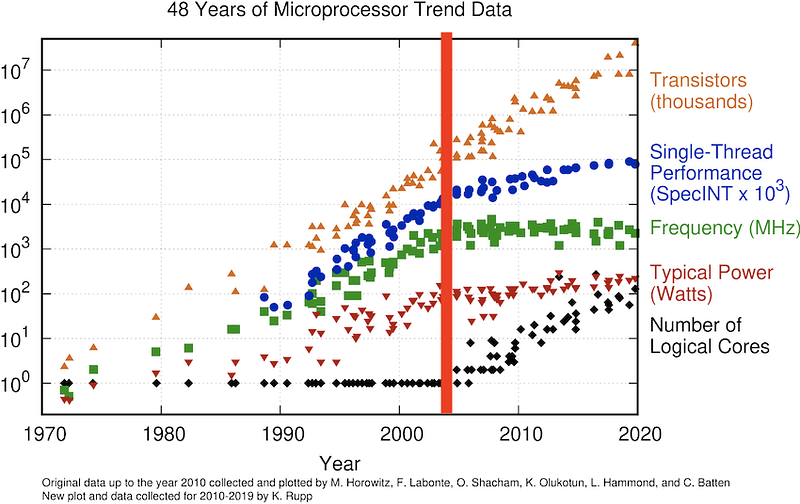
紅粗線就是所謂的 Power Wall,為了不讓紅點 (Power) 以指數繼續上升,我們不能再增加處理器的時脈 (Frequency, 綠點的部分),這個結果會讓處理器的效能停滯,也是 Dennard Scaling 失效的最重要的後果。
以前的故事是:
提升時脈 (Frequency) 後,電路的邏輯會變得更複雜,設計出更強悍的處理器,來運行更複雜的軟體。而電晶體縮小所帶來的更多的電晶體,就可以幫助我們設計更複雜電路,因此處理器性能可以繼續提升。
但現在的故事是:
由於電晶體愈來愈小,處理器面臨 Power Wall,而無法繼續增加時脈 (Max Freq. is 4GHz)來提升效能。
SoC 提供的解決辦法
那為何 SoC 可以讓 Dennard’s Scaling 繼續保持呢?也就是我們有了除了提升時脈的方法來提升效能,而同時可以維持功耗限制。
How to prevent from the end of Dennard’s Scaling?
- 硬體方面 — 異質運算 (Hetergeneous Computing)
以前的效能增長是透過量測 Single-thread Performance (單一執行緒效能) 來評斷的,也就是利用一顆 CPU 來跑分,因此以前會著重在做出一個 Generalized 的 CPU,也就是在任何 tasks 的效能都能最好。
但現今的應用來說,有太多太多需求,要能上網、播放音樂及影片、人工智慧運算…等,每個應用的需求所需要的架構都不一樣,沒辦法再做出一個 Generalized CPU 來處理他們,因此 Hetergeneous Computing 的概念就是將Custom Accelerators (e.g, Neural Egnine, GPU, CPU, DSP, ISP, Modem) 利用一個 Shared Memory Space 串連起來。如此一來,DSP 可以拿來做音訊的解碼、GPU/ISP 可以幫忙影音繪圖…等,各司其職。
這樣的概念最好的呈現方式就是在一塊 SoC 去設計新的 Microarchitecture (微架構) 來想辦法做出有效率、執行結果能正確的異質處理器,這也是 SoC 強大之處,避免需要增加時脈來 Maximize Single Core Performance。
- 軟體方面 — 編程模型 (System Programming Model)
而有了更多功能的硬體,Programming Model 也要做修正,因為現在寫的已經不是像以前一樣只需要 Program CPU,還有其他加速器、晶片同時一起存在。我們可以寫出更多工、更複雜的軟體來達到更好的效能,因此更多元的 Programming Languages 如 CUDA, GO, RUST, Python… 交錯著讓程式設計師有更多樣的變化及選擇。
除此之外,Compiler (編譯器) 同時也變得愈來愈複雜,來編譯不同的語言到不一樣硬體上,去解決更多的問題,如 MLIR (Multi-levels Intermediate Representation) 的發展。它目標就是想要做出一個統一的編譯器來編譯各種不同程式到不同的 Hardware 上面,避免碎片化。
挑戰
而製作 SoC 也不是件簡單的事情,主要有兩點
- 晶片驗證
可以很容易了解到,今天除了電晶體數量變多 (billions and more),同時又有更多不同功能的晶片在一顆晶片上面,因此不論是在晶片設計時所需的電腦模擬、電路佈局驗證,抑或是晶片產出後的 Functional Testing、Hardware Bring up,都需要更多的資金以及人力。
但因為市場有需求,自然就資源。此外相關的開發軟體 (EDA tools) 也進步的非常快,讓這個挑戰慢慢解決。
- 微架構設計
上面提到的異質運算架構,也是學界很大的課題,該怎麼讓不同的晶片同時進行運算 (Parallel Computing),讓他們互相可以存取對方的運算結果,這牽涉到如何解決 Memory sharing 的問題、Data Allocation、Dataflow 等,需要架構師去想出新的 Protocols,來保證安全、正確的存取方式,而不會產生任何錯誤。
SoC 也就是能整合不同功能的晶片來達到多工的效果,因此可以在不增加功耗的狀況提升效能。
但同時需要更突破的微架構以及更複雜的晶片驗證過程。
# 為何需要 SoC
先前提到所謂市場需求帶動金錢跟人才進入 SoC 的領域。那是何種市場需求呢 ?
智慧型手機
最重要的就屬智慧手機的發展了,其需求不外乎是高效能、低耗電、體積小。從上面的分析,這些莫屬於 SoC 的優勢。
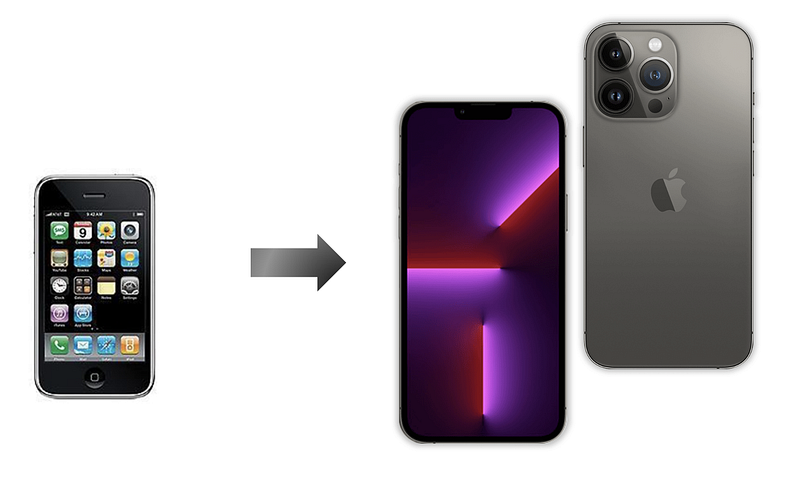
自 2007 年蘋果發表 iPhone 3G 後,到之後蘋果開始設計自己的 A 系列晶片,從 2010 的 A4 晶片,到現在 2021 的 A15 Bionic,性能的爆炸性增長,同時卻能維持住省電,而在同一面積下能塞的電晶體還愈來愈多。當然不能忽視的是這也是投入很多金錢即研究人員出來的成果,但可以證明 SoC 帶來的優勢,是非同小可的。
物聯網
蘋果真的是行動趨勢中最具代表性的趨勢,他們自成一家的生態系統完美的結合了很多裝置 (當然 Android 也有相對應的產品,但我主要使用 Apple ,因此比較多 Apple 的例子)。
而物聯網也是 SoC 其中的推力之一。Airpod 具有藍芽、音樂放送功能,Apple Watch 有 Wifi、顯示以及聲音功能。你很難利用同一顆 CPU 來完成這兩者截然不同的應用吧?

我們希望的是專業的讓專業的來
因此面對物聯網多樣化的應用需求,SoC 剛好就是很棒的解決方案。透過整合不同晶片,我們可以針對不同應用的設計 SoC 晶片,再讓架構師設計適合的微架構,進行優化、測試,來解決物聯網應用的需求,如:更長的使用時間搭配更棒的音質效果、或者更棒的感測技術搭配無線功能等等。
人工智慧發展
神經網絡的概念其實很早就被提出,只所以在近十年快速發展是因為 GPU 算力的爆成長,讓以前要花幾個禮拜訓練的模型,在幾天甚至幾個小時就能完成,這也帶領世界進入大數據時代 — 講究分析資料的時代。
而這樣的發展或多或少證明除了 CPU 我們需要另外一個處理器不論是 GPU 更甚是 TPU (Google 的機器學習硬體)、Neural Engine 在系統中,如此也推動這方面 SoC 的發展
市場需求、應用層面的擴張、額外的資料處理晶片造成 SoC 的需求增加
# 台灣扮演的角色
晶片日趨重要的時刻,台灣正在扮演著非常重要的角色
台灣正在「推動、創新、突破」整個晶片產業
為什麼這麼說呢?
- 台積電 TSMC (2330)— 無疑是台灣目前最重要的企業之一,它不斷突破半導體的極限,先進製程的佼佼者。
- 聯發科 MTK (2454) — 台灣數一數二的無晶圓廠晶片設計公司。
- 晶心科 Andes Technology (6533) — 這間公司就很有意思了,為亞洲 RISC-V 矽智財的領頭羊,美國有間 SiFive 公司,台灣有間 Andes。
這三間公司是我認為台灣之所以能掌握未來晶片產業的原因,他們從計算機結構 (Andes)、晶片設計 (MTK) 到半導體製程 (TSMC) 都囊括了。而除了 TSMC 台灣還有許多其他公司著重在成熟製程 (e.g. 10/28/65 nm 的製程),譬如力積電 (6770)、聯電 (2303)。而我深信,未來物聯網 (儘管喊很多年了) 的應用深深跟台灣有關係,原因如下:
- TSMC 先進製程可以提供更省電、更智能的半導體。
- MTK 可以提供更好的晶片設計藍圖,尤其是 5G Wireless 方面,提供物聯網所需的晶片。
- Andes 可以提供以開源 RISC-V 為基礎的指令集架構,與未來 (Maybe) 的趨勢接軌,結果就是讓晶片更便宜、更多元。 (有興趣可以閱讀這篇 Introduction to RISC-V)
然而 Andes 還是處於一個成長的公司,到底他能不能變成亞洲的 Arm (Arm is current world No.1 矽智財公司) 還是未知數,但是是一間值得觀察的公司。
我們從車用晶片慌就可發現台灣的重要性。車聯網的應用未來當然就是依靠車用晶片,而也是物聯網的一種應用。台灣如果能從製造端解決供應鏈的問題,再慢慢往上層做改進,台灣很有機會可以成為車用晶片的製造設計的重要成員。
結語
以前 SoC 算是 low-end 的裝置,只用在一些比較簡單的 task 上面,單晶片如電器產品上面的控制晶片、Arduino 等,畢竟以前還沒有現在的硬體實力、工具以及金錢把複雜的架構整合到一個晶片上面。
但面臨現在的功耗挑戰,如同以上的分析,SoC 或許是一個解決方案,但更大的重點是不能在一靠以前 Generalized CPU 來解決問題,而是所謂 Domain Specific IC,設計專用的晶片來有效的解決問題。
以上或許有遺漏一些沒提到的部分,如封裝瓶頸、製造瓶頸,以及更仔細的深入軟體端,但還是希望能給讀者一些較深入的見解,來認識 SoC。目前本人在特斯拉就是做 SoC 軟體開發,接觸到了 4 種車上不同功能的 SoC,然後在分別做設計優化,因此可以感受到 SoC 對未來的重要性,本身也非常期待能在軟體端更了解 SoC。
歡迎大家留言一起討論,覺得寫得不錯的話也可以幫忙拍手!!